No machine does not mean no coffee. The goal is simple: extract ground coffee with hot water, separate the grounds as cleanly as possible, and avoid turning the cup bitter while improvising.
Choose a heatproof saucepan, a stable food-safe strainer, a purpose-made coffee bag, or instant coffee, according to what you have.
- Heat water
Let boiling water settle briefly before it hits the grounds.
- Control ratio
For the saucepan method below, start with 15 g coffee and 225 g water.
- Steep gently
Four minutes works for many immersion-style emergency brews.
- Separate grounds
Use a supported food-safe strainer or careful decanting after settling.
Works well if your grind is not too fine.
Use a bag designed for brewing coffee and follow its instructions.
Rustic, strong, and best poured slowly after settling.
Set coffee and water before improvising.
Methods Six Ways to Brew CoffeeCompare manual brewing families.
Fixes Why Coffee Tastes BadTroubleshoot bitterness, sourness, and weak cups.
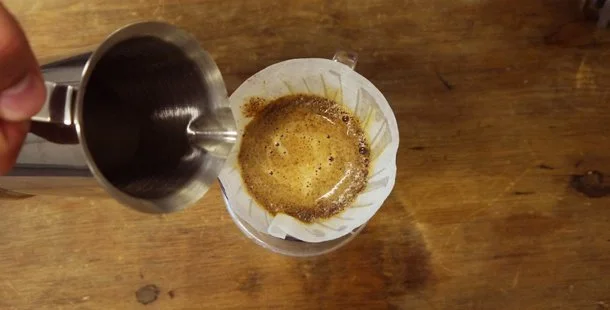
Use coffee you already have. Freshly ground beans can preserve more aroma, but pre-ground coffee is a practical choice when no grinder is available.
Grinding close to brewing can help freshness; coffee does not become unusable after 15 or 30 minutes. Store it sealed, cool and dry, following the National Coffee Association’s storage advice.
For the immersion method below, use water just off the boil, around 205°F (96°C) if you have a thermometer. A brief wait is only an approximation; it does not guarantee one temperature at every altitude or in every kettle.
The Saucepan Method
This is an improvised adaptation of Stumptown’s four-minute French press method, using settling or a strainer in place of its plunger. Coffee Corner has not physically tested this saucepan adaptation.
Things you need:
- Water
- Coffee grounds
- Spoon
- Small saucepan
- Ladle
How to brew in a saucepan
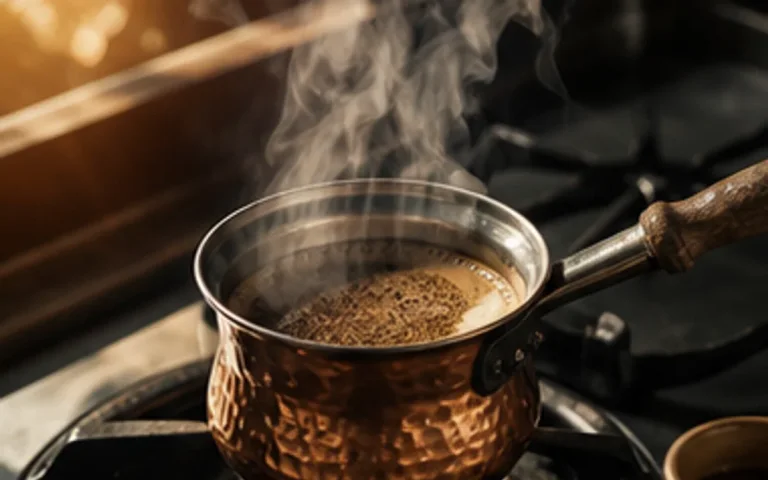
- Start with 15 g coarse-ground coffee and 225 g water, a 1:15 recipe. Choose a saucepan with plenty of headroom.
- Heat the water, then take the pan off the burner. Add the coffee and start a timer. Stir gently to wet the grounds.
- At four minutes, pour slowly through a stable food-safe strainer into a heatproof mug. Without a strainer, let the grounds settle and carefully decant, leaving the sediment behind.
- Do not drink until it has cooled to a comfortable temperature. Expect some grit: a kitchen strainer is not a paper coffee filter.
No scale? As an approximate alternative, start with 2 level US measuring tablespoons (15 mL each) of grounds per 6 US fluid ounces of water. For 12 fluid ounces, use 4 tablespoons. This uses the upper end of the NCA’s general spoon guideline; it is not a gram conversion, and roast and grind change how much fits in a spoon.
The Strainer Method
Another popular technique is the strainer method. Coffee lovers who have a broken coffee maker or who don’t have a filter can avoid a trip to the supermarket if they have a strainer.
Use a clean strainer intended for food, supported securely over a heatproof mug. Fine particles may still pass through; do not hold a loose paper towel over a cup of hot liquid.
Things you need
- Water
- Saucepan or kettle
- Coffee grounds
- Mesh strainer
How to strain the brew
Make the off-heat saucepan brew above, then pour slowly through the supported strainer. Stop before the pan’s sediment reaches the rim. If the cup is gritty, allow it to settle and leave the last sip behind.
Use a Coffee Bag
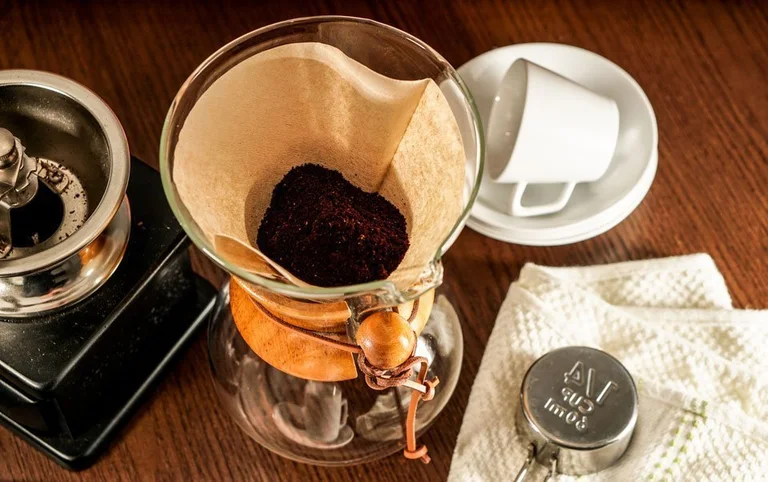
A ready-filled coffee bag or a filter bag designed for brewing coffee can hold the grounds while they steep. Follow its maker’s water quantity and steeping instructions; bag size and coffee dose vary. Remove it before drinking.
Avoid improvised bags made from an unknown fabric, household paper or string. Use materials intended for contact with hot food, with a closure that will not spill grounds.
The Cowboy Method
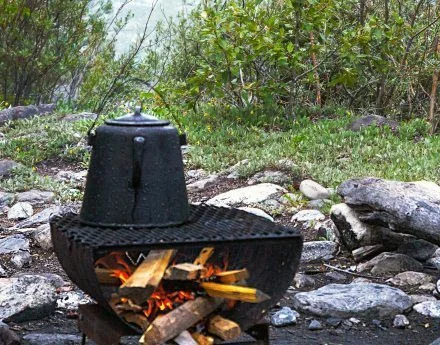
The no-filter version is often called cowboy coffee. Use the same off-heat steep above and let the grounds settle before gently pouring. Only put cookware on a stove or campfire if it is designed for that heat source; do not heat an electric kettle body on a burner.
The Microwave Method
A microwave can heat water, but it does not separate coffee grounds. Use microwave-safe cookware and the appliance’s water-heating instructions; there is no universal safe time for every wattage and volume.
The FDA warns that superheated water can erupt when moved or when coffee is added. Do not exceed the manual’s heating time. A kettle or saucepan is the simpler option for the method above.
Using a French Press
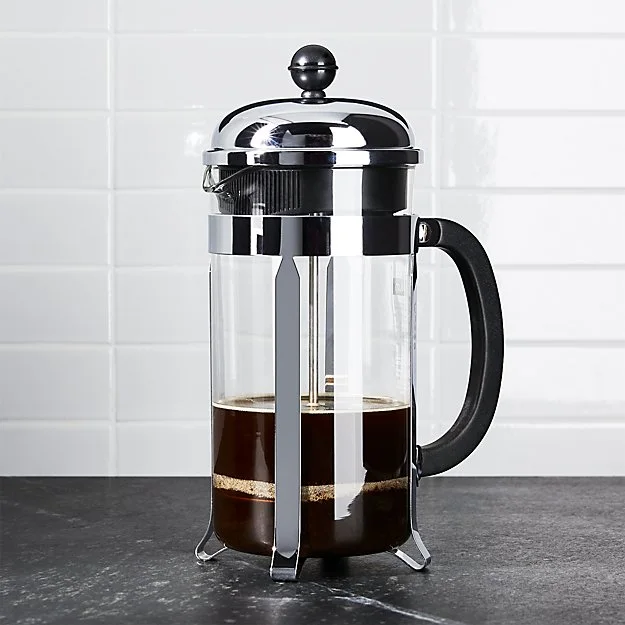
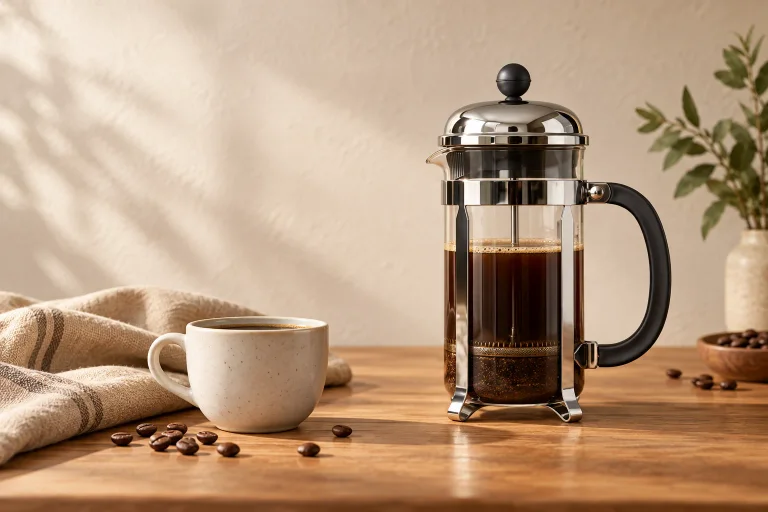
If you have a French press, it already serves as a manual coffee maker. Use our French press recipe for a measured dose, timing and pressing steps instead of guessing how much water belongs with eight tablespoons.
A stovetop percolator is another option if you own one. Use its model instructions and a compatible heat source; electric percolators cannot be put on a camp stove.
Instant Coffee
Sometimes all you can do is make a cup of instant coffee to give your morning a much-needed boost.
Instant coffee dissolves, so it avoids the sediment and filtering problem entirely. Different brands have different doses; start with the package instructions.
For a concrete maker example, Starbucks Premium Instant instructions use 1–2 teaspoons with 180–200 mL hot water. Stir until dissolved, then add milk if wanted.
Tips for Making Delicious Coffee without a Coffee Maker
Buy the form you can use: whole beans if you have a suitable grinder, ground coffee if you do not. There is no single roast-date cutoff that applies to every coffee and storage method.
Close the bag after each use and keep it away from heat, light and moisture. Buy an amount you will use while you still enjoy its aroma.
Check your local coffee shops to find the best and freshest coffee. Some shops even roast on the spot which adds more freshness to your coffee.
Store your beans properly to keep their flavor strong and fresh. A mason jar or a vacuum sealed container offer great ways to store your coffee.
When and how you grind also matters to get the perfect cup of coffee. Ideally, you should grind your coffee right before you are about to brew it to attain the maximum flavor.
Different Methods of Grinding Coffee Beans
We all want to turn our coffee beans into grinds we can use to brew the perfect cup of coffee. While most of us grind our coffee beans the usual way, you don’t want to compromise on the consistency of the grind to affect the quality of your coffee.
There are various ways to crush and grind your coffee beans. The key is to make sure the beans are sufficiently grounded without turning them to dust.
Blender
Only grind dry coffee beans in a blender when its manufacturer permits that use, with the recommended container and quantity. A grind button or a small batch does not by itself guarantee the appliance is suitable.
No suitable grinder?
Ask a coffee shop to grind the beans for your brewing method, or use pre-ground coffee. These are more predictable options than hammering beans in a plastic bag or using a food tool for a job it was not designed to do.
Use fresh drinking water. If you later use a machine, follow its water requirements.
Final Thoughts
Start with the simplest method your equipment supports. If a strained cup has a pleasant flavor but feels too strong, dilute that cup with a little hot drinking water.
If the brew is strong enough but tastes harsh, compare a coarser grind next time while keeping the amount of coffee and water the same. Look for less drying bitterness. This follows OXO’s immersion-brewing adjustment guidance.
Now that you know how to make coffee even when you don’t have the best coffee maker, make sure you pick the best coffee beans and store them the right way to preserve their freshness.
Research note: this guide adapts the linked maker and coffee-association guidance. Coffee Corner has not physically tested these methods. Images are illustrative.