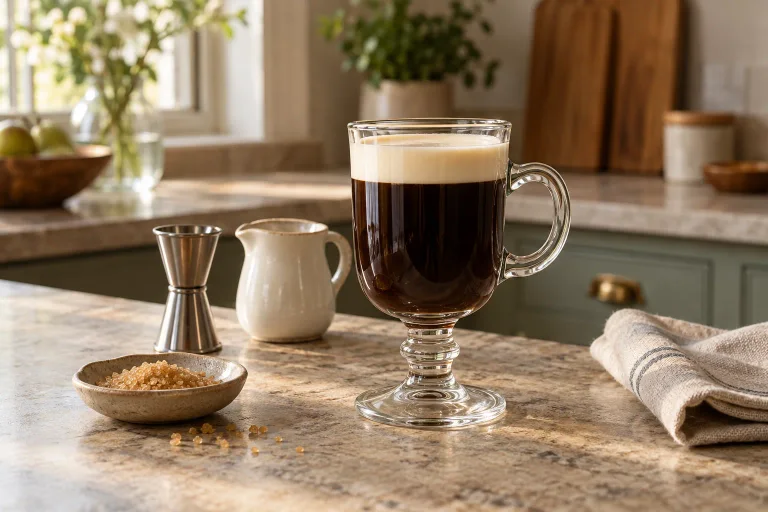
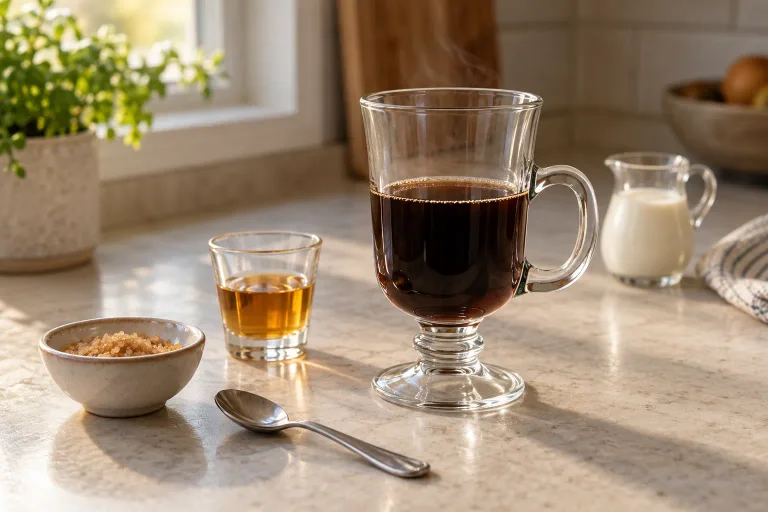
For one Irish coffee, combine 120 mL hot brewed coffee, 50 mL Irish whiskey and 1 teaspoon sugar in a warmed heat-safe glass. Float 50 mL cold, lightly thickened cream over the back of a spoon. Sip the coffee through the cream rather than stirring the layers together.
The drink has four ingredients, so small choices matter: coffee you enjoy before adding whiskey, fully dissolved sugar and cream that still pours. You do not need an espresso machine, a tall pile of whipped cream or a complicated garnish.
Ingredients for one Irish coffee
The metric quantities below follow the International Bartenders Association recipe. The US column is a rounded kitchen adaptation, so use one set of measures consistently.
| Ingredient | Metric recipe | Approximate US measure |
|---|---|---|
| Fresh hot black coffee | 120 mL | ½ cup / 4 fl oz |
| Irish whiskey | 50 mL | 3 tablespoons plus 1 teaspoon |
| Cold cream suitable for whipping | 50 mL | 3 tablespoons plus 1 teaspoon |
| Granulated sugar | 1 level measuring teaspoon | 1 level measuring teaspoon |
A US tablespoon holds about 15 mL and a teaspoon about 5 mL; a US cup is about 237 mL. These are rounded household conversions, not weights. A 1½ fl oz bar measure is about 44 mL, so it is a slightly smaller whiskey pour than the metric recipe's 50 mL.
Use a heatproof glass or mug of at least about 300 mL / 10 fl oz for this version. Its liquid ingredients total about 220 mL before the sugar and the air introduced into the cream. A smaller six-ounce goblet needs a smaller recipe; do not fill it to the rim and hope the cream fits.
Alcohol and caffeine
This is an alcoholic drink for adults who choose to drink alcohol. Caffeine does not reduce alcohol impairment; coffee will not make it safe to drive after drinking. For a drink without alcohol, omit the whiskey entirely and serve sweetened coffee with cream. Choosing decaf changes the coffee, not the alcohol content.
How to make it, step by step
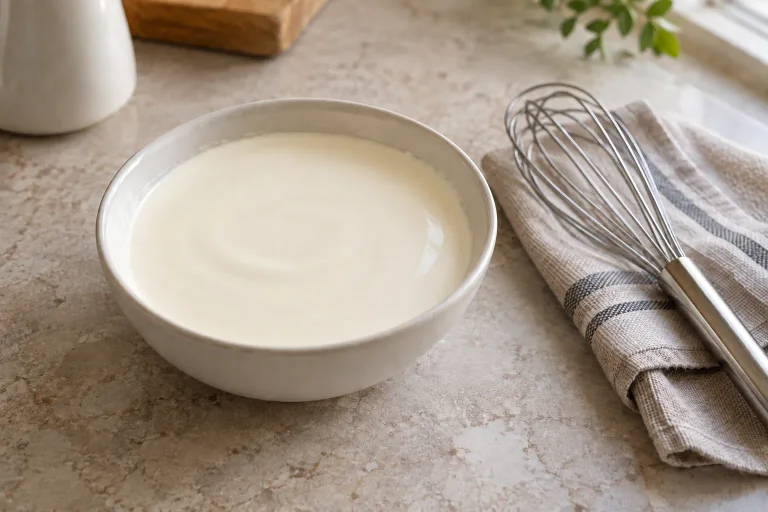
- Prepare the cream. Start with cold cream in a clean bowl. Whisk briefly until it thickens slightly but still flows. Stop before it holds firm peaks. Return it to the refrigerator while you prepare the coffee.
- Warm the serving vessel. Use a glass specifically made for hot drinks, or a heat-safe mug. Warm it with warm water and empty it. Avoid pouring boiling water into cold ordinary drinking glassware.
- Brew the coffee. Make a fresh batch by your usual drip, pour-over or French press method. Measure the finished coffee, rather than the water that went into the brewer.
- Dissolve the sugar. Add the hot coffee and sugar to the warmed glass. Stir until no grains remain, then add the measured whiskey and stir briefly.
- Float the cream. Hold the back of a spoon just above the coffee. Pour the thickened cream slowly over it, moving gently as the layer forms. The IBA uses this spoon technique to keep the cream above the coffee.
- Serve promptly. Leave the cream on top. Let the drink cool to a comfortable sipping temperature and drink through the cool cream into the coffee below. A straw bypasses that contrast.
Choose the four ingredients
Coffee: balanced before anything is added
Start with a medium or medium-dark coffee you already enjoy. That is a useful first comparison, not a requirement for a particular roast. Taste a little of the base before mixing: harsh, burnt coffee does not improve simply because cream and sugar disguise it.
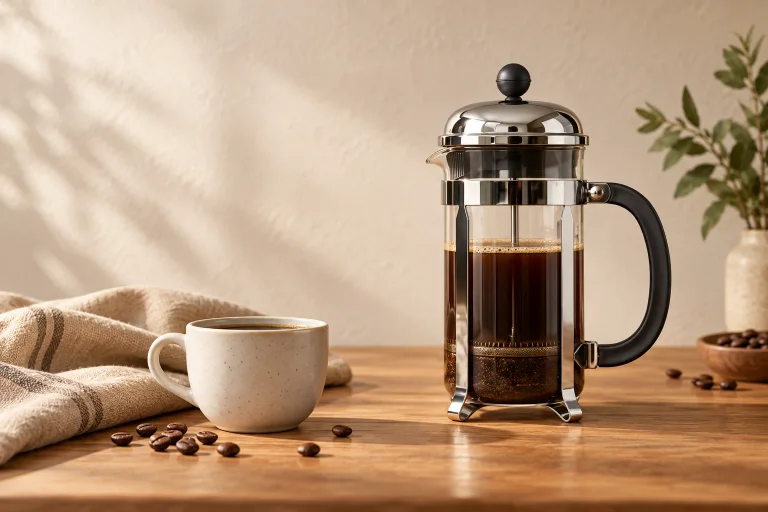
Drip or pour-over gives a straightforward base without sediment. French press also works; pour carefully and leave the muddy last portion in the press. Our brewing-method guide provides measured recipes, and the brew ratio calculator helps you size a batch for several drinks.
Do not confuse “strong coffee” with a longer, more bitter extraction. If the base tastes weak but otherwise pleasant, choose a recipe with more coffee for the same brew water next time. Keep that change separate from the whiskey measure. A short espresso shot is also not a one-for-one replacement for 120 mL brewed coffee.
Whiskey: measure instead of free-pouring
Use Irish whiskey you are comfortable drinking in a mixed drink; an expensive bottle is optional. Measure it even if you know the glass well. Free-pouring changes the alcohol dose and the flavor balance at the same time, which makes it hard to reproduce a good result.
If the whiskey dominates, make a smaller measured whiskey addition in the next drink rather than piling on more sugar. Keep track of that as your own variation. When serving guests, say clearly that the drink contains alcohol and offer a separate coffee-and-cream version to anyone who prefers it.
Sugar: dissolve it before the cream
Begin with the recipe's level teaspoon. White sugar works; brown or Demerara sugar gives a different flavor. Use a measuring spoon rather than an unspecified sugar cube, because cube sizes vary. Stir while the coffee is hot so you do not leave gritty sweetness at the bottom.
Syrup is convenient for repeated servings, but a spoonful of syrup is not the same amount of sugar as a spoonful of crystals. A rich syrup and a thinner syrup also differ. Follow one complete recipe when switching: Jameson's version, for example, uses 35 mL whiskey, 90 mL espresso, 10 mL Demerara syrup and 60 mL lightly whipped cream. It is a separate formulation, not a set of interchangeable measures for the recipe above.
Cream: cold, lightly thickened and pourable
Choose dairy cream labeled as suitable for whipping. In a US supermarket, heavy whipping cream is a straightforward option. Keep it cold and whisk in short bursts, checking the texture between them. It should pour from the spoon in a smooth stream and spread into a layer, rather than drop onto the coffee as a firm scoop.
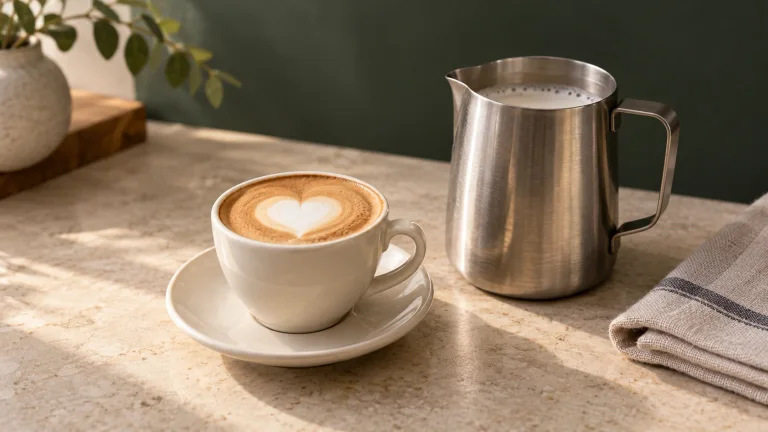
Do not use the milk-steaming routine from a cappuccino: this topping is cold cream, not hot milk foam. Aerosol whipped topping is convenient for a dessert-style variation, but it produces a different texture. If you want to practice silky steamed milk instead, follow the cappuccino guide.
Why the cream sinks, clumps or disappears
- The cream sinks immediately.
- Check it before changing the coffee. Very fluid cream may need a little more whisking; a fast pour from high above the glass can also push it beneath the surface. Use cold, lightly thickened cream and a slow pour over a spoon close to the coffee.
- A stiff blob sits on top.
- You have gone beyond a pourable topping. For the next glass, stop whisking sooner. Do not keep whipping in the hope that the cream will turn smooth again.
- The drink is too sweet.
- Check that the teaspoon was level and that the cream was unsweetened. On the next serving, reduce the added sugar modestly instead of changing the coffee and whiskey as well. A flavored syrup or sweetened topping can add sweetness you did not count.
- The coffee tastes flat or bitter.
- Make and taste a fresh plain batch. If it is already unpleasant, use the coffee troubleshooting guide before adding alcohol. Check the carafe and brew equipment for old coffee residue.
- The drink cools too quickly.
- Warm the heat-safe cup, have the ingredients measured and assemble promptly. Do not warm the cream just to make the finished drink hotter; the cool topping is part of the contrast.
A practical plan for serving guests
Prepare the cold cream first and keep it refrigerated. Put a measuring spoon and whiskey measure beside the cups, then brew enough coffee for the number of drinks you are actually serving. For four metric servings, that means measuring 480 mL finished coffee, 200 mL whiskey, 200 mL cream and four level teaspoons of sugar.
Those are scaled ingredient quantities, not a claim that the brewer will yield exactly the water you put into it. Assemble each drink in its own glass so portions stay clear. Dissolve sugar in the coffee before floating any cream; trying to stir a finished tray destroys the layers.
Keep extra cream refrigerated and follow the carton instructions. The FDA advises keeping the refrigerator at 40°F / 4°C or below and limiting the time perishable foods spend unrefrigerated. Make each drink for immediate serving rather than holding a completed batch for later.
Where Irish coffee began
The Foynes Flying Boat Museum traces the drink to chef Joe Sheridan in 1943, when passengers returned to the terminal after a flight turned back in bad weather. Coffee with Irish whiskey became a welcoming drink associated with the airport.
In San Francisco, the Buena Vista's own account dates its recreation to November 10, 1952, with owner Jack Koeppler and writer Stanton Delaplane. Its story emphasizes how much attention went into getting the cream to float. That history explains the drink's reputation; it does not mean every modern café serves the same measure or glass size.
Variations and common questions
Is Baileys coffee the same as Irish coffee?
No. Irish cream liqueur brings alcohol, sweetness and cream-like texture in one ingredient. It makes a different mixed coffee drink from separate whiskey, sugar and a fresh cream float. Check its ingredient and allergen label, and do not add it as though it were plain cream.
Can I use decaf or instant coffee?
Yes. Prepare either as a black coffee you enjoy, then measure the finished liquid. Decaf can reduce caffeine, but it does not guarantee zero caffeine or change the alcohol warning above. Instant coffee avoids extra brewing equipment; dissolve it fully before building the drink.
Can I make it without dairy?
Use a plant-based product specifically intended for whipping and follow its instructions. Ordinary oat or almond drink will not behave like heavy cream. Expect the float and flavor to differ, and check allergens for anyone you serve.
Should I add nutmeg, chocolate or cinnamon?
They are optional variations. Jameson's recipe includes nutmeg; the IBA recipe lists no garnish. Start without one if you want to judge the coffee, whiskey and cream clearly, then add a small amount if you like it.
Do I stir before drinking?
Stir the coffee, sugar and whiskey before adding the cream. Once the float is in place, leave it alone and sip through it. For a nonalcoholic milk drink with the ingredients combined, see the latte guide.