Buying Guide
SCA-Certified Coffee Makers: Models and Buying Advice
Compare selected SCA-certified coffee makers from Fellow, Breville and OXO by batch size, controls and carafe, and learn what certification means.
Choose by batch and controls: OXO 8-Cup for a mug or smaller pot, OXO 12-Cup for a larger scheduled batch, and Fellow Aiden or Breville Luxe for adjustable recipes. Compare the exact specifications, pros and cons, and Amazon owner evidence below before deciding whether those features are worth the cost.
The shortlist
Selected certified models
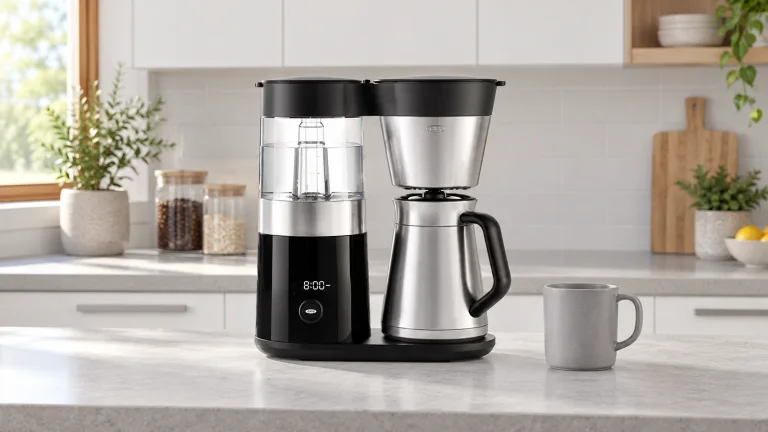
All four brewers appear in the SCA directory, but they solve different problems. The OXO 8-Cup is the straightforward mug-or-pot option. OXO 12-Cup adds capacity and a timer. Aiden and the Breville Luxe let you change the recipe as well as the batch.
Certification concerns brewing performance. Owner ratings, repair support and the parts you clean every day answer different questions. The figures and dated accounts below help keep those choices separate.
Programmable thermal brewer
Breville Luxe Brewer Thermal
Worth considering for a scheduled 60 US fl oz thermal pot and recipe adjustment, with caution warranted by its mixed Amazon rating.
Read the pros, cons and owner feedbackAdjustable brew profiles
Fellow Aiden Precision Coffee Maker
The flexible option for different coffees, small mugs and batch recipes, provided you will use the controls and accept its mixed owner record.
Read the pros, cons and owner feedbackSingle mug or carafe
OXO Brew 8-Cup
The focused choice here for a direct-brew mug and an insulated small pot, if you can do without a timer.
Read the pros, cons and owner feedbackLarger scheduled batch
OXO Brew 12-Cup
The larger programmable thermal option when a small mug and a 60 US fl oz pot both matter, without Aiden-style recipe controls.
Read the pros, cons and owner feedbackAmazon scores describe the linked listings, which can combine models or variants. See each product’s note before comparing the totals.
Side by side
The numbers and features that matter
These are water capacities, not finished-coffee yields. All four use thermal carafes. Cup labels and filter shapes differ by model; use each machine’s fill markings and manual.
Comparing 4 models. On small screens, swipe the table or use the arrow keys.
| Feature | Breville Luxe Brewer ThermalBDC465BSS · Thermal Carafe / Brushed Stainless Steel | Fellow Aiden Precision Coffee MakerBR01AAUS · Matte Black | OXO Brew 8-Cup8718800 · Stainless Steel | OXO Brew 12-Cup8721200 · Silver / 12-Cup (Maker Only) |
|---|---|---|---|---|
| Best reason to consider it | A shared pot with a scheduled start and optional brew adjustments. | Switching between one mug and a batch, with control over the recipe. | One-mug brewing with the supplied accessory, plus a smaller household pot. | A larger shared pot and a timer, with a separate basket for small batches. |
| Maximum water | 60 US fl oz / ≈1.77 L | 1.5 L | 40 US fl oz / ≈1.18 L | 60 US fl oz / ≈1.77 L |
| Small brew | Cup or carafe; measure water first | Single-serve basket ≤450 mL | Included one-mug accessory | 2–4 maker-cup basket |
| Start timer | Up to 24 h | Scheduled brewing | No | Up to 24 h |
| Recipe control | Bloom, temperature, flow | Profiles, bloom, temperature, pulses | Fixed brew program | Select batch; fixed brew program |
| Paper filters | Cone or flat-bottom options | #2 cone / 8–12-cup basket | Kalita Wave 185 / 8–12-cup basket | #2 cone / commercial basket |
| Amazon owner score | 3.3 / 5130 global ratingsChecked Oct 15, 2026 | 3.7 / 5623 global ratingsChecked Oct 15, 2026 | 4.0 / 54,840 global ratingsChecked Oct 14, 2026 | 3.7 / 5346 global ratingsChecked Oct 15, 2026 |
| Main limitation | Lower Amazon score and smaller rating base than established mass-market drip options. | Two baskets and two filter shapes to manage. | No programmed start. | Two filter shapes to stock, including commercial-size basket paper. |
| Details | Specifications, pros and cons | Specifications, pros and cons | Specifications, pros and cons | Specifications, pros and cons |
Make it personal
Find what fits your kitchen
Choose the features you need, then check the practical trade-offs in each product report.
Your must-have features
Select requirements to narrow the list.
Matches are based on documented features, not taste scores or a reliability ranking. Read the batch limits and owner feedback before choosing.
Plan a batch of coffee
Start with the water you will put in the brewer. Your finished coffee volume will be lower because the grounds hold water.
Check the brewer’s minimum batch and correct basket.
Starting ratio, not a taste guarantee. The check uses published water limits and stated basket-dose limits where available. Follow the manual for minimum batches, the correct basket and its maximum coffee dose.
A closer look
What you get—and what to live with
Compare the equipment, preparation and maintenance before choosing a model. Check the model number as well as the name; similar listings can include different versions.
01 · Programmable thermal brewer
Breville Luxe Brewer Thermal
Worth considering for a scheduled 60 US fl oz thermal pot and recipe adjustment, with caution warranted by its mixed Amazon rating.
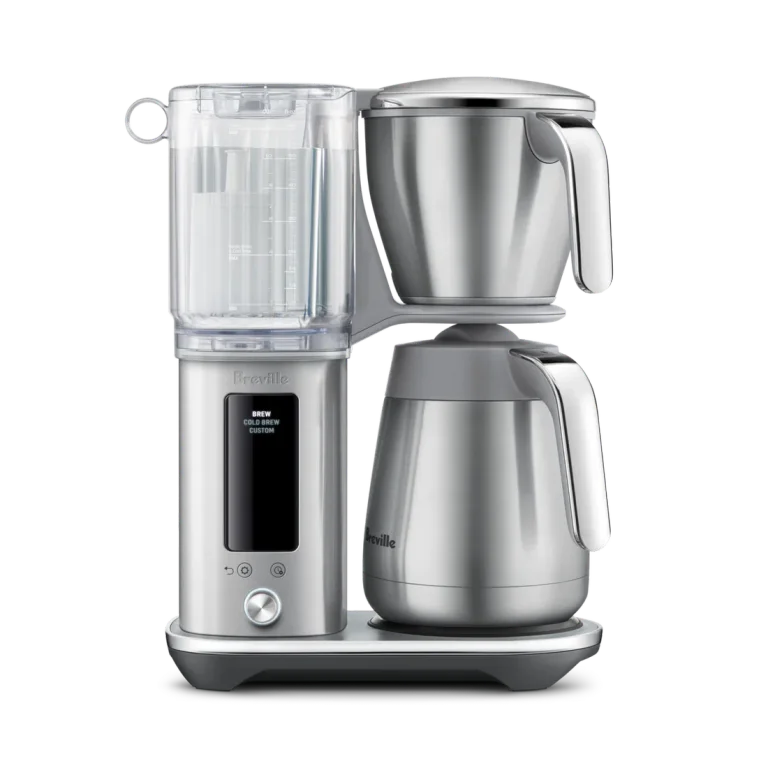
Exact model · BDC465BSS · Thermal Carafe / Brushed Stainless Steel
Direct product link. Price and availability may change.
Pros
- Removable 60 US fl oz tank.
- 24-hour delayed start.
- Custom bloom, temperature and flow settings.
- Thermal carafe and both cone/flat-bottom filter options.
Cons & limitations
- Lower Amazon score and smaller rating base than established mass-market drip options.
- Glass and thermal reviews may be pooled.
- Custom settings add decisions that a simple pot drinker may not need.
- Fill only for the intended batch; no hot plate for reheating.
The daily advantage is the removable tank
The 60 US fl oz tank lifts out for sink filling. Prepare the filter, grounds and water, then use the ordinary Brew program or set a start up to 24 hours ahead. The thermal BDC465 lets you carry the pot to the table without a warming plate. The similarly named BDC415 is the glass-carafe version; its hot-plate instructions do not apply here.
Custom controls need a purpose
Custom mode remembers bloom volume, bloom time, temperature and flow settings. Those are useful if you want to adjust a recipe for a new bag of coffee. Start with the standard program, then change one thing at a time so you know what made a difference. Included cone and flat-bottom filter options offer different basket arrangements; follow the manual’s basket and water-volume guidance for a mug or a pot.
The ownership compromise
You fill for the batch rather than expecting a full tank to dispense a chosen mug size. Thermal holding also depends on the amount of hot coffee left in the pot. A small serving in a large carafe is a different use from a full breakfast batch. The low Amazon score is a meaningful caution: confirm returns and warranty support, and make sure the tank, basket, lid and controls work correctly during the return period.
02 · Adjustable brew profiles
Fellow Aiden Precision Coffee Maker
The flexible option for different coffees, small mugs and batch recipes, provided you will use the controls and accept its mixed owner record.
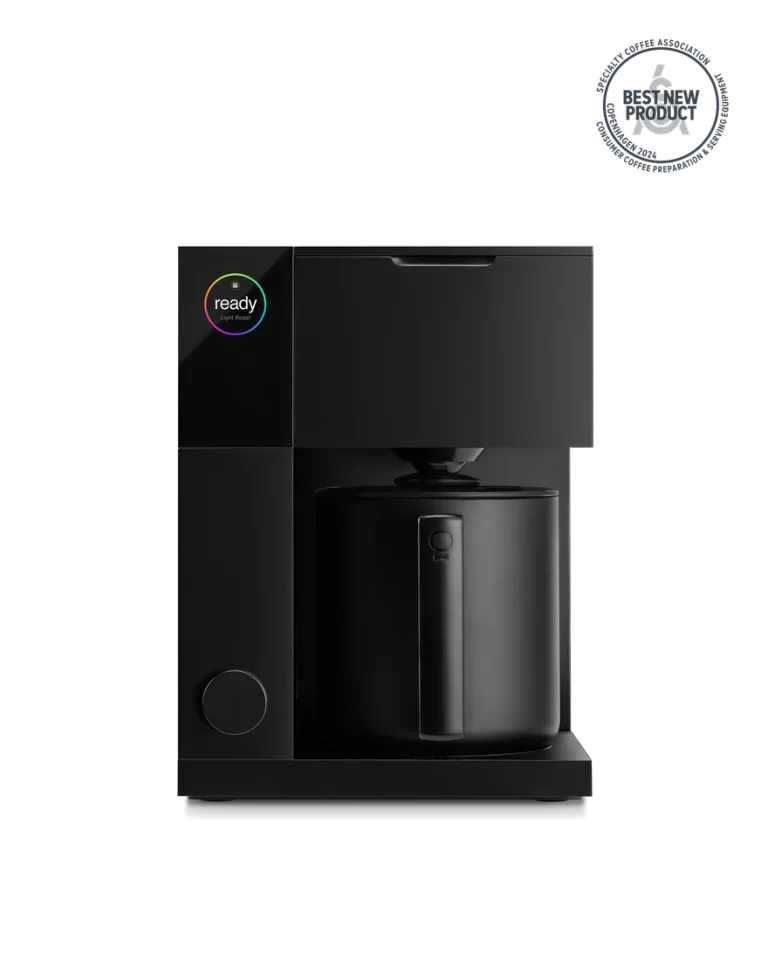
Exact model · BR01AAUS · Matte Black
Coffee Corner may earn a commission if you buy through this link, at no extra cost to you.
Pros
- Single-serve and batch baskets included.
- Adjustable profiles, bloom and pulse control.
- Removable tank and scheduled brewing.
- Normal brewing works without the app.
Cons & limitations
- Two baskets and two filter shapes to manage.
- No built-in grinder or warming plate.
- Settings may be unnecessary for a fixed daily pot.
- Recent owners report water errors and component/support problems.
Choose it for changing recipes
Aiden lets you choose built-in profiles or adjust temperature, bloom and pulses. Guided Brew supplies a suggested coffee dose for the selected water amount. That is helpful when you move from one mug of a new coffee to a larger weekend batch, but you still need to weigh the grounds and adjust to taste. The machine handles water delivery; it is not a grinder.
A small brew needs the matching parts
The single-serve basket is for up to 450 mL; larger brews use the batch basket. Match the showerhead selector to the basket and use #2 cone paper for single servings or 8–12-cup basket paper for batches. For standard hot brewing, the blue batch basket has an 82.5 g coffee limit; do not scale a strong recipe beyond that limit. A removable tank and scheduling help with preparation; normal brewing works without the app.
Control versus simple ownership
The 1.5 L thermal carafe holds a household batch without a warming plate. Compared with a switch-only brewer, Aiden asks you to learn more settings and care for more movable pieces. Recent Matte Black owners describe both useful profiles and failures involving water detection, hinges or the carafe. Buy it for the flexibility you actually want, and check the seller’s support and return process before paying for that flexibility.
03 · Single mug or carafe
OXO Brew 8-Cup
The focused choice here for a direct-brew mug and an insulated small pot, if you can do without a timer.
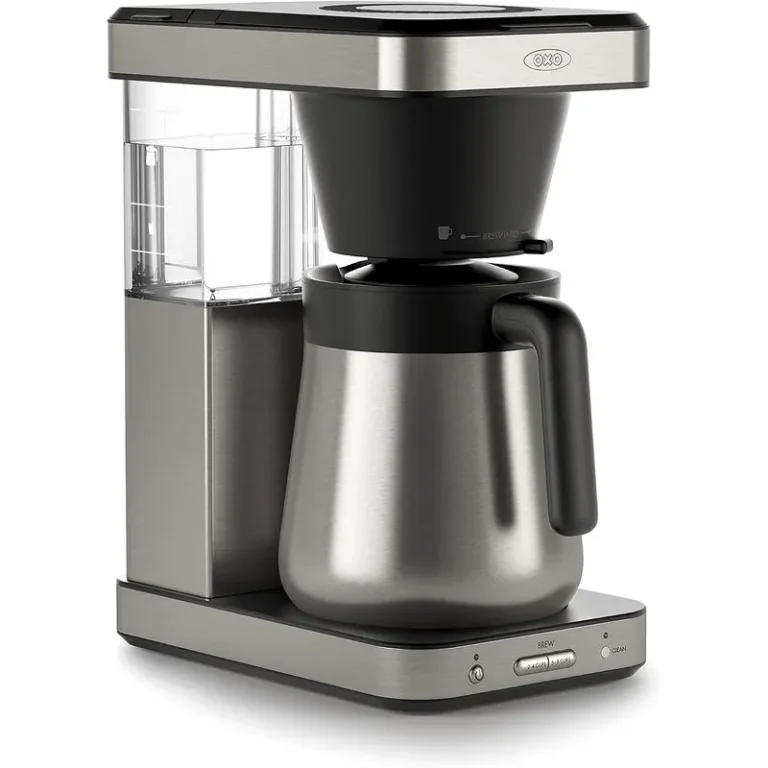
Exact model · 8718800 · Stainless Steel
Pros
- Included accessory for one-mug brewing.
- Thermal carafe works without a warming plate.
- Reversible well cover accommodates different mug heights.
- Removable brew parts and a cleaning mode.
Cons & limitations
- No programmed start.
- Fixed tank; measure the water for each batch.
- Lower capacity than the 60 US fl oz models.
- Owners report overflow, pouring and heat-retention frustrations.
Why the second basket matters
The supplied small-brew accessory sits inside the main basket and keeps a one-mug dose together. It takes a Kalita Wave 185 filter and is intended for 2–4 maker cups, or 10–20 US fl oz of water. Select Mug mode for direct brewing and the matching 2–4 cup button. The reversible well cover raises a shorter mug; removing it makes room for a taller one.
Capacity is a water measurement
The maximum is 40 US fl oz, about 1.18 L. The brewer runs the water you pour in, so measure a mug-sized batch before starting. Grounds hold back some of that water. There is no clock for an automatic morning start and no warming plate: the insulated carafe holds the finished batch. Pouring and heat-retention reports are mixed, so this is a specific one-mug/thermal choice rather than a universal winner.
Keep the lid and basket working freely
Hand-wash the carafe and its lid; OXO permits the listed removable baskets, scoop, well cover and Rainmaker on the top dishwasher rack. Keep the filter flat and the basket and lid seated correctly. Do not ignore an overflow or a leaking appliance. Stop using it and follow the maker’s troubleshooting or support route instead of assuming repeated spills are normal.
04 · Larger scheduled batch
OXO Brew 12-Cup
The larger programmable thermal option when a small mug and a 60 US fl oz pot both matter, without Aiden-style recipe controls.
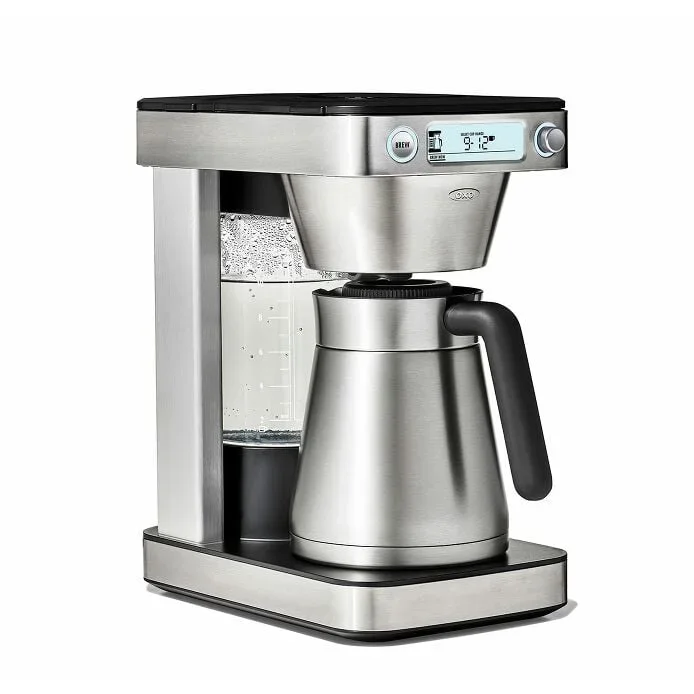
Exact model · 8721200 · Silver / 12-Cup (Maker Only)
Pros
- 24-hour start timer.
- Larger 60 US fl oz thermal pot.
- Separate 2–4 and 5–12 maker-cup baskets.
- Direct-to-mug option with an elevating drip tray.
Cons & limitations
- Two filter shapes to stock, including commercial-size basket paper.
- No custom bloom or temperature controls.
- Glass tank needs care; it is not the serving carafe.
- Mixed Amazon score from a smaller owner-rating base.
Why choose it over the 8-Cup
The practical gains are the larger 60 US fl oz capacity and a timer you can set up to 24 hours ahead. The small basket covers 2–4 maker cups, and the large basket covers 5–12. A household can use the small basket for one drinking mug and the larger one when several people want coffee. Set the amount and fit the corresponding basket before starting.
Two filter supplies, one thermal carafe
The small basket takes #2 cone filters; the large one needs commercial basket filters. Ordinary small basket filters are not a substitute for the specified large paper. OXO supplies ten of each to get started. The carafe is vacuum-insulated stainless steel, while the water tank is glass. Those two components are easy to confuse in shop descriptions; this model does not have a glass serving pot on a warming plate.
What to check before paying more
The timer and extra capacity are the reasons to choose this over the 8-Cup. There is no user-adjustable bloom or temperature recipe like Aiden’s. Confirm room for lid access and for pulling the carafe forward, then try the small and large baskets, scheduled start and pouring. Its mixed Amazon score and smaller rating history make a clear return policy useful; certification alone cannot settle those ownership questions.
Living with it
What Amazon owners report
Read the score together with the number of ratings and the model note. Individual reports show what can go well or wrong; they do not measure a product’s failure rate.
Breville Luxe Brewer Thermal
Back to product details ↑Amazon.com
Checked Oct 15, 2026
Selected version: BDC465BSS · Brushed Stainless Steel / Thermal Carafe
This relatively low score is a reason to be cautious, particularly alongside the smaller rating base. Consider the Luxe for its removable tank and programmable custom brewing; do not treat certification as evidence of long-term reliability.
Glass and thermal carafes share a selector. The 130 global ratings cannot be assigned exclusively to the thermal BDC465.
Amazon rating distribution
Fellow Aiden Precision Coffee Maker
Back to product details ↑Owners value profiles and one-cup flexibility, while water errors, component failures and support experiences temper the recommendation. The extra controls need to be useful to you to justify those concerns.
The listing offers multiple colors. Written examples below identify Matte Black and were captured October 12; the aggregate was checked again October 15.
Amazon rating distribution
What owners liked
A Matte Black owner liked the profiles and on-machine controls without relying on the app.
Jul 5, 2026 · Read owner feedback ↗Another Matte Black owner enjoyed Guided Brew, while disliking the display styling and batch-filter height.
Aug 14, 2026 · Read owner feedback ↗Problems and cautions
A Matte Black owner liked the coffee initially, then reported an Add Water fault and a poor replacement experience.
Sep 24, 2026 · Read owner feedback ↗Another Matte Black owner praised the control but reported basket-hinge and carafe-component failures.
Sep 14, 2026 · Read owner feedback ↗OXO Brew 8-Cup
Back to product details ↑Amazon.com
Checked Oct 14, 2026
Selected version: OXO 8-Cup 8718800 · Stainless Steel
Owner feedback is divided on pouring and keeping coffee hot. The one-mug accessory is the reason to consider this model; the score does not justify calling it the safest general recommendation.
The number is global ratings displayed on Amazon.com, not US-only written reviews. These examples identify Stainless Steel; the 9-Cup and 12-Cup are different machines.
What owners liked
An owner liked the simple steps, easy cleanup and clean pouring when the lid was secured.
Oct 11, 2026 · Read owner feedback ↗Problems and cautions
An owner reported repeated brewing overflows and could not reliably identify the cause.
Oct 6, 2026 · Read owner feedback ↗Another owner liked the brewed coffee but criticized spills from the carafe and coffee remaining inside after cleaning.
Oct 2, 2026 · Read owner feedback ↗OXO Brew 12-Cup
Back to product details ↑Amazon.com
Checked Oct 15, 2026
Selected version: 8721200 · Silver / 12-Cup (Maker Only)
The rating base is much smaller than the OXO 8-Cup’s and the score is mixed. Choose the 12-Cup for the larger thermal pot and timer if those features solve a real need, with the seller’s return terms checked before buying.
The listing offers the machine alone and a machine-plus-filters bundle. The global rating total is not a count of US-only written reviews or a separate reliability measure for each bundle.
Amazon rating distribution
Other options
When to choose something else
Moccamaster KBT
Consider its thermal pot, manual basket control and parts support if you mainly make several mugs and do not need a timer. Check the carafe generation on the offer; the current glass-lined carafe is different from older steel-lined versions.
Read more ↗Ninja CE251 and Cuisinart DCC-1200
If a scheduled glass pot is the real requirement, compare these simpler choices and their larger owner-rating histories before paying for recipe controls. They are covered in the broader coffee-maker guide, not presented here as certified models.
Read more ↗Buying advice
How to choose a certified brewer
Your real batch
Measure the water used for your usual mugs. A brewer’s advertised cup is often smaller than a drinking mug, and a large maximum capacity does not explain its smallest useful batch.
The morning routine
A timer helps if you prepare water and grounds the night before. A removable tank can make filling easier; a one-mug basket can reduce the need to brew surplus coffee.
Access and cleanup
Leave room to lift the tank and basket lids and remove the carafe. Check which parts need hand washing and whether filters and replacement carafes are easy to buy.
What the SCA mark actually means
The Specialty Coffee Association uses third-party testing to check brewing performance against its standards. Certified models have passed those requirements and entered a certification agreement. That narrows the list, but you still need to choose a batch size, controls and cleaning routine that work for you.
- Check the exact model
- Use the official directory to verify the brewer name. Similar branding can cover different carafes, capacities or generations.
- Separate brewing from ownership
- Certification gives you information about brewing performance. It does not replace checking the warranty, spare parts, cleaning routine or reports of faults for the particular version you buy.
How to use the official list in 2026
Treat the directory as the place to check certification, then open the manufacturer’s page for the exact local model and specifications. The four machines above are a manageable comparison of common routines, rather than every certified option.
- Read the model number
- Breville BDC465 is the thermal Luxe Brewer. OXO 8718800 and 8721200 are the 8-Cup and 12-Cup machines. Match the label, carafe and accessories to the listing before ordering.
- An older model needs its own check
- Do not assume an older brewer lost certification simply because it is absent from a short comparison or a reorganized web page. Technivorm still describes its KBT as SCA approved; our KBT review covers its manual basket and thermal-carafe workflow.
When SCA certification is not the main answer
If you want a shared pot of filter coffee, this is a relevant shortlist. If you want milk drinks, capsules, manual pour-over or coffee for travel, first choose that brewing method. A certified drip machine does not turn filter coffee into an espresso shot. Compare the broader coffee-maker shortlist if you need a morning timer or a different drink style.
- Choose the coffee style first
- Compare the daily work, number of servings and ongoing supplies before deciding which machine category belongs in your kitchen.
- Prefer manual control?
- A pour-over dripper offers a different routine: you supply the water, timing and pouring. Compare the filters and technique as well as the purchase price.
The buyer checklist for certified drip machines
Check where you’ll fill the tank, lift the basket and pour the coffee. A removable tank is useful if you can carry it to the sink, but you need enough room to lift it out from under a cabinet.
- Size the batch in ounces or litres
- A 40 fl oz reservoir is approximately 1.18 L; a 60 fl oz reservoir is approximately 1.77 L. Those are water capacities, not guarantees of coffee delivered to mugs, because the grounds retain water.
- Check filters and access
- Buy the correct filter shape for each basket, and allow space above the machine for filling and basket removal. Follow the manual’s placement and hot-water precautions.
- Plan the cleaning routine
- Empty spent grounds, wash the carafe as directed, and descale on the maker’s schedule for your water. A clean-looking exterior does not tell you whether the water path needs attention.
Why the grinder still matters
A capable brewer cannot compensate for every problem with stale coffee, an unsuitable grind or an inconsistent dose. Before replacing a working machine, try fresh coffee, a repeatable ratio and a clean basket and carafe. The coffee grinder guide explains adjustment, dosing and maintenance for filter coffee.
- Use a repeatable starting recipe
- Weigh the coffee and water, then change one variable at a time to suit your taste. The ratio calculator gives a starting dose rather than a promise about flavor.
- Match the grinder to filter coffee
- A burr grinder gives you an adjustable grind setting. Our grinder guide separates everyday filter use from the more demanding adjustments of espresso.
Choosing between these four brewers
For a scheduled pot, compare Breville, Aiden and the OXO 12-Cup. For a mug as well as a batch, look at Aiden and the OXO models. Aiden and Breville are the options here if you want to adjust the brewing recipe. Use our brew ratio calculator to set a repeatable starting dose for your batch.
- Still choosing a category?
- Use the coffee-maker quiz to compare the work and drink styles before committing to a specific brewer.
Buy for the batch you actually make
A single mug of 300 mL and a 1.5 L shared pot need different amounts of coffee and may need different baskets. At 55 g of coffee per litre of water, 300 mL calls for 16.5 g and 1.5 L calls for 82.5 g. This is a starting recipe; stay within the basket’s stated dose limit. Aiden’s blue basket is limited to 82.5 g for standard hot brewing. Grounds retain water, so neither batch delivers exactly its starting water volume into the cup.
Separate the carafe from the water tank
All four selected SCA models serve from thermal carafes. The OXO 12-Cup’s glass component is its water tank. A thermal carafe avoids a warming plate, but the lid, pour channel and seals still need washing. If everyone drinks at once, a glass-carafe model elsewhere in the coffee-maker guide may serve you just as well.
Make the extra controls earn their place
Aiden and Luxe are worth comparing when you change coffees and want to adjust the brewing recipe. If you brew the same pot every morning, a timer and an easy-to-fill tank may be more useful. No machine here grinds whole beans; include a grinder or a regular supply of appropriately ground coffee in the setup.
Common questions
Before you decide
Does SCA certification mean a coffee maker is the best?
It shows that the model met the program’s brewing requirements. The best fit for a household also depends on batch size, controls, maintenance, parts and the coffee style people want.
Is this every SCA-certified coffee maker?
No. These are four selected models for common home routines. Follow the official SCA directory for the wider list and check the exact model you plan to buy.
Are the OXO 8-Cup and 12-Cup carafes glass?
The models compared here, 8718800 and 8721200, use thermal carafes according to OXO. The 12-Cup has a glass water tank, which is a separate component.
How many mugs does an 8-cup or 12-cup brewer make?
Use the stated water capacity and your mug size rather than the cup label. Grounds retain some water, so the finished coffee volume is lower than the water you pour in.
Will a certified machine fix weak or bitter coffee?
Check freshness, dose, grind size and cleaning first. Change one variable at a time. A brewing certification does not guarantee that every recipe will match your taste.
Keep exploring