The short answer
Buy the routine you want to repeat.
The Premier suits the household with different orders: an espresso for one person, a larger coffee for another and milk drinks without learning pitcher technique. Its extra functions are worth paying for when they replace something you already use.
The Barista Express suits the person who wants an espresso hobby. Setting a dose, watching the pour and practicing milk texture are part of the attraction. It also has the larger Amazon rating history; that gives you more owner evidence to examine, rather than a guarantee of better coffee.
Choose neither if you want to press one button and receive a finished latte, or if you already own a grinder you want to keep. Consider the workflows in our espresso-machine buying guide before paying for an integrated grinder you may not need.
The differences that matter
Features, with their everyday consequences.
These differences describe what you will do at the counter. More settings, a higher pump-pressure claim or a longer menu does not establish better espresso.
| Decision point | PremierES601 | Barista ExpressBES870XL | What it means |
|---|---|---|---|
| Dose preparation | Weight-based guidance; separate tamping | Adjustable grinder dose; manual tamping | Ninja helps choose the dose; Breville leaves more of the setup to you. |
| Milk | Automatic hot-milk and cold-foam programs | Manual steam wand | Choose whether you want a program or pitcher practice. |
| Long black drinks | Selectable coffee sizes, up to 18 oz | Espresso plus a hot-water outlet | Coffee and an Americano are different preparations. |
| Cold menu | Cold-brew and cold-pressed-espresso modes | No dedicated cold-extraction program | Breville can still make espresso to serve over ice. |
| Espresso baskets | Double and quad | Single and double; single- and dual-wall options | Check the basket supplied for your intended dose. |
| Grinder controls | 25 settings | 16 external settings | A count is not a comparison of grind quality. |
Feature references: Ninja ES601, Breville BES870 and the model-specific owner’s guides.
Make it personal
Match the machine to your drinks and budget.
Start with the drinks you make most often. A feature you will use every morning is worth more than a longer menu you rarely touch.
Start with your routine
Which features do you need?
Choose your requirements to see which models cover them. This compares features, not taste or reliability.
Answer each question to compare the features you need.
Compare the prices you find
Put the price gap in context.
Enter delivered prices on the same basis for tax, shipping and included accessories.
Use 1–600 whole months. This is an illustrative period, not a lifespan estimate or financing offer.
Enter all prices and a number of months.
Formula: (each price − the lowest entered price) ÷ months. The lowest price is a reference, not a recommendation. Coffee, milk, energy, maintenance, repairs and resale value are excluded.
The everyday difference
The first coffee—and the one after it.
Premier: follow the prompts
Choose the basket and drink; follow the dosing prompts, tamp, then lock the handle at the brew head and start.
Barista Express: establish a repeatable setup
Preheat the cup and portafilter, dry the basket, then grind, distribute and tamp. Select the shot. Use a consistent basket and dose while learning the grinder; changing both makes the next result harder to interpret.
For two drinks, think about the reset as well as the brew button. Empty the used grounds, clean the basket and prepare it for the next dose. Put a waste container and cloth within easy reach without crowding the working space. A well-organized station can matter more to your morning than another menu setting.
The practical question is whether both regular users want the same level of involvement. A household should not choose the Breville solely because one person enjoys adjusting everything if the other will avoid using it. Equally, the Ninja’s guidance has less value to someone who actively wants to establish a personal recipe. The Breville support hub shows the controls before you commit.
The everyday difference
Milk changes the buying decision.
Ninja’s automated milk routine reduces the technique you must learn, while Breville asks you to hold and position the pitcher. That is a more consequential difference than the appearance of their pressure gauges or control panels. If your main drink is a latte before work, consider whether manual steaming sounds enjoyable on an ordinary Tuesday.
Premier routine
Fill the jug between its marked minimum and maximum, seat it and choose the milk program. Afterward, remove it, wipe the wand and lower it to purge. Stay nearby.
Barista Express routine
Wait for steam to be ready, return to standby before positioning the pitcher, then steam. Stop steam before removing the wand. Wipe and purge immediately; the machine purges water into the tray as it returns from steam operation.
For a second milk drink, start with a clean jug and fresh cold milk. Manual steaming is a sequence of jobs, not a promise of simultaneous brewing and steaming. Keep hands clear of the hot wand and discharged steam.
Want to make a smaller, foamier drink instead of a large latte? Our cappuccino guide explains what you are trying to achieve. The Breville wand-cleaning guide is worth keeping alongside it: milk cleanup is part of making the drink, not an occasional deep-cleaning task.
The everyday difference
Coffee, Americanos and iced drinks are different jobs.
The Premier is attractive when your household actually wants its broader menu. If someone expects a full mug of regular coffee, do not assume that diluting a shot will satisfy the same preference. Conversely, someone who already enjoys an Americano may find the Barista Express’s hot-water outlet more relevant than a dedicated coffee program.
Ninja’s own model comparison distinguishes the Premier from the Pro: the ES601 does not provide the Pro’s dedicated hot-water function. Budget for a kettle if convenient hot water is part of your routine. Neither brand name nor a similar-looking model is enough to establish this feature.
Decide what “iced coffee” means to you before paying for extra modes. Espresso poured over ice is a different preparation from cold extraction; a cold-mode label is not evidence of the same flavor as a long, refrigerated steep. If you mainly add a shot to cold milk, the absence of a special cold menu on Breville need not be a dealbreaker.
For espresso-focused shopping, read the individual Barista Express review alongside this comparison. A wider menu should not distract from whether you enjoy the main drink you intend to make.
The everyday difference
Check working space, not just the closed footprint.
Published dimension labels for these listings are inconsistent, so a claimed number of inches saved would be misleading. Measure the intended location, then confirm the exact model’s dimensions and operating clearances with the seller or manufacturer before ordering.
- Above: can you refill the beans and access the reservoir without lifting the machine?
- Beside: can the milk jug sit and move where the wand needs it?
- In front: can you remove the drip tray and lock the handle without hitting the wall or an adjacent appliance?
- At the brew head: will your usual cup fit with any scale you intend to use?
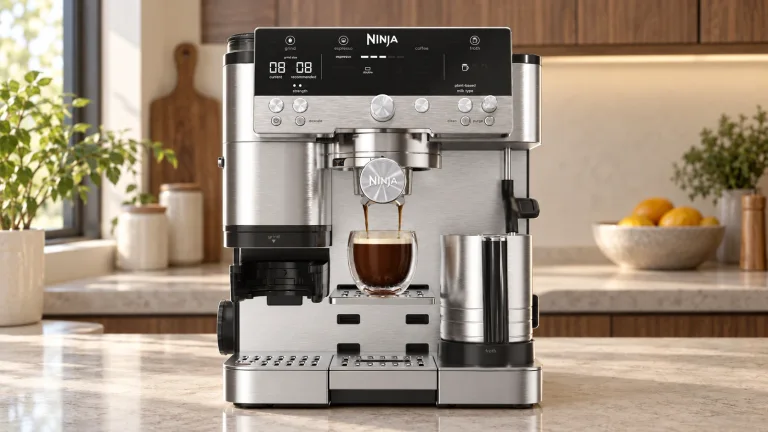
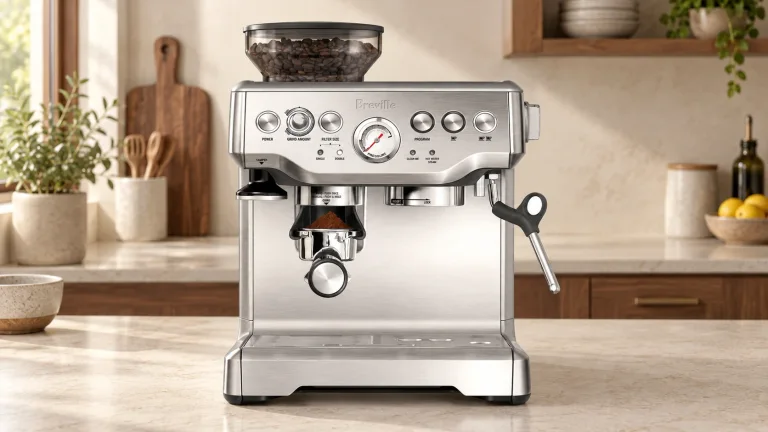
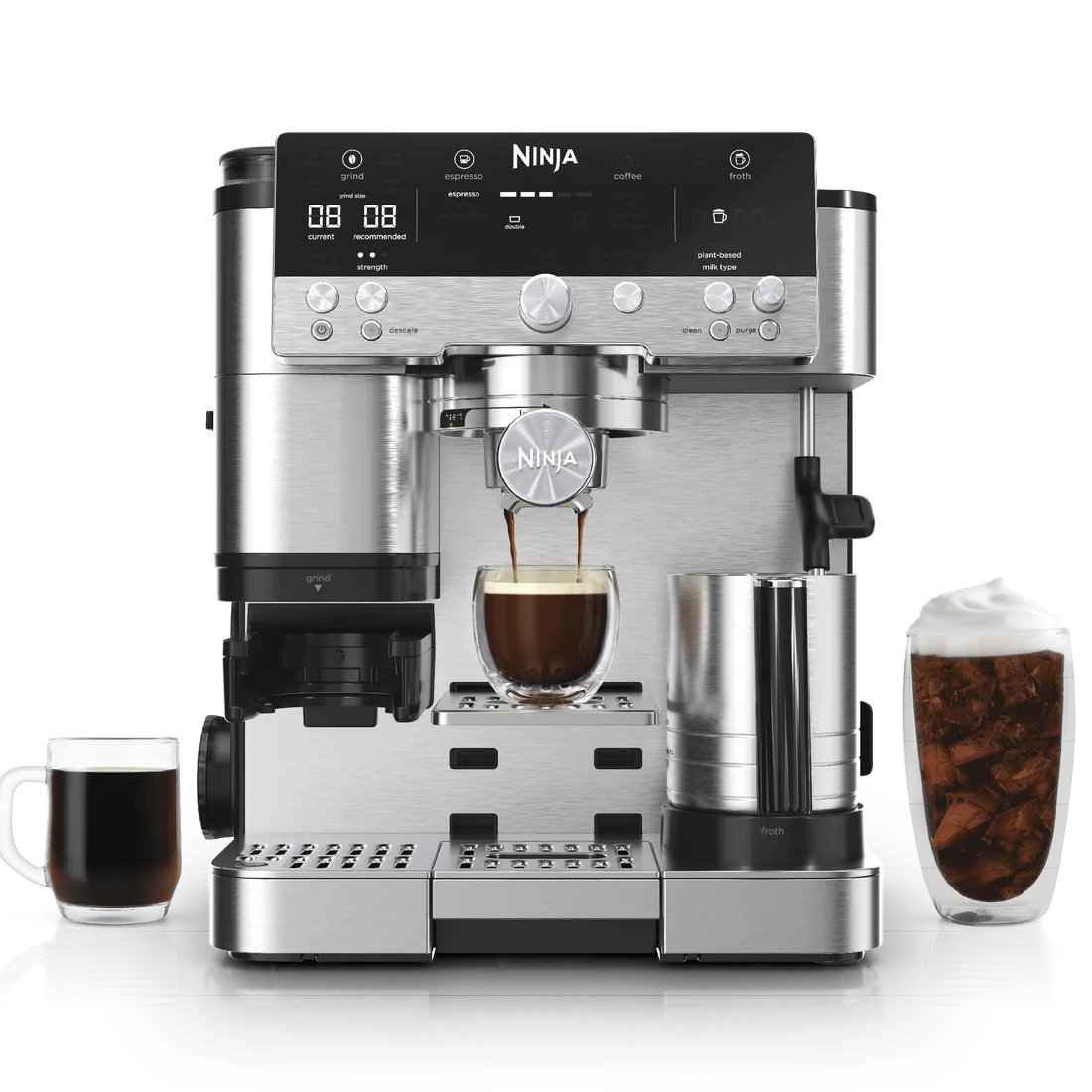
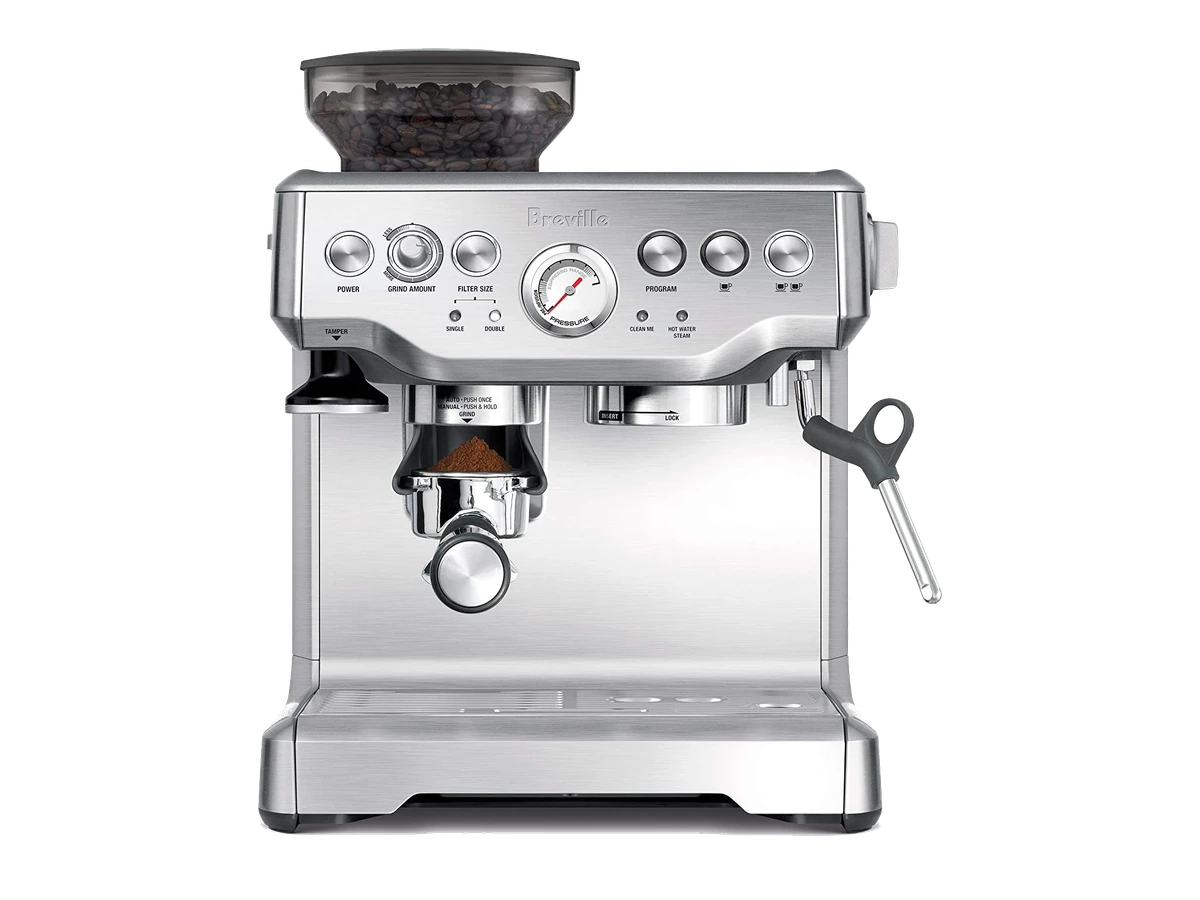
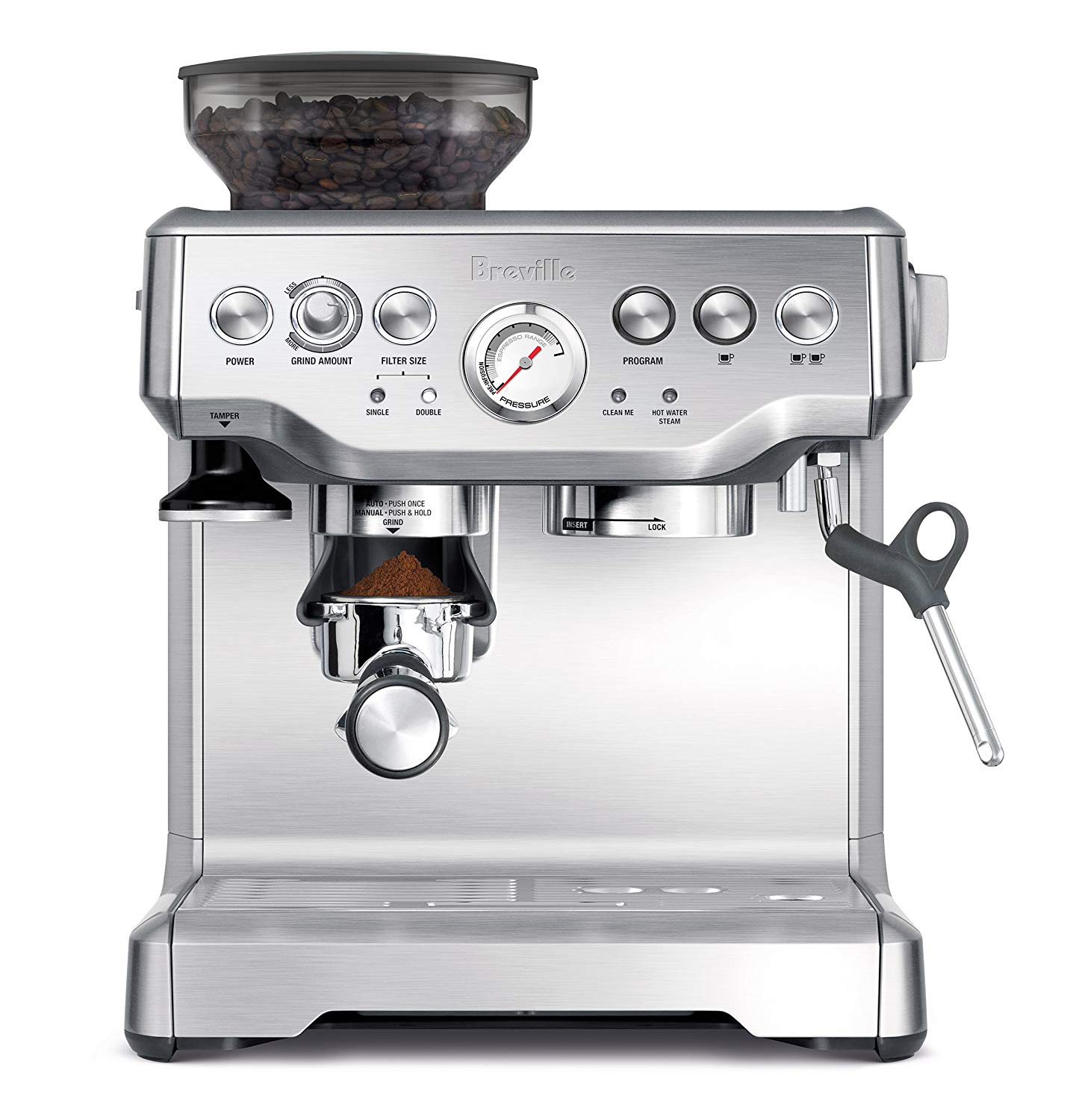
Ninja prohibits operation under wall cabinets or inside appliance garages. A machine fitting on the shelf does not make that a suitable brewing location. The product photos below help identify the controls and access points; they are not shown to a common physical scale.
The everyday difference
Start with the kit you already receive.
The standard Breville package includes its 54 mm handle, baskets, tamper, dosing funnel, Razor tool, jug and starter care supplies. The Ninja supplies its handle and baskets, funnel, assisted tamper, milk jug and whisk, plus starter cleaning items. Check a used or open-box listing carefully: missing proprietary pieces can change the apparent saving.
A small scale is a useful addition if you want to compare a weighed espresso recipe on the Breville. On the Ninja, buy one for a specific task such as checking beverage yield; an extra scale is not required merely to repeat the machine’s guided dosing.
A knock box and washable cloths help organize either station. These are convenience purchases, not claims that an upgraded accessory will improve extraction. Make your first few drinks before deciding what creates a real nuisance.
Replacement baskets, handles and milk jugs need exact compatibility. A matching nominal diameter does not establish that a handle locks correctly, and an ordinary jug is not automatically a replacement for Ninja’s frothing jug. Use the maker’s model-specific parts information instead of ordering a generic bundle of “barista upgrades.”
The everyday difference
Cleaning and purchase price both count.
Both setups require attention to milk residue, spent grounds and the drip tray. With the Breville, the flashing cleaning indication calls for the tablet cleaning cycle; a solid indication calls for descaling. These are different jobs. Ninja also has separate cleaning and descaling cycles; finish the prompted rinse.
For supplies, Ninja’s ES601-compatible kit contains tablets, descaling packets and filters; the filter housing is separate. Breville’s eight-tablet pack was listed at $14.95 on October 12, 2026, but was out of stock. Tablets are not descaler, and a pack price does not establish annual maintenance cost. Water conditions and the machine’s instructions determine the relevant care.
The Amazon listings checked that day showed $599 for the Premier and $499.95 for the brushed-stainless Barista Express: a $99.05 difference in Breville’s favor. Promotions can reverse the value argument. Compare the final prices for the exact versions, including any missing essentials, before deciding what automatic milk is worth to you.
At the same bean price and daily coffee dose, bean spending is equal; this comparison provides no basis for claiming that either machine consumes less. Milk, water, electricity, repairs and wasted dialing-in shots are separate costs. Use your own likely purchases rather than a speculative café-savings promise.
Both US products list a one-year limited warranty. Review Breville’s terms and Ninja’s supplied warranty for coverage and purchase requirements. Keep the receipt; a large owner-review history does not substitute for warranty eligibility.
Dated owner evidence
Owner scores need the size of the sample.
Breville has the higher displayed score and a substantially larger rating pool. That supports giving its owner history serious weight. It does not turn a pooled listing into a controlled test against Ninja, or establish a failure rate. These are global ratings shown on Amazon.com, not counts of US written reviews.
Premier: convenient assistance
What owners appreciated: guided preparation and automatic milk.
What to check: the learning curve, a firm handle lock, tray emptying and whether the lack of a hot-water outlet matters.
Barista Express: control and commitment
What owners appreciated: an integrated espresso setup and room to adjust the routine.
What to check: tight portafilter engagement, ongoing cleaning and reports of component or service problems alongside long, satisfactory ownership.
Use the return period to make your normal drinks, not just the easiest demonstration shot. Have every regular user fit the handle, empty the tray and prepare milk. A machine that you find awkward to clean or operate is a poor fit even when thousands of other owners like it.
Keep these handy
The official instructions for each machine.
Match the model on the rating label to the manual before following a cleaning cycle or buying replacement parts.
Premier · ES601
ES601 / ES600 series. Check the illustrations and included basket against your machine; some series instructions cover additional models.
Open official owner’s guide ↗Barista Express · BES870XL
US/Canada BES870 instructions. This is the original Barista Express, not the Impress or Barista Pro.
Open official owner’s guide ↗Choose your routine
Check the exact model before buying.
We may earn a commission from purchases through shopping links.
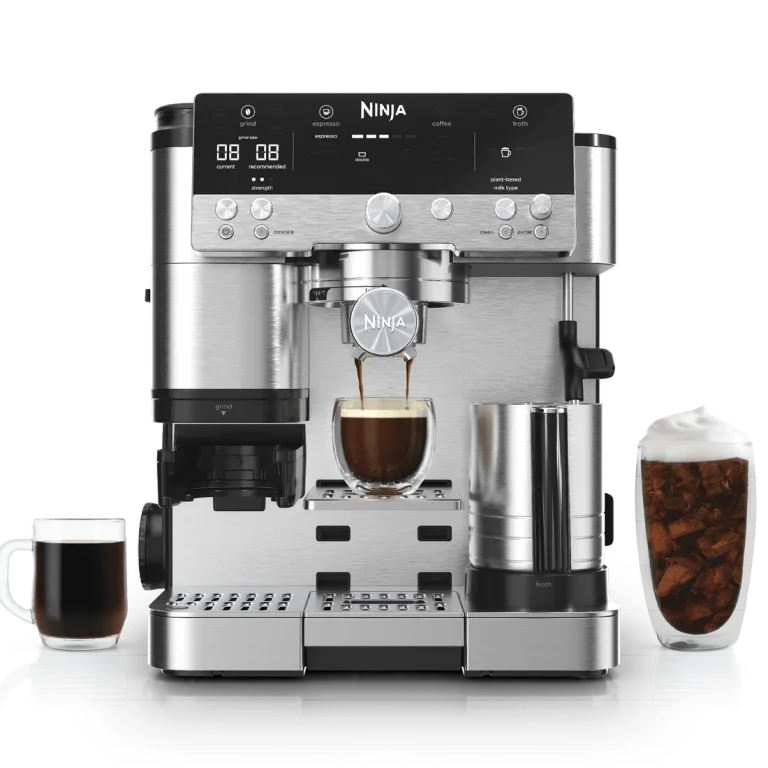
Premier ES601
The more useful choice when regular coffee and automatic milk matter alongside espresso.
Check Premier at Amazon ↗Explore the full review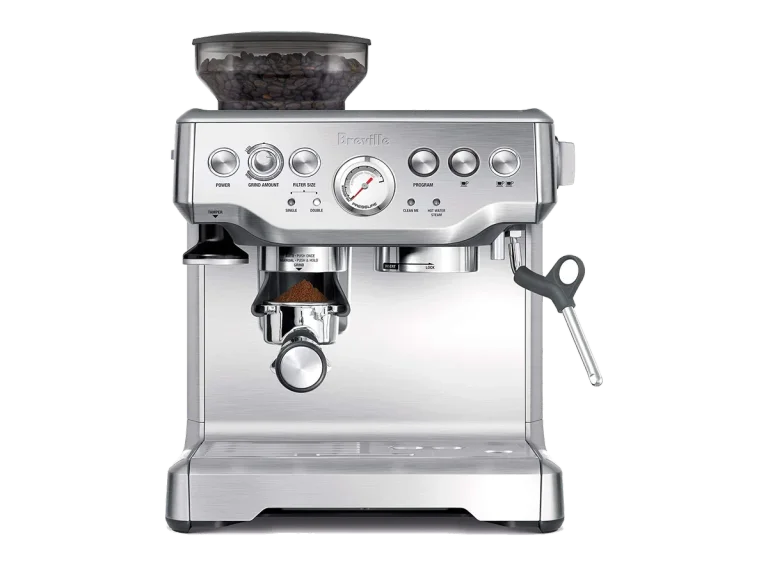
Barista Express BES870XL
A manual espresso routine with a substantial owner-rating history. Check BES870XL and the selected finish.
Check Barista Express at Amazon ↗Explore the full reviewBefore you decide
Your comparison questions, answered.
Is this the Barista Express Impress?
No. This comparison is about the original US BES870XL. The Impress is a different model with an assisted tamping system; do not transfer its workflow or listing reviews to the original.
Does the Breville make better espresso?
The verified differences support a choice about controls and workflow, not a universal taste ranking. Choose the Breville if you want to manage that routine yourself; do not buy it on an unsupported promise of a higher espresso ceiling.
Should I buy a separate grinder immediately?
Neither purchase requires that as a starting assumption. Learn the included setup first. If you already have a grinder you prefer, compare a machine without an integrated grinder before paying for duplicated equipment.
Which is better value when the prices change?
Compare the checkout totals and the jobs each machine would replace. Paying extra for automatic milk can be worthwhile if you will use it daily; it is poor value if you only drink straight espresso. The price tool should use the prices you can actually buy today.
Manufacturer sources
- Ninja Premier ES601 features
- Ninja espresso family comparison
- Ninja ES600-series US owner’s guide
- Breville Barista Express BES870
- Breville BES870 US/Canada owner’s guide
- Breville BES870 support and tutorials
- Breville steam-wand cleaning
- Ninja ES601 cleaning-supply kit
- Breville cleaning tablets
- Breville US warranty terms