
Coffee Corner Buying Desk · Updated October 19, 2026
Best hybrid coffee makers for mixed coffee routines
A hybrid earns its counter space only when it replaces two routines cleanly. We compared four machines that cross real brewing systems—not models with a decorative “bold” button and a longer menu.
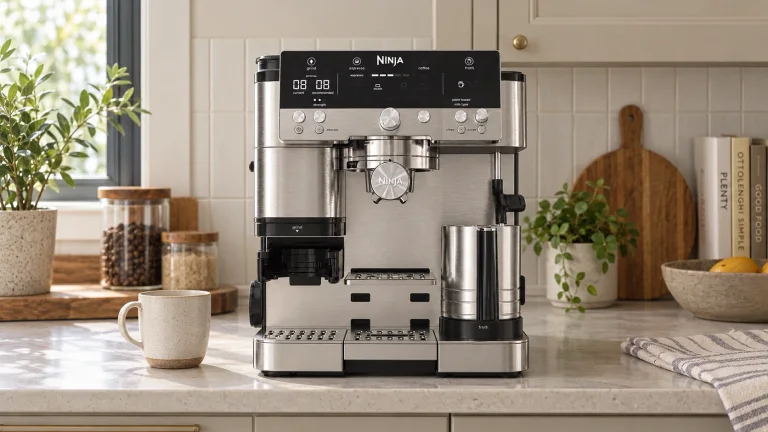
I would not buy a hybrid just to collect drink buttons. The useful question is whether two people can approach it with different expectations—one wants a quick mug, one wants a cappuccino—and both can leave the kitchen without moving appliances around. If the brewing category itself is still unclear, start with our Coffee Maker Quiz.
That is why the four picks below are intentionally unlike one another. The Ninja pair use fresh beans and assisted espresso logic; our full Ninja Luxe Café Premier review compares the specifications, workflow, and attributed owner feedback. De’Longhi places a conventional drip brewer beside a pump espresso system. Keurig bridges loose grounds and K-Cup pods. Start with the split in your household, then choose the machine.
60-second decision
Which two routines are you trying to combine?
Comparison matrix
The trade-offs in one screen
| Machine | Hybrid lane | Grinder | Milk | Batch | Owner record |
|---|---|---|---|---|---|
| Ninja Luxe Café Premier ES601 | Espresso + coffee + rapid cold brew | Built in, 25 settings | Hands-free hot and cold foam | Single cups, not a carafe | 4.2 / 5 · 2,569 global ratings |
| Ninja Luxe Café Mini ES301 | Espresso + coffee over ice | Built in, 60 settings | Manual steam wand | Single cups, not a carafe | Compare the exact regional ES301 offer |
| De'Longhi All-in-One COM532M | 10-cup drip + espresso | Separate grinder required | Manual steam wand | 10-cup glass carafe | 3.6 / 5 · 3,794 global ratings |
| Keurig K-Duo Gen 2 | K-Cup pods + ground-coffee carafe | Separate grinder optional | None | Carafe plus single serve | 4.1 / 5 · 7,020 global ratings |
Amazon.com scores and global rating totals checked October 18, 2026. Totals can pool variants and older purchases; they are not US-only written-review counts. The Mini is linked to its manufacturer offer.
The picks
Four hybrids, four different jobs
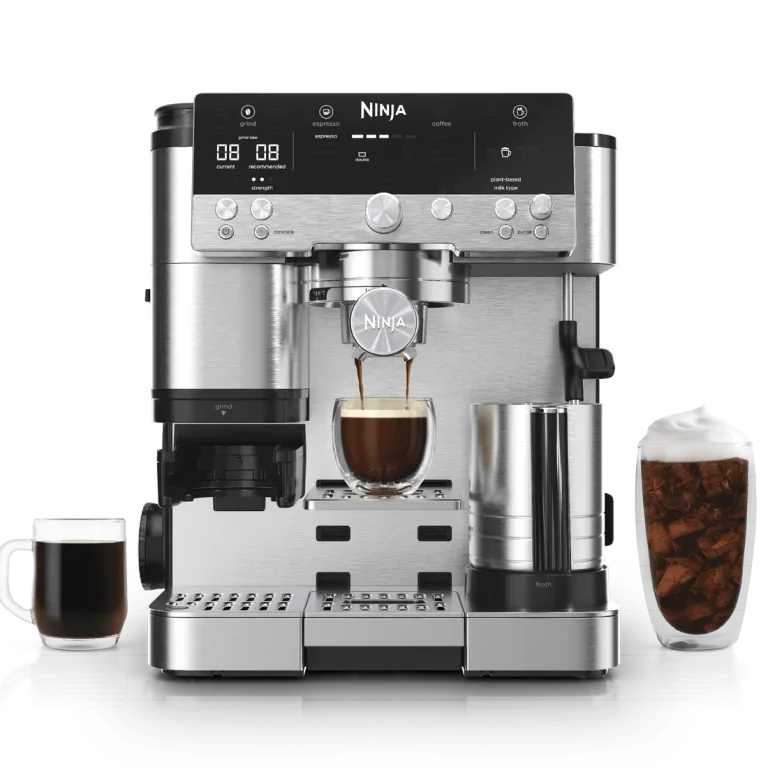
Ninja Luxe Café Premier ES601
The strongest choice when one counter has to cover espresso, mugs of coffee, iced drinks, and milk drinks with guidance for grinding and dosing. You still move and tamp the portafilter.
The Premier’s advantage is guidance: it recommends grind size, weighs the dose, and handles hot or cold foam without holding a pitcher. Its limitation is equally clear: it makes individual drinks, not a ten-cup breakfast carafe.
- Best for: Espresso + coffee + rapid cold brew
- Main compromise: Large footprint and no carafe
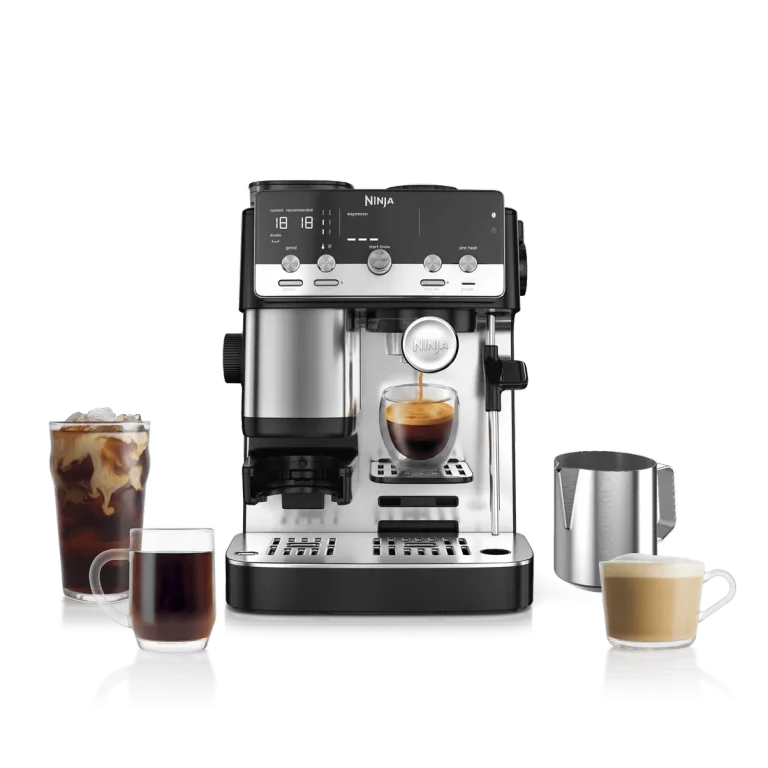
Ninja Luxe Café Mini ES301
The better fit for a smaller counter and a buyer willing to texture milk by hand. You give up Premier’s rapid cold brew and hands-free frothing.
The Mini keeps the scale, assisted tamping, and broad grinder range, then hands milk texture back to you. That makes it narrower in both body and mission. Buy it because you enjoy—or at least tolerate—a manual steam wand, not merely because it costs less.
- Best for: Espresso + coffee over ice
- Main compromise: Manual milk and fewer cold options
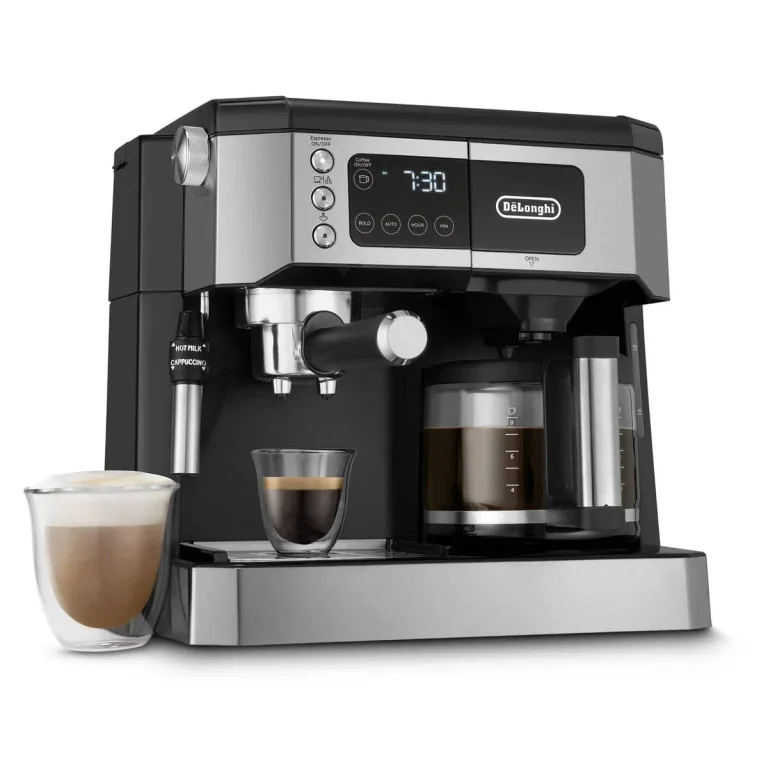
De'Longhi All-in-One COM532M
The useful old-school hybrid: one side makes a breakfast pot while the other pulls espresso. Dual heating is more consequential than the 15-bar headline.
De’Longhi’s dual heating system lets the drip and espresso sides operate together. That matters in a mixed household. The glass carafe, separate grinder requirement, manual wand, and two brewing paths also mean more pieces to wash. Ignore “15 bar” as a buying shortcut; workflow, coffee freshness, and shot preparation matter more than the pump’s maximum rating.
- Best for: 10-cup drip + espresso
- Main compromise: Two brew paths to clean; no grinder
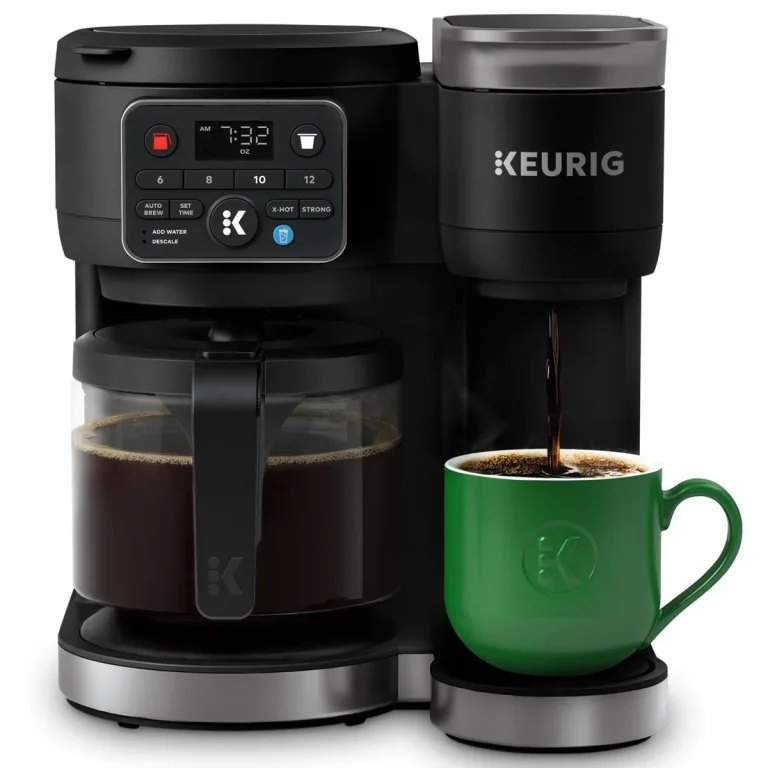
Keurig K-Duo Gen 2
Choose it when “hybrid” means a weekday pod for one person and a weekend pot for everyone—not espresso, grinders, or milk texture.
Keurig’s 72-ounce shared reservoir feeds both K-Cup and carafe routines, with Strong and iced settings. This is the least ambitious cup in the group and possibly the most practical: there is no espresso pretense, no milk hardware, and no demand that every person use coffee the same way.
- Best for: K-Cup pods + ground-coffee carafe
- Main compromise: Pod cost and no espresso or milk system
The owner record changes the shortlist
Premier’s 4.2 average across 2,569 global ratings supports considering its guided workflow, with learning time and cleanup still part of ownership. K-Duo’s 4.1 from 7,020 is a larger history for a different job: pods and shared pots. Neither is a universal winner.
COM532M’s 3.6 from 3,794 deserves more caution. Positive buyers value the two brewing systems, but critical feedback includes faults and service frustrations. Compare the cost and space of separate drip and espresso machines before choosing it. If one side of a combined appliance fails, the repair decision affects the whole setup.
Picture the second drink
For two milk drinks on Premier, finish the first extraction and milk routine, empty the basket and prepare a fresh dose before repeating. A larger menu does not create a second brew group. Mini adds manual steaming to that sequence. COM532M’s dual heating can run its drip and espresso sides together, but you still prepare the espresso and steam milk. K-Duo’s carafe is useful when several people want ordinary coffee at once.
Compare a year of your actual routine
At two pods a day, a hypothetical $0.60 pod costs $438 a year before milk. Two 18 g espresso doses daily use about 13.1 kg of beans a year; at an example $25 per kilogram, that is about $329 before dialing-in waste. Those example prices are not live offers. Add the grinder where needed, filters, cleaning supplies and the parts you would have to replace.
How we judged
A hybrid has to be better than owning the wrong two machines
We rewarded machines that cross meaningful brew methods, not minor recipe variations.
Tank access, grinder steps, milk cleanup, carafe handling, and the number of loose parts all count.
A solo latte drinker and a four-mug family should not receive the same recommendation.
Retailer feedback was used for recurring workflow signals, never as proof of laboratory performance.
Before you commit
The counter-space bargain has a maintenance clause
A hybrid compresses two routines into one footprint, but it rarely cuts cleaning in half. Espresso grounds, milk residue, drip baskets, pod needles, and shared reservoirs each keep their own schedule. If your household will ignore half the machine, use our espresso-machine guide to choose the simpler specialist instead.
- Measure above the machine. Bean hoppers and rear tanks need cabinet clearance, not just counter width.
- Count daily drink makers. Single-cup hybrids can bottleneck a household that wants four mugs at once.
- Price the missing pieces. De’Longhi needs a capable grinder; Keurig creates a recurring pod decision.
- Choose your milk tolerance. Hands-free frothing is convenient, but every milk path still needs immediate attention.
Hybrid coffee maker questions
What is a hybrid coffee maker?
A hybrid coffee maker combines different brewing workflows, such as espresso and drip coffee, or pods and a ground-coffee carafe. Extra cup sizes alone do not make a machine hybrid.
Can a hybrid coffee maker replace two machines?
It can, if both brewing systems suit your household. Check serving capacity, milk preparation, and whether the two sides can operate together. Separate machines can offer more control and let you replace one brewer without replacing both.