Who should choose the Mini ES301?
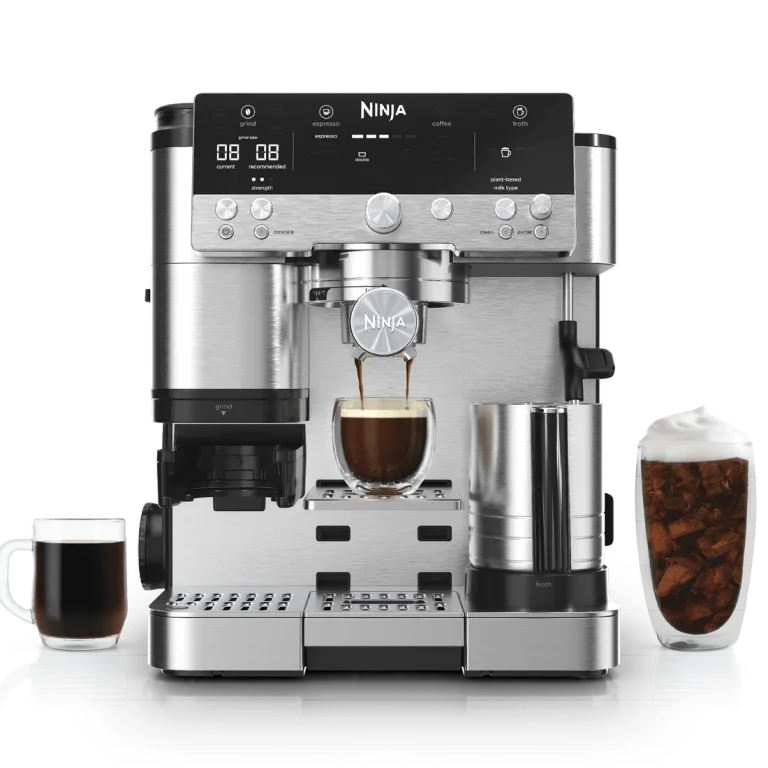
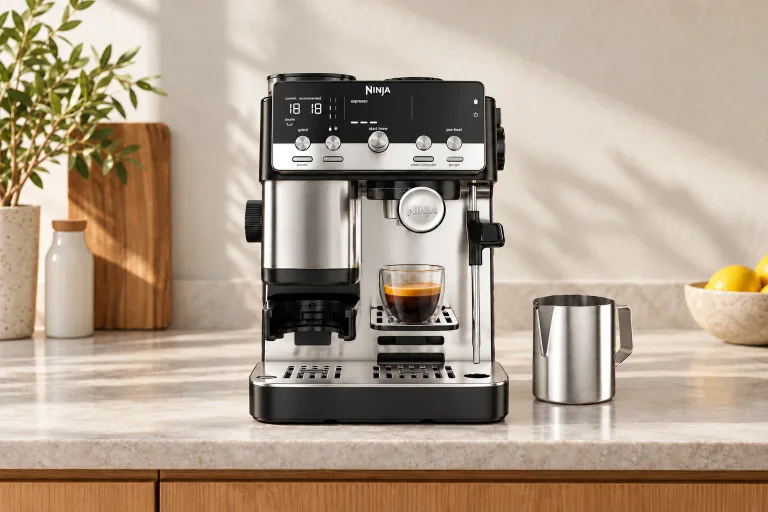
Choose the Ninja Luxe Café Mini ES301 if you want help with grinding and dosing but want to steam milk yourself. It combines a grinder, dosing scale, espresso maker and single-cup coffee brewer. You still handle the portafilter, prepare the grounds and clean the milk tools. That division of work is the main reason to choose it.
Check the model number before comparing prices. The US ES301 has a manual steam wand. The ES351 Mini Plus AutoFroth adds three automatic hot-milk programs. A listing with “Mini” in its title can refer to either. For larger coffees, automatic cold foam and additional cold-drink options, see our Premier versus Mini comparison.
The Mini makes more sense for someone who alternates between espresso and a mug of coffee than for someone who only needs a pot of black coffee. Our hybrid coffee-maker guide covers those broader choices. Here, the useful question is whether the ES301's daily routine fits yours.
The basket and tamping table
Select the drink, size and strength before grinding. The dose belongs to that selection. The US ES301 owner's guide makes an easily missed distinction: a small coffee uses different preparation depending on which basket is fitted.
| Drink selection | Basket | Prepare the grounds |
|---|---|---|
| Double espresso | Double | Tamp with the supplied tamper and funnel. |
| Triple espresso | Luxe | Tamp with the funnel, remove it, then tamp once more. |
| 6 or 8 oz coffee | Double | Tamp. |
| 6 or 8 oz coffee | Luxe | Gently shake to level the grounds; do not apply the large-dose tamping step. |
| 10 or 12 oz coffee | Luxe | Tamp. |
Coffee choices are Classic, Rich and Over Ice. Over Ice brews coffee onto ice; it isn't a cold-brew program. Fill an appropriate glass with ice before brewing and allow enough room for the finished drink. The ES301 doesn't offer the Premier's larger coffee selections.
Ninja gives approximate standard-strength espresso outputs of 1.5 US fl oz for a double and 2.3 US fl oz for a triple, with roughly 10% variation. Strength changes also alter espresso output. These are cup-planning estimates, not guaranteed yields: a triple isn't simply one and a half identical doubles.
Fit the funnel before grinding. Slide the portafilter flat and fully back into the cradle, then let go so the scale can tare. Holding some of its weight interferes with dosing. If you grind for the wrong drink, the manual's reset is to discard the grounds, switch off and on, then select again.
Grind guidance still needs your input
The grinder has 60 settings, from fine at 1 to coarse at 60. Barista Assist displays a recommendation, but you turn the grind dial to match it. The machine isn't physically moving that dial for you. With new beans, Ninja says espresso guidance can take two or three brews to settle.
Start with the displayed recommendation and the correct basket preparation. A poor result caused by an untamped espresso dose won't be fixed sensibly by chasing random grind numbers. Keep one bean in the hopper while learning the routine. Switching between regular and decaf means emptying the hopper and clearing retained beans, rather than selecting a second stored coffee.
Use the included water-hardness strip during setup and set the matching hardness level. Then complete the manual's first-use flush. That setting helps the machine schedule descaling for your water; it isn't a substitute for responding to the maintenance alert.
Manual milk: the work you are choosing
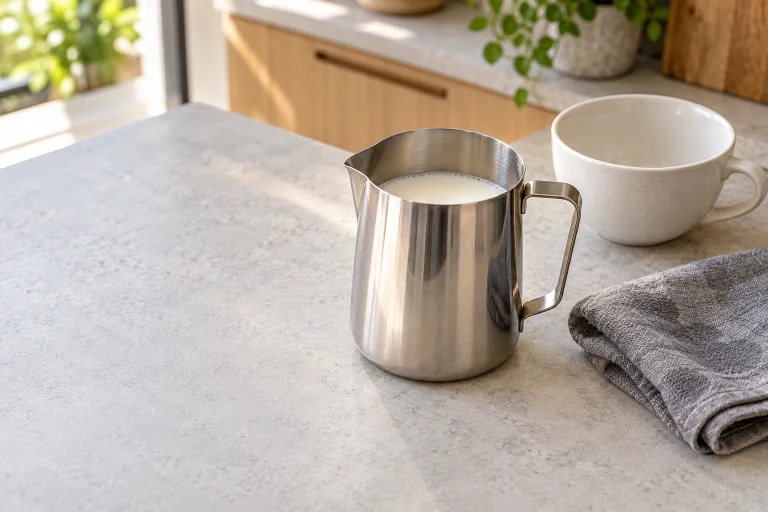
The ES301 won't stop steaming at your preferred milk texture for you. Have cold milk, the supplied jug and a damp wiping cloth ready. Stay within the jug's fill markings so the milk has room to expand. Ninja also provides an ES301 manual-frothing guide through BILT.
 AI
- Press PREHEAT and wait for the ready check mark. Position the wand in the milk as the manual shows, off-center near the jug wall, then turn the valve to STEAM.
- Establish a circulating vortex. Lower the jug slightly so the tip approaches the surface and introduces air. Ninja's starting points are 5–7 seconds for thinner foam or 8–12 seconds for thicker foam.
- Raise the jug to submerge the tip more deeply and finish heating without continuing to add lots of air. Turn the valve back to BREW before removing the wand from the milk.
- Immediately wipe the wand carefully with the damp cloth. Point it down over the tray, turn to STEAM for the manual's 10-second purge, then return to BREW. Keep hands away from the hot wand and steam jet.
Those aeration times are starting points, not a promise of identical foam from every milk. If you're mainly buying for effortless lattes, compare the AutoFroth model before paying for this one. If learning that short manual sequence is part of the attraction, the ES301's simpler milk system has a clear purpose.
A closer look
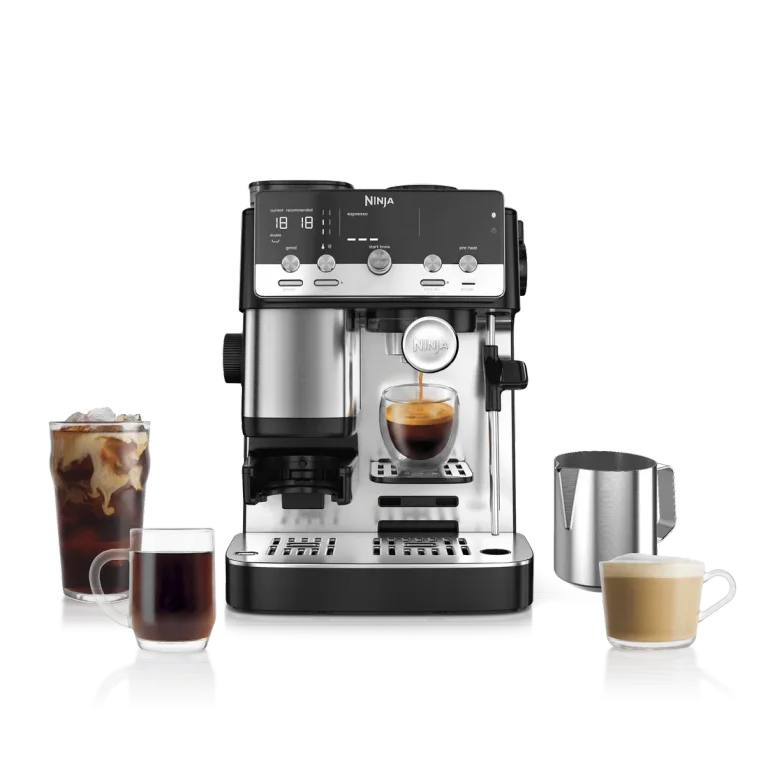
Details worth noticing.
Product detail views: SharkNinja
Plan the second drink before the first
For a latte followed by a 12 oz black coffee, lay out both baskets and cups first. The changeover adds a basket swap and a fresh dose, so leave a clear place for the used parts.
| Stage | What changes | Check before continuing |
|---|---|---|
| Latte espresso | Double basket; select espresso, grind and tamp. | Latte cup has room for milk. |
| Milk | Preheat, steam manually, wipe and purge. | Steam valve has returned to BREW. |
| Reset | After brewing ends and pressure releases, remove the portafilter; discard grounds and clean it. | Basket and portafilter are dry before the next grind. |
| Black coffee | Fit Luxe basket; choose 12 oz Classic or Rich, grind and tamp. | Different cup in place; tray has capacity. |
Don't remove the portafilter during brewing. The machine and used grounds are hot, so handle the reset accordingly. With two milk drinks, each person adds a fresh milk-preparation step; there is no cold-foam setting on the ES301. Budget for this handling time rather than assuming café-style simultaneous brewing and steaming.
Counter space means access, too
The published dimensions are easy to misread. Ninja labels them 10.24 inches long, 12.17 inches wide and 13.43 inches high; retailer listings may order the axes differently. Don't use “10.24-inch width” as a cabinet-fit promise. Check the actual orientation, then allow access to the hopper, water tank, portafilter and removable tray.
More importantly, the manual says not to operate the machine under a wall cabinet or in an appliance garage. Choose an open operating position with a suitable outlet; don't use an extension cord. Reserve counter space beside it for tamping and a hot jug. Our coffee corner layouts can help you organize that working area.
The supplied kit includes the double and Luxe baskets, portafilter, funnel, tamper, milk jug and starter care supplies. You don't need to buy a second grinder or dosing scale to begin. A separate scale is optional for independent recipe records, not a missing part of the basic setup.
Cleaning is three different jobs
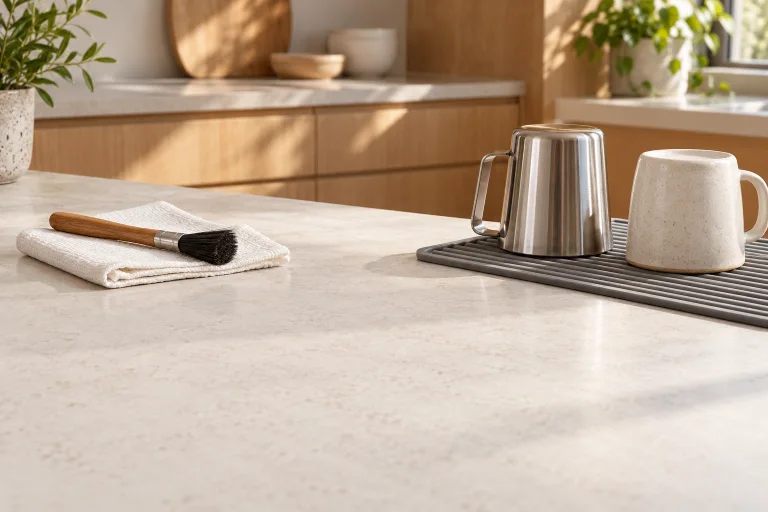
Wash coffee-contact parts after use and keep the steam wand clean after every milk drink. Hand-wash the portafilter and baskets rather than treating the whole kit as dishwasher-safe. Dry the basket before the next grind, and check the tray's float frequently.
 AI
- Grinder care: unplug before opening it and follow the manual's removal sequence. Use a dry brush, never water, on the burrs. Ninja recommends weekly cleaning with daily use, more often for oily or dark beans, and monthly for less frequent use.
- CLEAN: the approximately six-minute coffee-oil cycle uses the double basket, cleaning disc and one suitable cleaning tablet.
- DESCALE: mineral removal takes about 90 minutes and includes separate valve positions for the steam and brew stages, followed by rinsing. Follow the complete instructions and the specified product dilution.
A cleaning tablet doesn't replace descaler, and descaling won't clear oily grounds from the grinder chute. Keep the ES301 manual and care page handy before either cycle. The supplied starter chemicals won't cover the machine's lifetime, so include replacements in your running-cost estimate.
Troubleshooting: choose the next step by the symptom
These distinctions come from the US manual. They help separate an adjustment from a condition that needs support.
- ADD BEANS with beans present: distinguish an empty hopper from grounds accumulating in the chute. Switch off and unplug, then follow the dry-brush chute-cleaning procedure. After reassembly, check whether grounds flow again. Don't pour water into the grinder.
- Sour espresso with a fast, pale pour: confirm the correct tamped basket first, then follow the finer grind recommendation. On the next shot, observe whether the pour slows and the sourness eases. A machine that stops or leaks needs a different response.
- Milk is hot but foam is too thin: the air-introduction phase may have been too short. Ninja suggests adding 2–3 seconds of aeration on the next jug, then submerging the tip to finish. Look for more foam without continuing to inflate it throughout heating.
- Coffee cools quickly in the cup: distinguish a cold vessel from a brewing fault. Run the manual's water-only double through the portafilter into that cup, discard the water and dry before dosing. Observe whether the next drink stays warmer.
- Water underneath: check the tank seating and whether the tray is overflowing. If leakage persists with both corrected, stop using the machine and contact Ninja. Don't treat recurring water beneath an electrical appliance as normal purging.
Questions before you buy
Can I use it without a kitchen scale?
Yes. The built-in scale doses into the correctly seated portafilter for the selected drink. Use the supplied funnel and let go during tare. No scoop-to-gram conversion or weighing spoonfuls is needed.
Does it make single espresso or cold foam?
No. Its espresso choices are double and triple, and its wand is for manual hot-milk steaming. Choose a different model if single-shot presets or automatic cold foam are essential.
Is the higher Amazon score enough to choose it over the Premier?
No. The Mini's owner-rating base is much smaller, and the machines serve different milk and drink preferences. Positive ES301 owners like the combined setup and guidance; critical reports include grinder failures and leaks. That makes seller support and return terms relevant, without establishing how often faults occur.