
Coffee history is a story of movement: seeds, traders, empires, cafes, machines, workers, brands, and daily rituals crossing borders again and again.
The drink changed every time it entered a new place, technology, and social setting.
- Origin stories
Legends helped coffee become memorable before written records became clear.
- Coffee houses
Public coffee spaces made the drink social, political, and commercial.
- Global farming
Coffee spread through trade, colonial systems, and difficult labor histories.
- Modern rituals
Instant coffee, chains, pods, and specialty roasters each changed daily habits.
Legend, evidence, and the first coffee cultures
Coffee history often begins with legend because the Kaldi story is memorable: goats, red cherries, and an unexpected burst of energy. It is a good doorway, but the more reliable story moves through Ethiopia, Yemen, Sufi communities, trade routes, and coffee houses where the drink became social rather than only functional.
By the time coffee reached Ottoman coffee houses, it was already more than a stimulant. It was a reason to gather, debate, listen, read, trade news, and spend time outside the home. That public role explains why coffee has always attracted both devotion and suspicion.
Coffee spread through trade, power, and labor
The global spread of coffee was not a simple romance of flavor. It moved through merchant networks, colonial agriculture, forced labor, land pressure, and volatile commodity markets. Any honest coffee history has to hold both truths: coffee built remarkable rituals, and it also grew inside unequal systems.
That history still matters when we talk about origin, transparency, and price. Modern specialty coffee often celebrates farms and processing methods, but the best version also asks who is paid, who takes risk, and how much of the value reaches producers.
Modern coffee is a series of convenience revolutions
Instant coffee changed speed. Electric drip machines changed breakfast. Espresso bars changed urban coffee culture. Starbucks and other chains standardized coffee language for millions of people. Capsules made single-serve brewing effortless. Specialty roasters then pulled attention back toward origin, freshness, and craft.
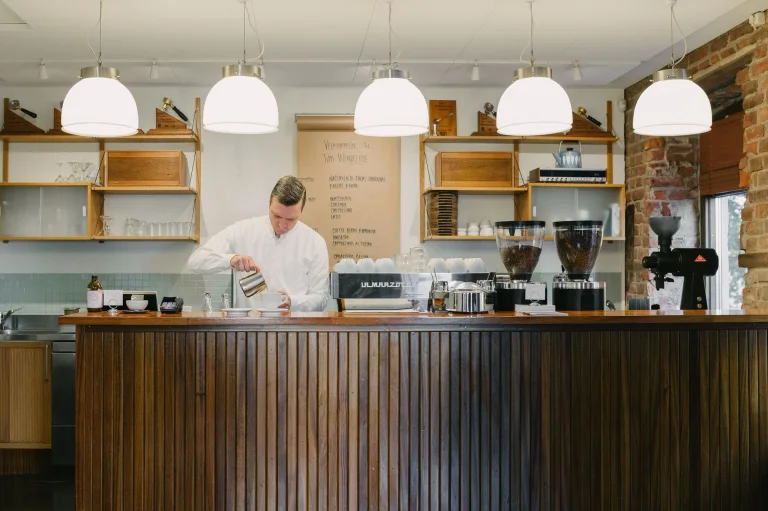
None of those eras fully replaced the others. They now sit side by side: a commuter buys a chain latte, a home brewer uses a scale, an office runs pods, and a weekend drinker orders a washed Ethiopian pour-over. Coffee history is still happening on the counter every morning.
Why coffee history matters to the cup you brew
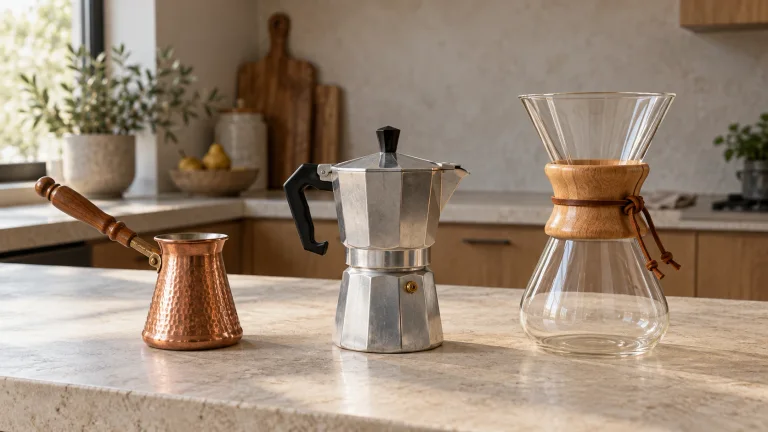
History is not just trivia for a coffee article. It explains why we have paper filters, espresso bars, home drip machines, moka pots, instant coffee, capsule systems, and specialty roasters using farm names on bags. Each habit came from a real need: speed, cleanliness, social life, preservation, taste, or convenience.
That is why a modern coffee drinker can choose better by asking what problem a method was built to solve. Pour-over gives clarity and control. Espresso gives concentration and speed. Pods give consistency and convenience. None is automatically superior; each carries a piece of coffee history into a different daily routine.
Cafes helped turn coffee into conversation and commerce.
Instant coffee and pods changed who brewed and how often.
Modern coffee pays more attention to origin, process, and transparency.
Follow coffee from farm to brewed cup.
Machines History of Coffee MakersSee how brewing equipment evolved.
Facts Coffee Facts AtlasExplore more coffee history and culture.
Your first real memory of coffee might be from watching your parents wrap their hands around the handle of their coffee mug and lean against the counter while a thin line of coffee sputtered into the bottom of the coffee pot.
Knowing where coffee came from adds context to that routine, from the plant itself to the trade and machines that brought it into kitchens.
Coffee’s story combines documented events with legends. It is useful to distinguish the origins of the plant from the later spread of cultivation, coffeehouses and modern brewing equipment.
Where was coffee discovered?
Coffee’s origins are associated with Ethiopia, but the first person to discover or brew it is unknown. The National Coffee Association’s history explicitly treats the familiar Kaldi goat-herder story as legend.
A named discoverer makes a memorable story; it does not establish a verified invention date.
When did the rest of the world catch on?
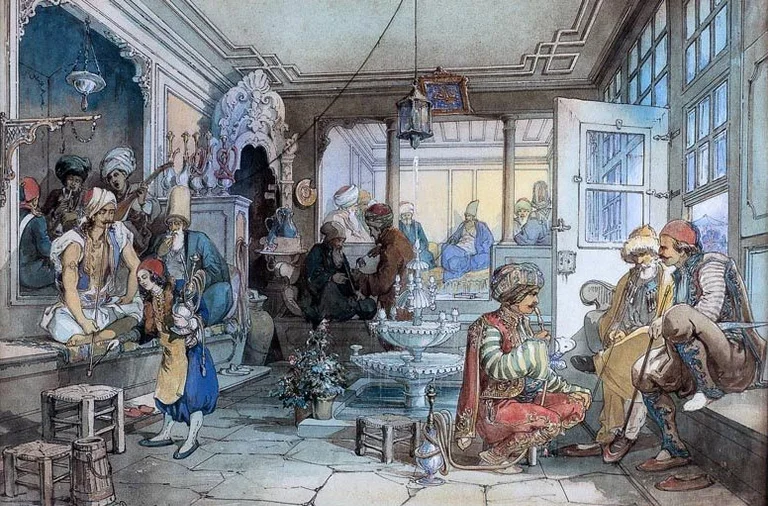
The NCA places cultivation and trade in Yemen by the fifteenth century, followed by wider popularity in Iran, Egypt, Syria and Turkey during the sixteenth. Mocha was an important Yemeni coffee port.
Who are the coffee pioneers that we have to thank today?
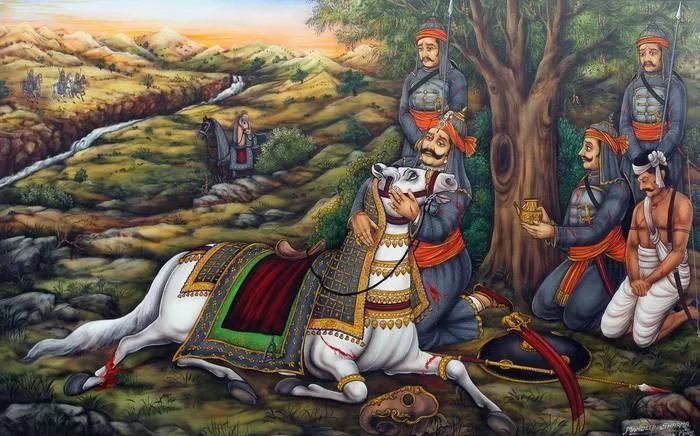
The Coffee Board of India recounts the story of Baba Budan planting seven seeds from Mocha in Karnataka around 1600. Treat the smuggling story as a traditional account, rather than a precise explanation of how one person ended a century-long Ottoman monopoly.
The Board distinguishes those early plantings from the later development of commercial plantations.
How did coffee spread beyond the Arabian Peninsula?
Coffeehouses spread across the Middle East and later Europe, becoming places for conversation, entertainment and news. Coffee did not follow a simple Ethiopia–India–Turkey sequence.
Dutch cultivation expanded in Java in the late seventeenth century.
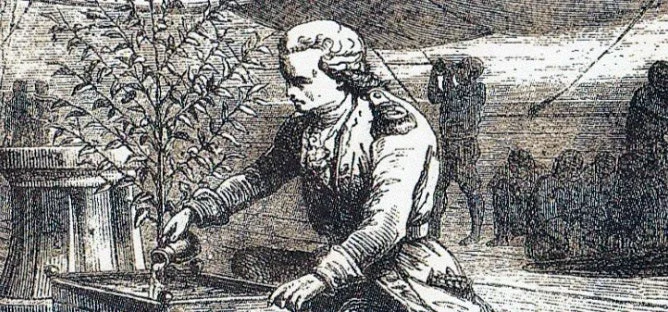
The NCA dates Gabriel de Clieu’s voyage carrying a coffee seedling to Martinique to 1723. It is one well-known episode in coffee’s expansion through colonial trade.
French naval officer Gabriel de Clieu
Espresso developed through successive machine designs. Bezzera dates Luigi Bezzera’s influential patent to 1901; it helped develop coffee prepared at the moment of order. The modern espresso machine did not appear fully formed in one step.
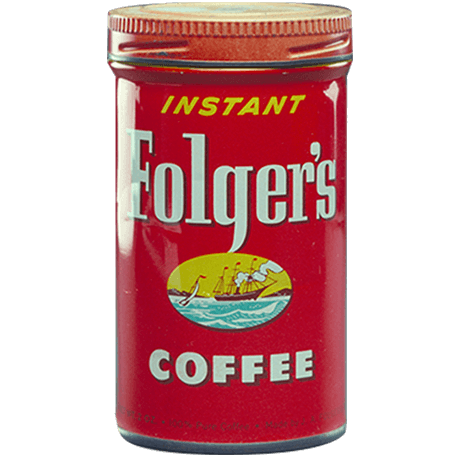
An archived instant-coffee advertisement.
Instant coffee became another route to convenience. For one dated example, Nescafé records its Swiss launch on April 1, 1938. A jar of soluble coffee offered a different preparation method from grinding beans and brewing them fresh.
But how was coffee culture established in the years following the Industrial Revolution?
Convenient home preparation and the social appeal of cafés developed alongside each other. The history of one format is not the history of all coffee drinking.
Starbucks says its first Seattle store opened in 1971 selling whole-bean coffee. Its early retail business should be distinguished from the later coffeehouse model.
One of the first Starbucks coffee shops
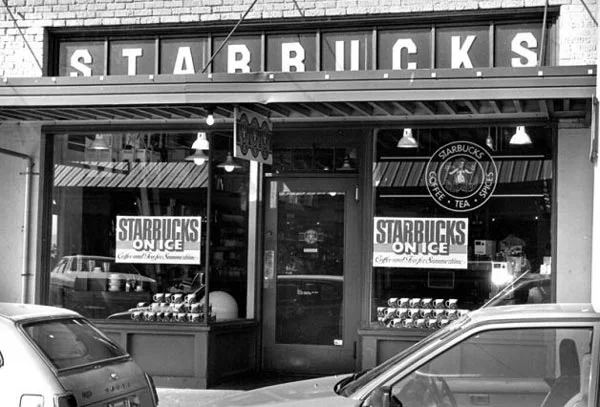
According to Starbucks’ company history, Howard Schultz’s 1983 visit to Italian cafés helped inspire its later direction, and the company became a coffeehouse business in 1987.
Coffee chains helped make a wider range of coffee drinks familiar to more customers. Independent cafés and home brewers are also part of that story.
How did coffee culture evolve after that?
Single-serving brewers offered another approach to convenience: prepare one portion when it is wanted. Keurig’s timeline illustrates how a format can move from offices into homes.
The Keurig K-Cup

Keurig Dr Pepper dates its first commercial brewing system to 1998, aimed at offices, and its first home system to 2004. The original market was therefore not home kitchens.
Different single-serving systems use different pods, capsules and brewing methods. Their histories and drink styles should not be collapsed into one interchangeable format.
Current Day
Today, people are still enjoying their coffee in all kinds of ways. Coffee has become an integral part of a number of fast food chains and restaurants.
Coffee’s history continues through changing tastes, farming practices and brewing equipment. The everyday cup connects drinkers with a story stretching from Africa and the Arabian Peninsula to farms and kitchens around the world.