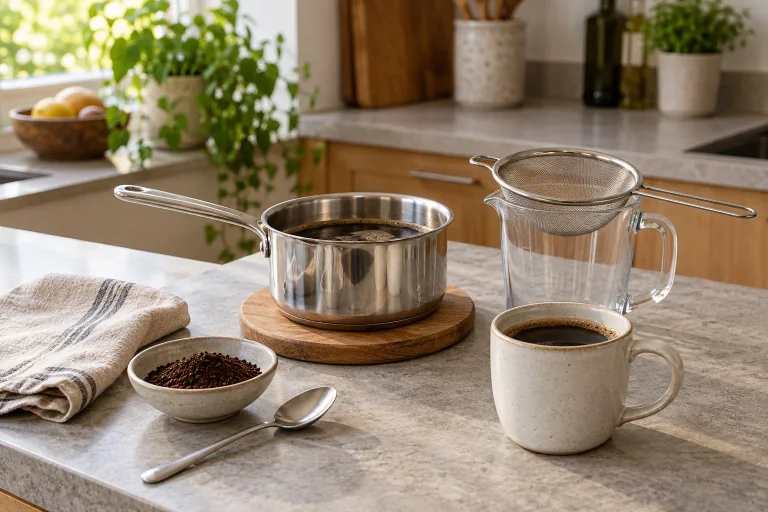
To make coffee without a coffee maker, steep 15 g of coarse-ground coffee in 225 g of hot water in a heatproof saucepan off the heat. At four minutes, strain it into a heatproof mug, or let the grounds settle and pour carefully. If you have instant coffee, follow the package dose and skip filtering entirely.
Instant coffee can also turn vanilla ice cream into an easy dessert. Our affogato recipe explains how to use a small, concentrated coffee serving when espresso is unavailable.
You need something safe to heat water in, a vessel that can handle that hot water, and a way to leave most of the grounds behind. A saucepan and a kitchen strainer can manage that job. They will not make pressure-brewed espresso, and a mesh strainer will leave more sediment than a paper coffee filter.
Choose a method from what you have
| Available equipment | Method | Main limitation |
|---|---|---|
| Instant coffee, mug and hot water | Dissolve according to the package | Use instant granules, not ordinary ground coffee |
| Saucepan and supported food strainer | Off-heat steep, then strain | Fine sediment can pass through the mesh |
| Saucepan but no filter | Steep, settle and carefully decant | Leave the muddy final portion behind |
| Purpose-made coffee bag | Steep in a heatproof mug | Follow its dose, volume and steeping instructions |
| Dripper and matching paper filter | Manual pour-over | A loose filter needs proper support |
| No way to heat water | Instant suitable for cold water, or refrigerated cold brew | Cold brew needs hours; it is not an immediate substitute |
Use fresh drinking water. A failed machine is a reason to change brewing methods, not to keep running a leaking appliance. For a power outage, use a safe alternative heat source according to its instructions; never bring outdoor cooking equipment indoors to make coffee.
The saucepan method: one small cup
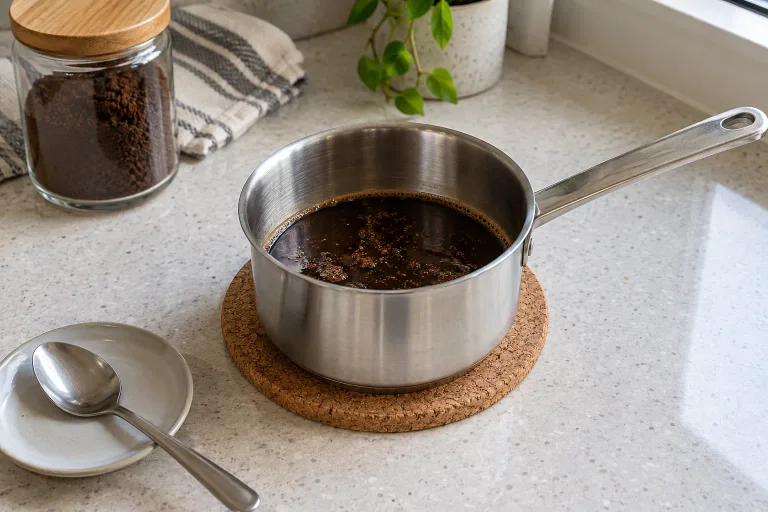
This is an immersion brew: the coffee sits in water before you separate it. The four-minute starting point follows the approach in Stumptown’s French press recipe, with a strainer or careful pouring replacing the press. Keep the pot off the burner during steeping rather than continuously boiling the grounds.
What you need
- 15 g coarse-ground coffee and 225 g drinking water, a 1:15 ratio by weight.
- A clean saucepan with a handle and room above the liquid.
- A spoon, timer and a heatproof mug.
- A food-safe strainer that rests securely across the receiving vessel, if available.
For two small cups, use 30 g coffee and 450 g water, provided the pan and receiving vessel have enough capacity. The water amount is what goes into brewing; grounds retain some, so the finished drink is smaller. Our brew ratio calculator can scale the input without confusing it with the final yield.
Step by step
- Prepare the receiving mug. Put it on a level, heat-resistant counter and set up the strainer before handling hot coffee.
- Heat the water. Bring the measured water to a boil, then take the pan off the heat. Around 205°F (96°C) is a useful recipe starting point if you have a thermometer. A brief cooling pause is approximate, not a guarantee of temperature.
- Add the coffee. Start a four-minute timer and stir gently to wet the grounds. Avoid vigorous stirring that splashes hot liquid.
- Let it steep off the heat. Do not leave the burner running underneath the pan.
- Separate the drink. At four minutes, pour slowly through the supported strainer. Without one, let the grounds settle, then decant gently and stop before the sediment reaches the rim.
- Let the cup cool enough to sip comfortably. Expect some particles, especially with a fine pre-ground coffee.
Keep the batch small enough to lift and pour easily. A wide, full pan is awkward even if it technically holds the recipe. If transferring feels unstable, let it cool and choose a safer vessel rather than holding a filter in one hand and a heavy hot pan in the other.
No scale? Use a repeatable spoon measure
As an approximate alternative, start with two level US measuring tablespoons of grounds per 6 US fluid ounces of water, or four tablespoons for 12 fluid ounces. This is the upper end of the NCA’s general spoon guideline. A measuring tablespoon is about 15 mL; a cutlery spoon is not a consistent measure.
This spoon recipe is a separate volume-based starting point, not a conversion of 15 g into tablespoons. Roast, grind and how tightly you fill the spoon change its weight. Use the same scoop technique each time, then adjust the next cup by taste.
The strainer method: separate after steeping
A kitchen strainer is useful for catching grounds after they have brewed. Pouring water quickly through dry coffee sitting in a broad mesh strainer can give a thin cup because contact is brief. Steep in the saucepan first, then use the strainer to separate the liquid.
Get a cleaner cup
Let the strainer rest securely over a wide-enough heatproof cup or jug. Pour slowly, avoid filling the receiving vessel to its rim, and stop before the thick grounds at the bottom of the pan slide out. Do not press or squeeze the hot grounds to recover the last mouthful.
If you already own a holder and matching paper coffee filter, you can filter the brewed liquid through that supported setup for less sediment. Add a little at a time; wet grounds may slow drainage. Never support a hot, full paper filter with your fingers or improvise a hanging pouch from a paper towel.
Use a purpose-made coffee bag
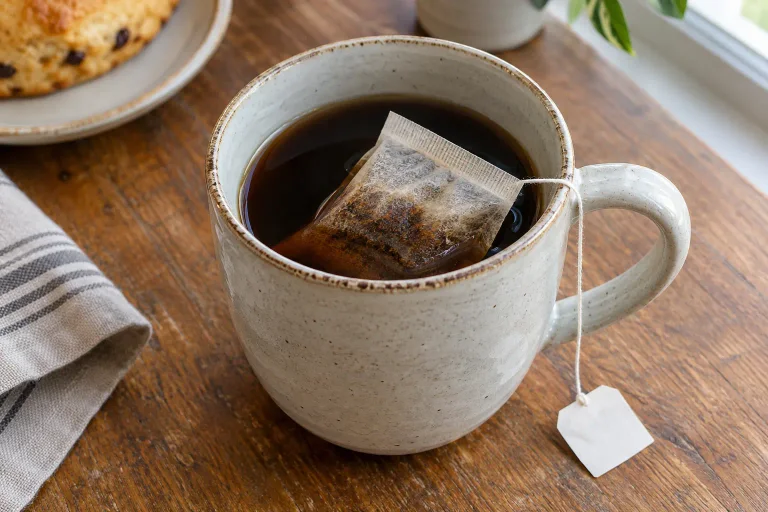
Ready-filled coffee bags and empty bags designed for brewing can keep grounds together while they steep. Use the maker’s instructions for water quantity, steeping time and whether to agitate. An overfilled bag leaves little room for water to reach the grounds; adding more coffee is not always the answer to a weak cup.
Remove the bag before drinking and let it cool before disposal. Household fabric, socks, dyed cloth, random string and scented paper are not substitutes for materials intended for hot food contact. A reusable coffee cloth filter is different: it is made for the job and comes with cleaning instructions.
Cowboy coffee: no filter, careful pouring
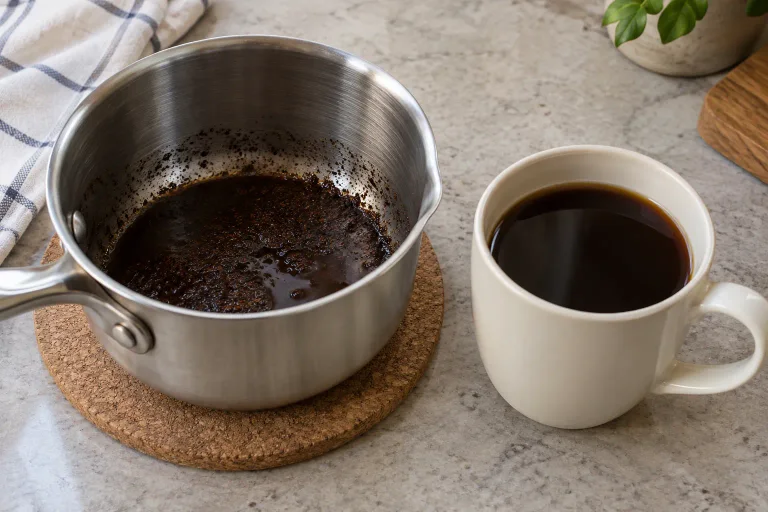
For the no-filter version, use the same off-heat steep, let the grounds settle and pour the clearer coffee from above them. Keep the final muddy portion in the pot. You do not need to add eggshells or keep boiling the mixture to make this work.
Use cookware rated for the actual heat source. A stovetop pan, a camping pot and the body of an electric kettle are not interchangeable. Glass that tolerates a hot drink may still be unsuitable for a burner or sudden temperature changes. Never put an ordinary mug or electric kettle on a stove.
A microwave heats water; it does not filter coffee
Follow your microwave’s instructions and use a microwave-safe vessel. There is no safe universal “two-minute” rule across cup sizes and power levels. The FDA warns that overheated water can erupt when disturbed or when instant coffee is added. Do not exceed the appliance’s recommended water-heating time.
For ground coffee, the separation problem remains after heating. Use the steep-and-strain method with suitable vessels instead of microwaving a mug full of grounds and expecting them to dissolve. A kettle or saucepan gives a simpler workflow when one is available.
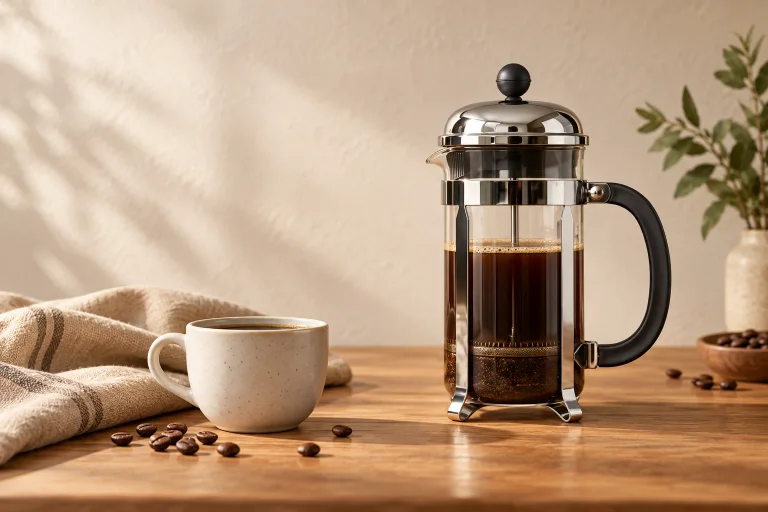
Already have a French press or dripper?
Those are manual coffee makers, even though they need no electrical brewing machine. Use our French press recipe for dose, timing and safe pressing, or our brewing-method guide for pour-over. A filter cone from a broken machine should only be used separately if it is designed to stand securely that way.
Do not force a press plunger through a blockage. Keep a dripper supported by a suitably sized mug or server and leave space for the finished coffee. Having the correct small brewer is usually easier than balancing improvised parts above a cup.
Instant coffee: the simplest fallback
Instant coffee dissolves because it is made from brewed coffee that has been dried. Ordinary ground beans do not dissolve. Start with the dose on your package, add the stated hot water and stir; different products use different serving sizes.
For example, Starbucks’ US Premium Instant guide gives its own hot and iced recipes. Use those amounts only for that product rather than treating a teaspoon as the same strength across brands. Add milk after the coffee is dissolved if that is how you enjoy it.
Only have whole beans?
Use pre-ground coffee if you cannot grind safely
A shop can grind a bag for your brewing method, or you can use a small bag of pre-ground coffee. For this saucepan method, a coarse grind makes separation easier. Regular drip grounds can work with more sediment; very fine espresso grounds are harder to leave behind.
Check the appliance instructions before using a blender
Only grind dry beans in a blender if its manufacturer permits that job with the fitted container and quantity. A blade can produce a mixture of powder and large pieces, making both brewing and filtering less predictable. Do not hammer beans in a fragile vessel or use an unsuitable tool simply because the coffee machine is unavailable.
Fix the next cup, one change at a time
| Problem | Next step |
|---|---|
| Gritty | Let sediment settle, pour more slowly and leave the bottom portion; use a coarser grind next time |
| Weak | Check the measured coffee and water against the recipe before extending time |
| Good flavor, too strong | Dilute the finished cup with a little hot drinking water |
| Strong enough but harsh | Try a slightly coarser grind at the same dose and steep time |
The grind adjustment follows OXO’s immersion-brewing guidance. For a problem that follows you between brewing methods, check the water, coffee age and mug with our coffee troubleshooting guide.
Questions about coffee without a machine
Can I make coffee without hot water?
If you have instant coffee suitable for cold preparation, follow its label. For grounds, make a planned batch using our refrigerated cold-brew method. Stirring grounds into cold water for a minute is not the same process.
Can I make espresso in a saucepan?
No. You can make concentrated immersion coffee, but concentration alone does not reproduce espresso’s pressure-driven extraction. Use it as a strong coffee base if you like the result, without expecting the same texture or crema.
Can I use the grounds a second time?
For a fresh cup, use a fresh dose. Adding new water to spent grounds produces a different, usually weaker brew and makes this recipe less predictable. Let the used grounds cool before emptying them into an appropriate waste or compost container.