Wash coffee-contact parts to remove grounds and oils; descale the water circuit to remove mineral deposits. A cleaning light can refer to either job. Find the exact model number, identify the alert, then use that model’s product, cycle and rinse instructions.
The examples below cover three different jobs: an Aiden carafe soak, OXO 9-Cup descaling and a Barista Express tablet cycle. They illustrate how to choose the right procedure; they are not interchangeable recipes. Start with our machine manual library if your model is different.
Choose the job before choosing a cleaner
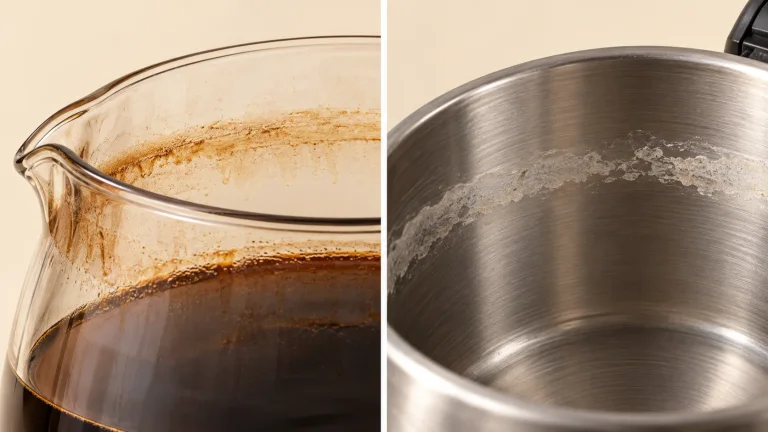
Brown deposits in a carafe or basket suggest a coffee-contact cleaning task. Scale belongs to the water-heating circuit, although some deposits may be visible. Color and taste alone cannot diagnose a blockage or establish that equipment is hygienically clean.
Moccamaster’s maintenance guidance makes the useful distinction: cleaning products remove coffee oils and organic residue; descalers address mineral accumulation. Milk wands and tubes need their own care.
Before you open a cleaning product
Read the model number on the appliance and find its manual. Similar-looking machines can use different controls, metals, seals and cleaning cycles. A product called “coffee cleaner” might remove oils from a removable basket while being unsuitable for the tank. Match the task, the machine and the cleaner label.
- Make room: empty the sink or draining area and put the receiving carafe on a stable surface.
- Check the amount: measure concentrate or powder with the method its label specifies. Do not convert grams to a guessed spoonful.
- Plan the rinses: have enough fresh water and time to complete the whole sequence. A machine pause may be waiting for you to empty a vessel.
- Keep the jobs separate: do not mix descaler, oil cleaner, dish soap, bleach or other household chemicals.
During a powered cleaning cycle, the machine must be connected as its manual directs. Cool and unplug it again before wiping the body or removing parts for washing. Do not open a hot brew basket to investigate a blockage.
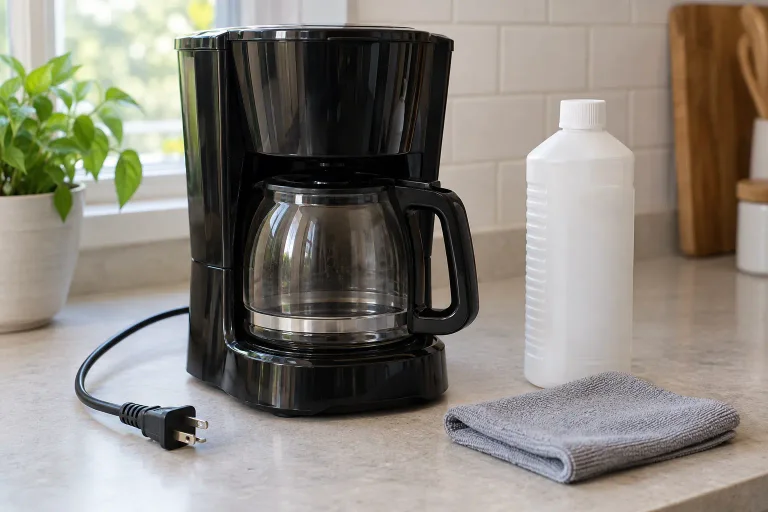
After each brew, clean the parts coffee touched
- Let hot parts cool. Empty leftover coffee and remove used grounds and disposable filters.
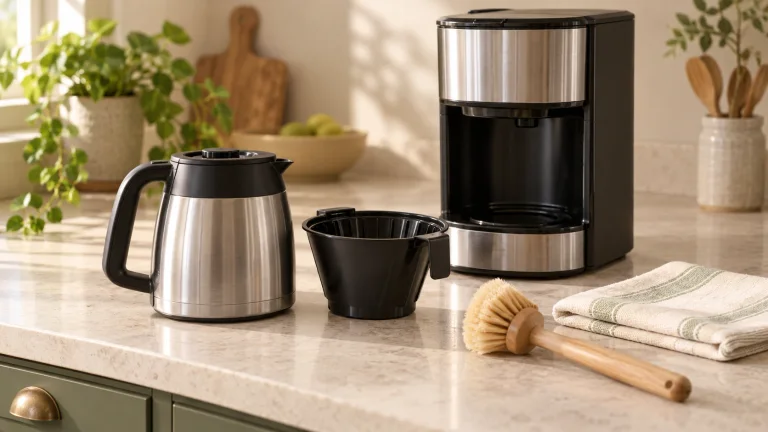
- Switch off and unplug an electrical brewer before wiping it or taking off parts for washing. Keep its base, cord and plug out of water.
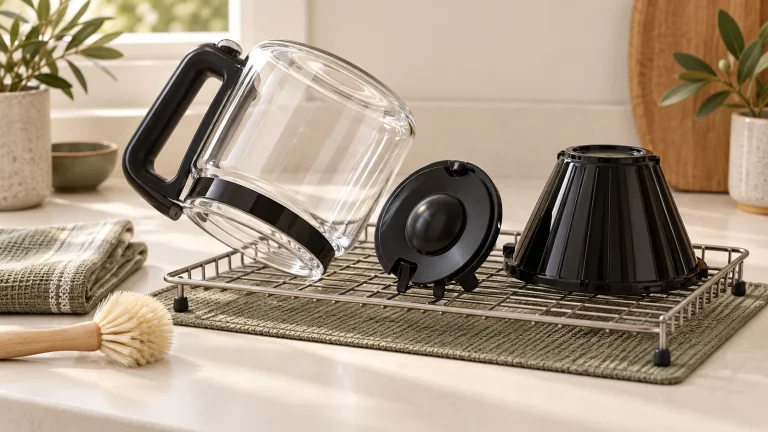
- Wash the permitted removable parts, reaching lid recesses, filter edges and spouts. Rinse away detergent and loosened residue.
- Let parts drain and dry, then reassemble them correctly.
Use a clean water pitcher to fill the tank. Moccamaster explains that a carafe used for coffee can carry oils back into the reservoir. This small habit keeps two jobs separate: storing brewed coffee and supplying fresh water.
Check dishwasher permission part by part. For Fellow Aiden, only the two brew baskets are dishwasher-safe; hand-wash the carafe, tank and removable showerhead. A dishwasher-safe basket does not make the whole machine washable that way.
A model-and-task reference
These are maintenance examples, not product recommendations. Match the model and document edition before using the steps.
| Exact equipment and task | Product and amount | Finish and source |
|---|---|---|
| Fellow Aiden Stained carafe | Cafiza powder: 9 g; fill the carafe with hot water | 30-minute soak, empty, thorough fresh-water rinse. Carafe support article. |
| OXO Brew 9-Cup 8710100 Descaling | Descaler dose from its label; solution plus water to MAX | Then fill to MAX with fresh water; rinse on the 5–9-cup setting. IB-8710100-00, printed p. 13. |
| Breville Barista Express BES870 Group-head cleaning | One cleaning tablet; supplied disc and 1 CUP basket | Tablet cycle, then component rinse. USCM X26 manual, printed pp. 22 and 25. |
Fellow Aiden: remove stubborn carafe stains
Start with warm soapy water and gentle hand cleaning. If staining remains, Fellow’s carafe instructions specify this soak:
- Put 9 g of Cafiza powder in the Aiden carafe and fill it with hot water.
- Leave for 30 minutes.
- Empty it and rinse thoroughly with fresh water.
This solution stays in the removable carafe. It is not an instruction to put Cafiza into Aiden’s water tank or run a brew cycle with it. Rinse the carafe soon after use and allow it to air-dry when practical.
Use the specified powder, not a guessed tablet substitution. The Aiden review covers the wider ownership decision.
OXO 9-Cup: run the descaling program
With the reminder lit, follow 8710100 manual p. 13:
- Use the amount of descaler stated on its label; add water to MAX. Fit the empty carafe, lid fully screwed on.
- Turn the dial right to the descaling symbol/red ring; press OXO.
- Discard the liquid. Refill to MAX with fresh water, run a 5–9-cup water-only brew, then discard.
Follow any extra rinsing on the cleaner label. Without a reminder, use the manual’s separate start sequence. An unmarked cleaner bottle gives insufficient dosing information.
Barista Express: distinguish tablet cleaning from descaling
In the BES870 USCM X26 manual, flashing CLEAN/DESCALE means tablet cleaning; steady means descaling.
- Fit the 1 CUP basket, cleaning disc and one tablet. Lock the portafilter in; place a large container beneath.
- Fill the tank with cold water, empty the drip tray and turn POWER off.
- Press 1 CUP and 2 CUP together, then POWER; hold all three about 10 seconds.
- After the roughly five-minute cycle and two beeps, check tablet dissolution. Repeat if needed.
Remove the disc; hot-water rinse the basket and portafilter. Keep hands clear. Flush the group with the empty portafilter as described on p. 25. Descaling (p. 23) uses a different product and cycle; tablets stay out of the tank.
After steaming milk, wipe the wand with a damp cloth. Point it over the drip tray and briefly select STEAM, keeping clear of the hot jet. Backflush other machines only when their manuals specify it.
Match your edition using our BES870 manual page. The Barista Pro, La Specialista Arte Evo and Ninja Luxe Café have different maintenance programs.
Keep manual brewers and cold-brew gear clean too
French press and pour-over
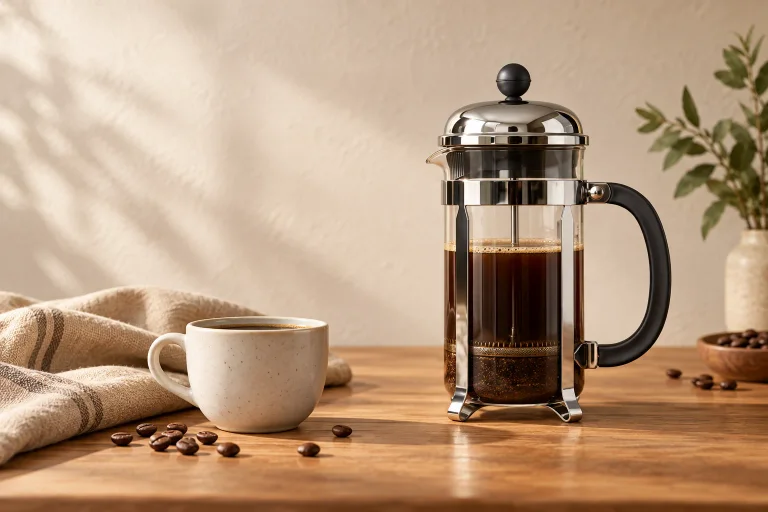
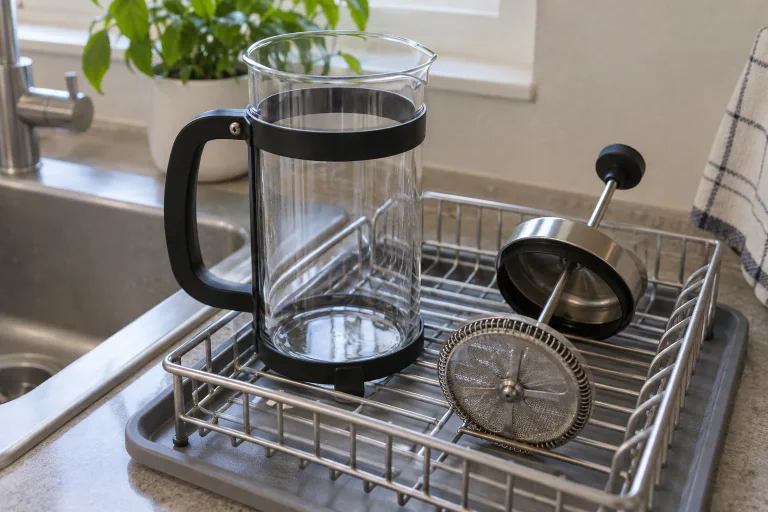
Empty the grounds first. Clean accessible mesh, lid recesses and coffee-contact surfaces; disassemble a French press filter only as its maker permits and put the pieces back in order. For a Classic CHEMEX, remove the wooden collar and tie before washing. Warm soapy water and a suitable brush reach the narrow interior; rinse afterward.
AeroPress
After safely ejecting the puck, rinse the chamber, cap and plunger end. AeroPress recommends occasionally removing the silicone seal to wash inside and out with warm soapy water. Premium is hand-wash only; other versions have specific dishwasher-rack guidance.
Moka pots
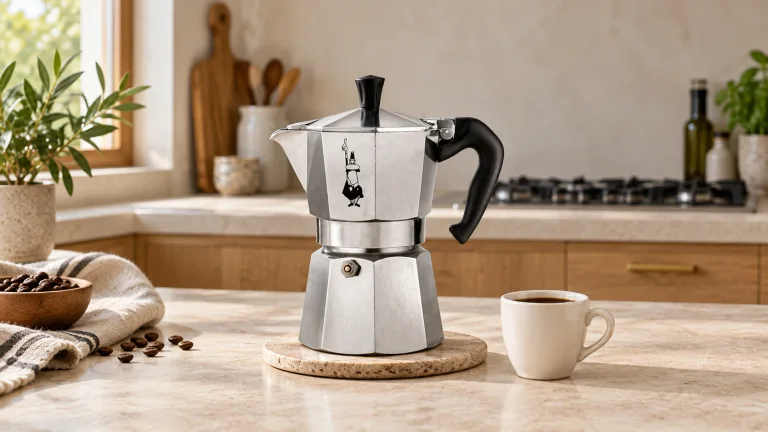
Let the pot cool before unscrewing it. The aluminum Moka Express care instructions call for rinsing with water, without detergent or a dishwasher. Dry the parts before storage. That material-specific rule should not be extended to every stainless-steel pot.
Cold-brew systems
Clean the steeping vessel, filter and storage container between batches. In OXO’s full-size cold-brewer instructions, the glass carafe may go in the dishwasher; the other parts are hand-washed. Remove the filter cap as illustrated so trapped grounds are accessible.
Build a routine you can keep
There is no single monthly schedule for every brewer. Divide the work into what touches coffee or milk, what needs inspection, and what the water system requires.
| When | Job | What determines the details |
|---|---|---|
| After brewing | Remove grounds, empty leftover coffee and wash permitted coffee-contact parts | Materials and dishwasher permission in the manual |
| After milk preparation | Complete the wand, frother or milk-tube routine | The specific milk system; a purge alone is not the whole routine |
| During regular inspection | Look inside lids, seals, basket outlets and reusable filters | Accessible removable parts only; do not open the electrical housing |
| At the maker's interval or reminder | Descale and replace water filters when required | Water hardness, usage and model instructions |
A dated note on your phone is enough: record the job, product and completed rinse. If the machine slows down soon afterward, that record helps support staff distinguish a missed maintenance step from a recurring fault. Reset a maintenance reminder only as part of the manufacturer's completed procedure.
Replace a cracked carafe, torn filter mesh or damaged gasket with a compatible part. Scrubbing harder will not repair a broken surface. If equipment has been stored damp and you find suspected mold, stop using it and ask the manufacturer about appropriate cleaning or replacement; an ordinary descale is not a general disinfection method.
What to try when cleaning does not solve it
Brown carafe stains remain after descaling
The stain may be coffee residue rather than scale. Use the approved carafe-cleaning method—the soak above applies to Aiden. Inspect the rinsed surface for remaining deposits. A stain’s disappearance does not establish sanitation.
Aiden keeps asking to descale
Distinguish: an interrupted program can leave the reminder active. Next: follow Fellow’s completion check: the program has a 16-minute stage and two 10-minute flushes. Respond to each empty-carafe/refill-tank prompt within five minutes. Observe: whether the completed program clears the reminder. If it persists, Fellow’s current instructions explain a factory reset after confirming completion. Save custom profiles first because a reset deletes them; contact support if you are unsure. Adding stronger solution is not the next step.
OXO’s basket drains slowly or overflows
A blocked outlet differs from internal scale. Cool and unplug; clear the basket’s drain hole with a soft brush. Check drainage next brew. Persistent trouble: see manual p. 14.
Cleaner odor or taste remains
First check whether you completed the required rinse. For Aiden, run the manual’s three additional coffee-free brews after descaling. Check for lingering odor before preparing coffee; if it remains, contact Fellow support. Do not taste cleaning water or add chemicals to neutralize it.
For leaks near electrical components, damaged cords or persistent malfunction, stop using the brewer and contact support. Repeated acid cycles cannot establish what is wrong.
Cleaning questions
Can I clean without a scale or special cleaner?
For routine Aiden carafe cleaning, warm water, dish soap and gentle scrubbing are the manufacturer’s first option. That requires no scale. Its stronger powder soak needs a measured 9 g; the source gives no reliable spoon conversion. Use the ordinary wash first rather than guessing the chemical dose.
Can vinegar replace descaler?
Only where your equipment instructions permit it. Moccamaster explicitly advises against vinegar; AeroPress allows it for a sticky chamber. Those are different materials and jobs. Neither instruction establishes a universal vinegar recipe for a heated water circuit.
How often should I descale?
Use the model’s reminder and water-hardness guidance. Moccamaster specifies about 100 brews, sooner with hard water; OXO 8710100 displays a reminder after 90 cycles. Washing removable coffee-contact parts remains a separate routine.
How many rinses are enough?
After Aiden’s programmed descaling and flush stages, its North American manual recommends three additional regular brews without coffee. Complete those too. Other machines and cleaners have their own rinse requirements; clear-looking liquid is not a reason to shorten them.
Keep vodka, aspirin, denture tablets and household bathroom cleaners out of these procedures. Do not mix products. Once maintenance is complete, use the same coffee recipe to judge whether further brewing adjustments are needed; our brewing-method guide and ratio calculator can help.
If coffee still tastes wrong after the correct cleaning and rinsing, use our 18-point coffee troubleshooting guide to separate water, dose, grind and roast preference. Cleaning restores the starting conditions; it does not make every recipe suit every bean.