
A latte is simple on paper: espresso plus steamed milk. In the cup, the ratio, milk texture, espresso strength, sweetness, and temperature decide whether it tastes silky or flat.
A good latte balances espresso presence with warm, textured milk.
- Pull espresso
Use a shot with enough sweetness and body to hold up in milk.
- Texture milk
Aim for glossy microfoam, not dry foam piled on top.
- Set the ratio
More milk means more comfort, but less coffee intensity.
- Flavor carefully
Syrups and spices should complement the coffee, not erase it.
A latte is about balance, not just milk
A latte uses espresso as the center and steamed milk as the softening layer. The drink should still taste like coffee, even when it is gentle. If the cup tastes like warm milk with a coffee shadow, the espresso may be weak, the cup too large, or the drink too sweet.
The exact ratio changes by cafe and country, but the idea is stable: espresso, enough milk for sweetness and volume, and a thin integrated layer of foam. That is why a latte feels smoother than cappuccino and less direct than espresso or macchiato.
Latte variations make sense once the base is clear
A vanilla latte is not a new technique; it is a latte with syrup. A mocha adds chocolate. An iced latte changes temperature and dilution. A flat white sits closer to the espresso with less foam and a smaller feel in many cafes. A cappuccino keeps the drink tighter and foamier.
When choosing, decide whether you want coffee strength, milk texture, sweetness, or temperature. That makes the menu easier to navigate and helps you ask for changes without creating a completely different drink by accident.
Making better lattes at home
For a stronger coffee flavor in a latte, keep a balanced espresso shot and use a little less milk. If you do not have an espresso machine, a moka pot or concentrated AeroPress-style brew can make a similar milk drink.
Texture the milk until it looks glossy, not foamy like bath bubbles. Swirl before pouring, use a cup that is not oversized, and sweeten lightly only after the base drink tastes right.
Smooth, mild, and easy to flavor.
Smaller, stronger, and more textured.
Ice dilutes the drink as it melts; start with the recipe and adjust milk to taste.
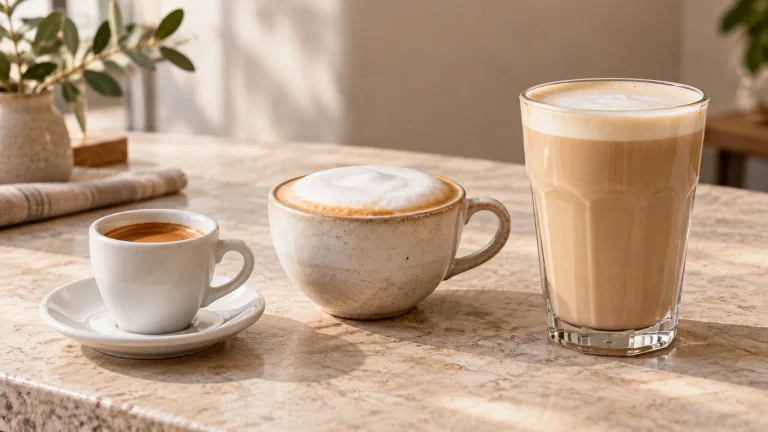
See latte beside cappuccino and macchiato.
Technique Perfect CappuccinoPractice milk texture and espresso balance.
Gear Best Espresso MachinesFind machines suited for milk drinks.
Is It Italian?
“Latte” means milk in Italian; “caffè latte” means coffee with milk. Breville’s latte guide describes the familiar espresso drink with steamed milk and a thin layer of microfoam.
Latte in Italian means milk
So, as a word of caution if you’re in Italy and want a Latte, ask for a Café Latte. When you put the words Café Latte together, you get coffee with milk which is more or less what the Latte we all know and love is.
Making it At Home
If you just want to know a little more about the humble Latte, then we can tell you that it appears on most café and restaurant menus and it can easily be made at home too with the right machinery.
A Latte is prepared using a large amount of steamed milk with an espresso shot (or shots). Then, the coffee drink is topped up with a half an inch of foam (on average). Lattes are milk-based coffee drinks that aren’t made with sugar although many people like to add sugar to their drink, or even add flavored syrup to give it that little extra sweetness and an altered taste.
For a different kind of decoration, our selfieccino guide explains how edible image printing differs from hand-poured latte art.
Latte and cappuccino
A latte generally has more milk and a thinner foam layer. See our cappuccino method for the smaller, foamier drink.
How to Make The Perfect Latte Drink?
If you’re at home and you want to make your own Latte, you do need the right equipment. You’ll need to get hold of the following:
- A quality coffee machine with a steam wand (or steam arm)
- A milk jug (usually stainless steel)
- Fresh milk
- Thermometer
- Espresso coffee
Prepare an espresso using the dose and basket recommended for your machine. Pour cold milk into a steaming jug within its fill marks, leaving room for expansion.
Purge the steam wand safely over the drip tray. With the steam paused, position the tip just below the milk surface, then begin steaming. Add a little air early and keep the milk rolling. For dairy milk, Breville’s recipe targets about 140–150°F (60–65°C); a thermometer is more reliable than judging by touch.
Stop the steam before removing the tip from the milk. Follow your machine’s cleaning sequence; the Barista Express Impress manual calls for purging and wiping the wand after use. Swirl the jug, then pour the textured milk into the espresso.
Milk, sugar and nutrition
There is no single calorie, protein or fat value for a latte. The amount and type of milk, serving size and added syrup determine the total. Check the milk or syrup label and a café’s nutrition information for the size you actually order.
Flavored Lattes

As well as regular Latte drinks (Skinny and Full-Fat) there are also flavored Lattes (mentioned earlier). These drinks are flavored with syrups to add a little extra and for coffee drink variety. Essentially, the drink is exactly the same. If you live in the USA, you’ll find that special flavors appear in cafés according to the time of year.
Flavor ideas
For example, at Christmas, there may well be cinnamon flavored Lattes on the menu or Bailey’s Irish Cream Lattes – these are in line with the time of year. At Thanksgiving, in November, you might see Pumpkin flavored Lattes and so on. Here are some other flavors you might like to try that work perfectly with Latte drinks:
- Vanilla
- Caramel
- Almond
- Hazelnut
- Orange
- Raspberry
- Peppermint
- Coconut
- Marshmallow
To make these at home, simply add a teaspoon of the syrup you desire to your coffee base and top off with the frothy milk as usual.
Iced Lattes

In the summertime, while many people do enjoy a nice, tall, glass of Latte, there is another alternative, an Iced Latte. This is different to a regular Latte as it is prepared using another method.
For one iced latte, the Starbucks at Home recipe uses 30 mL prepared espresso and 175 mL cold milk, plus ice. Syrup is optional. The espresso quantity is brewed liquid, not dry coffee grounds.
- Put ice in a serving glass and add the prepared espresso.
- Stir any syrup into the cold milk.
- Pour the milk over the coffee and ice, then stir to combine.
Research note: Coffee Corner checked maker recipes and steam-wand instructions. We have not physically tested this update; nutrition varies with the ingredients and serving size.