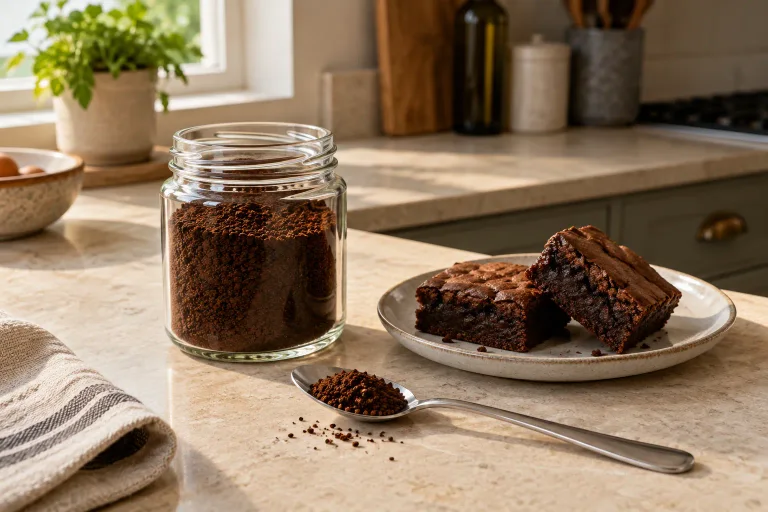
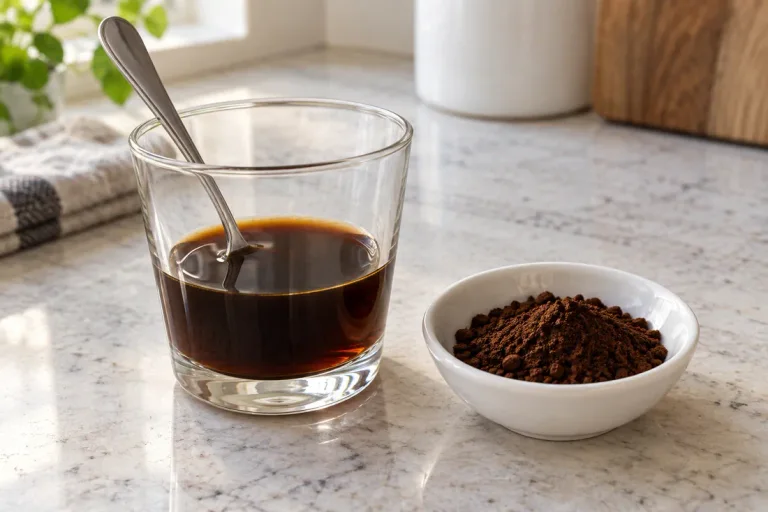
Espresso powder for baking is a soluble coffee ingredient made from coffee that has already been brewed and dried. It adds coffee flavor without requiring a cup of liquid. Bakers also use small amounts alongside chocolate, where it can deepen the flavor without making coffee the main attraction.
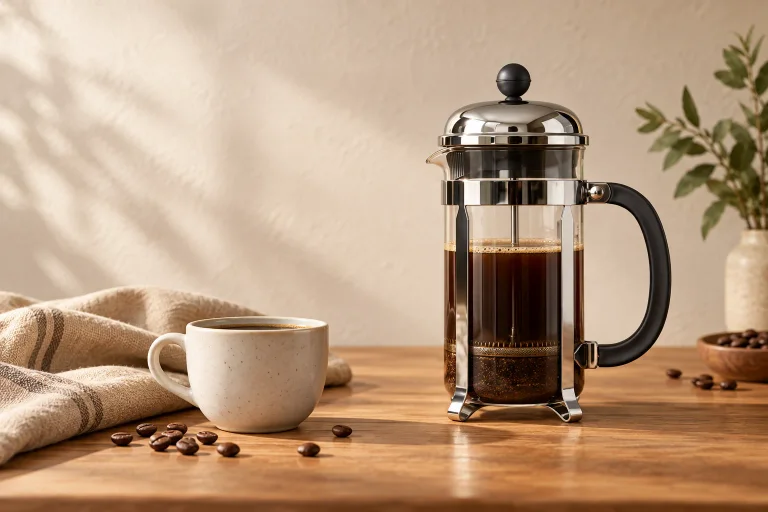
It is easy to pick up the wrong thing: a bag marked “espresso ground” contains coffee for brewing, while an instant espresso powder dissolves. Before changing a recipe, check which one it asks for. The important distinction is what the ingredient does in the bowl, not how dark the package looks.
What is in espresso powder?
King Arthur describes its espresso powder as coffee that is ground, brewed and dried, with a powder that dissolves readily. DeLallo sells a product labeled Instant Espresso Powder and lists its ingredient as 100% coffee. These are useful examples of the soluble category.
Names overlap across manufacturers. “Espresso powder” and “instant espresso” can describe the same kind of product; the first name often appears in baking recipes. Neither name tells you an exact strength, dose or caffeine content. Read the ingredient list and preparation directions rather than assuming every jar is interchangeable.
| Ingredient | What it is | What to do with it |
|---|---|---|
| Soluble espresso powder | Brewed coffee dried into a dissolving ingredient | Use the baking or beverage directions for that product |
| Plain instant coffee | Dried brewed coffee, sold as powder or granules | Dissolve it; it can be a baking substitute with adjustments |
| Espresso-ground coffee | Roasted beans ground for extraction | Brew it using an appropriate method |
| Espresso shot | A liquid made by brewing ground coffee under pressure | Account for the liquid if a recipe accepts it |
| Cocoa powder | A cocoa ingredient, not coffee | Keep the recipe’s cocoa quantity separate |
NESCAFÉ’s explanation of instant coffee describes brewing a coffee concentrate before drying it. Grinding roasted beans more finely skips that brewing-and-drying process. Our whole-bean coffee guide covers beans intended for brewing; they serve a different purpose here.
How much should you use in baking?
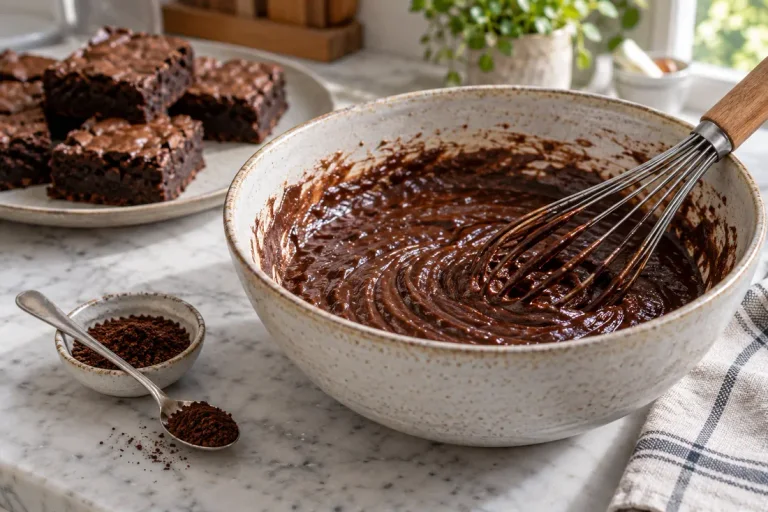
Use the amount in the recipe first. The useful question is whether you want chocolate with a little coffee behind it or a dessert that clearly tastes of coffee. A teaspoon can play a different role in a large tray of brownies than in a small batch of frosting.
Two published recipes show the difference more clearly than a blanket “add a spoonful” rule:
| Recipe and batch | Espresso powder | Why the amount matters |
|---|---|---|
| Fudge Brownies, one 9 × 13-inch pan yielding 24 small brownies | 1 teaspoon, optional | A small flavor addition across the whole batch |
| Flourless Chocolate Cake, one 8-inch cake | 1–2 teaspoons, optional | The recipe describes 1 teaspoon as enhancing chocolate and 2 as adding a hint of mocha |
Those are amounts for those complete recipes, not a dosing chart for every cake. Follow the linked recipe’s other ingredients and instructions if you make it. Doubling only the powder because you want “more chocolate” may instead move the result toward coffee flavor.
Use a measuring teaspoon, level it, and keep a note of the product and amount. Teaspoons measure volume; an espresso powder’s gram weight depends on its texture and density. Do not copy a gram conversion from a different coffee jar unless the recipe or label supports it.
When to dissolve it and when to add it dry
Follow the recipe’s mixing sequence. The brownie example above combines its powder with eggs, cocoa and other ingredients. The flourless cake stirs it into the melted chocolate-and-butter mixture with sugar and flavorings. Neither requires a separate mug of coffee.
For a smooth frosting or sauce, dissolving the powder first can prevent specks. DeLallo advises using a little warm liquid from the recipe. Taking it from the measured liquid keeps you from quietly adding extra water. Check the recipe before heating a liquid whose temperature matters later in the method.
King Arthur’s frosting tip uses 1 tablespoon powder dissolved in 1 tablespoon cream or water. That is a way to prepare a concentrated flavoring, not a universal amount to pour into any bowl of frosting. Use the quantity your frosting recipe needs.
Before adding the dissolved mixture, look for dry pockets on the bottom of the cup. If a supposedly soluble product leaves gritty particles, check the package again: you may be holding ground coffee. More vigorous stirring cannot turn ground coffee into instant coffee.
What can replace espresso powder?
Dry instant coffee: a practical baking substitute
King Arthur suggests about 50% more instant coffee when replacing espresso powder. For a recipe calling for 1 teaspoon, that means approximately 1 1/2 teaspoons dry instant coffee. It also warns that the substitution can bring a more bitter edge.
Treat that as one baker’s starting advice, not a laboratory conversion. Roast, product and the rest of the recipe matter. Use plain instant coffee rather than a sachet containing sugar and creamer, and dissolve coarse granules in a little recipe liquid when a smooth texture is important.
Brewed espresso or coffee: only when the liquid fits
A shot of espresso contains water that a teaspoon of powder does not. Adding it on top of all the original ingredients changes the recipe’s liquid balance. A soak or sauce with room for liquid is a different situation from cookie dough.
Use a recipe that gives a brewed-coffee alternative, including how much other liquid to replace. There is no dependable “one teaspoon equals one shot” rule across powders and home espresso recipes. If you need a dessert built around a fresh shot instead, our affogato guide uses coffee in its liquid form from the start.
Leaving it out: check its role
If a chocolate recipe labels a small amount of espresso powder optional, omission is often the easiest choice. That applies to both baking examples above. It is less suitable when coffee is the main flavor, as in a coffee filling or tiramisu soak.
Do not replace cocoa powder or melted chocolate with espresso powder simply because both are dark and bitter. Keep those ingredients as written. A coffee-flavored dessert still needs the other ingredients that give it its structure and chocolate character.
Can you use espresso powder to make coffee?
Yes, when the product provides beverage instructions. Follow its own dose. DeLallo’s directions use 1 tablespoon of its instant espresso powder with 4 tablespoons hot water. By contrast, NESCAFÉ’s US Gold instant-espresso directions use 1 teaspoon with 2 fl oz water. Both water measures are about 60 mL, yet the powder quantities differ.
That is a reason to read your jar, not to decide that one product is three times as strong. The recipes and products differ. Stir the powder into water in a heat-safe cup; do not put it into an espresso machine’s coffee basket to try to extract it again.
The result is an instant coffee drink rather than freshly pressure-brewed espresso. It can still be useful in a milk drink or dessert. For a recipe that specifically whips soluble coffee, use our dalgona coffee guide. Its measured sugar-and-water mixture is different from making a drinking-strength cup.
What about caffeine?
Do not assume a baking ingredient is caffeine-free. The relevant amount depends on the actual powder and how much goes into the whole recipe, then on the portion you eat. A teaspoon spread across a tray is not the same serving as a tablespoon dissolved in one cup.
Use caffeine information for that exact product when available; do not borrow a number from a different instant coffee. The FDA explains that caffeine amounts vary and decaf still contains some. If you need to avoid caffeine, choose an appropriate recipe without added coffee rather than judging by whether the dessert tastes of it. Our caffeine guide explains the limits of general estimates.
Keep the powder dry and the jar closed
Store it according to the package. For plain instant coffee, Nestlé’s storage guidance recommends a cool, dry cupboard or pantry with the lid closed tightly. That makes a better everyday location than leaving an open jar beside a steaming kettle.
Use a clean, dry spoon, measure away from rising steam, and close the jar before cooking. If you transfer it to another container, keep the product name, date and directions with it. Do not assume every powder has the same life after opening; follow the current package rather than a generic multi-year promise.
Read these four things before buying
- The format: look for “instant,” “soluble,” or directions saying it dissolves. “Espresso ground” alone describes a grind, not an instant product.
- The ingredients: choose the type your recipe expects. Added sugar, milk powder or flavorings change what you are measuring.
- The intended use: baking directions help with cakes and frostings; drink directions are useful if you want the same jar for a cup of coffee.
- The amount you will use: a small jar can be practical when your usual recipe needs only a teaspoon. A larger package is not automatically the better choice if it will sit open for a long time.
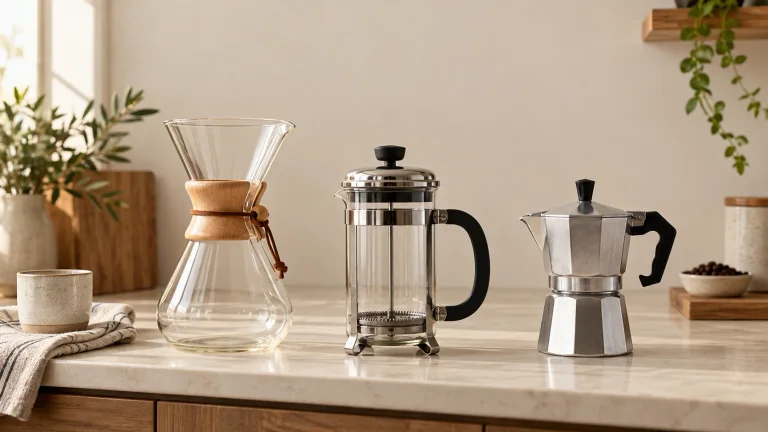
If you already own plain instant coffee and are making a recipe with an optional coffee note, check its substitution advice before buying another ingredient. If your bag contains grounds for a brewer, keep it for brewing: our coffee methods guide explains where those grounds belong.
Frequently asked questions
Is espresso powder the same as ground espresso?
No. The soluble espresso powder used in many baking recipes has already been brewed and dried. Ground espresso is roasted coffee ground for brewing. Grinding beans more finely does not turn them into a dissolving instant powder.
Can I substitute instant coffee for espresso powder?
Often, when the powder is a small flavor addition. King Arthur suggests about 50% more dry instant coffee, so 1 teaspoon espresso powder becomes roughly 1 1/2 teaspoons instant coffee. Treat that as a starting approximation for its baking advice, not a universal conversion between brands.
Can I make a drink with espresso powder?
Use a product whose label or manufacturer gives beverage directions, and follow those quantities. Some instant espresso powders are intended for both baking and drinking. Dissolving powder makes an instant coffee drink; it does not reproduce pressure-brewed espresso.
Can I leave espresso powder out of a chocolate recipe?
If the recipe lists a small amount as optional flavoring, usually yes. The chocolate flavor may differ, but there is no need to replace that small amount with more cocoa. In a coffee-flavored filling, soak or dessert, use a substitution the recipe supports instead.