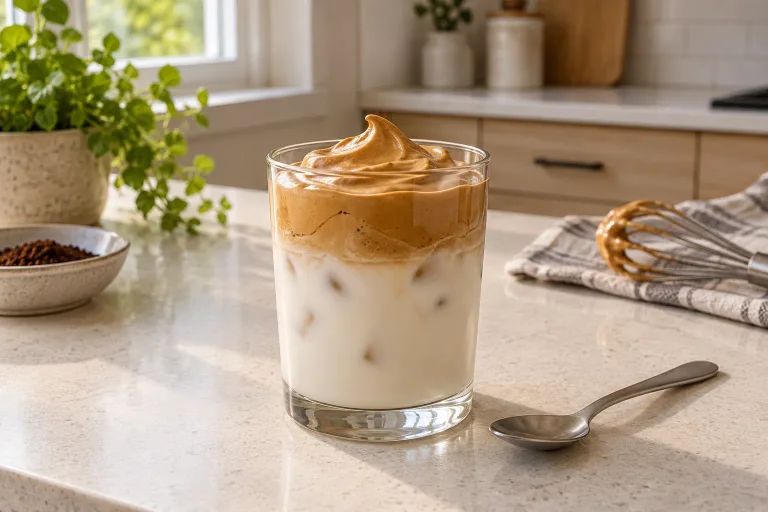
Dalgona coffee is milk topped with a thick foam made by whipping instant coffee, sugar and water. For two drinks, start with 2 tablespoons of each whipping ingredient, then divide the topping over two cups of milk. Stir it in before drinking: the foam is a concentrate, not a separate serving of coffee.
You can make it iced or hot with a hand whisk or mixer. The useful trick is getting the small coffee mixture to hold a peak before it meets the milk. Here is the measured recipe, followed by fixes for a topping that stays runny, tastes too strong or refuses to leave the whisk.
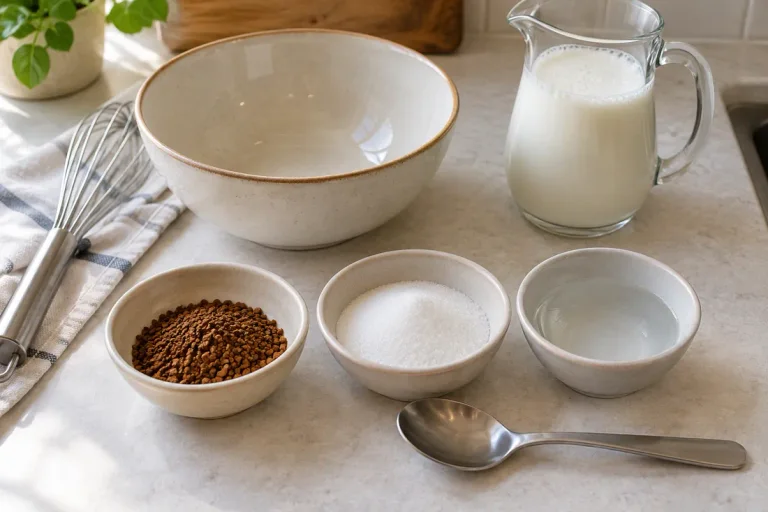
Dalgona coffee recipe for two
Makes: 2 drinks. Time: about 10 minutes; hand whisking can take longer. Use level US measuring tablespoons, not an ordinary dinner spoon.
- 2 level US tablespoons plain instant coffee
- 2 level US tablespoons granulated white sugar
- 2 US tablespoons (30 mL) hot water
- 2 US cups (480 mL) milk, divided
- Ice cubes, optional
The coffee, sugar and water follow the equal-spoon formula in NESCAFÉ's dalgona instructions. This is a 1:1:1 ratio by volume, not by weight: a tablespoon of sugar does not weigh the same as a tablespoon of instant coffee. The milk is the drink's base and is measured separately.
- Prepare the milk. Divide the milk between two glasses, adding ice if you want cold drinks. Leave enough room above the milk for the coffee topping. For hot drinks, warm the milk separately and use heatproof mugs without ice.
- Combine the coffee mixture. Put the instant coffee, sugar and hot water in a medium bowl. Stir until the granules are wet and the sugar has mostly dissolved. Keep the milk out of this bowl.
- Whip. Use a balloon whisk or an electric hand mixer. Start the mixer slowly to limit splashes, then increase the speed. Whip until the mixture becomes much paler, thick and fluffy; allow several minutes, and longer by hand.
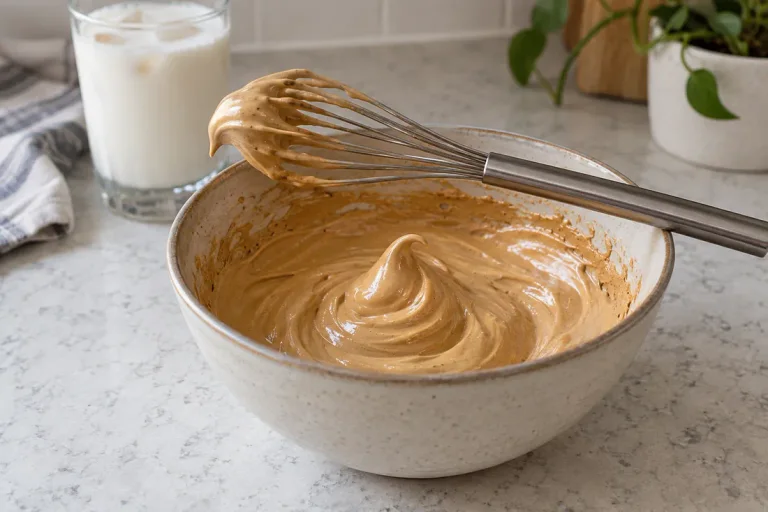
- Check the peak. Stop the mixer before lifting the beaters. The foam should mound on a spoon, with a peak that mostly holds its shape. If it pours straight off, continue whipping and check again.
- Serve and stir. Divide the foam evenly over the two drinks. Serve immediately with long spoons, and stir the coffee topping into the milk before drinking.
Keep a little extra milk nearby if you prefer a milder drink. Add it to the finished glass, not the bowl you are trying to whip.
What makes it dalgona coffee?
The name comes from the Korean dalgona candy, whose color resembles the whipped topping. You do not need to make candy, caramelize sugar or add a piece of it to the drink. Korean recipe writer Sue Pressey explains the name and the basic whipped-coffee method.
The topping contains coffee, water and sugar; the milk sits underneath until you stir. That makes it different from a cappuccino, where espresso is combined with steamed milk and milk foam. It is also different from cold foam, whose airy topping is made from milk or a cream mixture.
Think of the tall two-tone presentation as the serving style, not an instruction to drink it in layers. A mouthful of unmixed topping can be much more intense than the drink you intended to make.
Which coffee, sugar and milk should you use?
Plain instant coffee is the straightforward choice
Look for a jar or sachet whose ingredient is instant coffee. Both granules and soluble powder are suitable starting points. Instant coffee is brewed coffee that has been dried, so it dissolves again when you add water. Ground coffee is a different ingredient: its particles would remain in your bowl.
Do not use a “3-in-1” coffee sachet as if it were plain instant coffee. Its added sugar and creamer change what goes into the recipe. Likewise, check a product labeled espresso powder: soluble instant espresso is different from finely ground beans intended for an espresso machine.
For a closer look at those labels, see our guide to espresso powder, instant coffee and espresso grounds. It explains which powders dissolve and how to approach substitutions in baking.
A shot of espresso is not a spoon-for-spoon replacement for the granules here. Other methods do exist: Nespresso has an espresso-based version for its Barista Recipe Maker, and recipe writer JinJoo Lee describes a concentrated brewed-coffee variation. They use different preparation or equipment. If you have ground beans and no instant coffee, choose one of those specific methods or make coffee without a coffee maker instead of guessing a substitution.
Start with granulated sugar, then adjust
White granulated sugar keeps the base recipe simple. Measure it before adding the water; pouring sugar into the bowl by eye makes it harder to repeat a result you like. It helps the topping keep its structure as well as sweetening the drink.
For a less sweet batch, try 1 tablespoon of sugar with the same 2 tablespoons each of instant coffee and water. Recipe writer Brittany Mullins reports that halving the sugar still produced foam, but it did not stay fluffy as long. Expect a softer result rather than demanding the same firm peak from both versions. Do not assume that omitting sugar altogether, or replacing it with a packet of another sweetener, will produce an identical topping.
The milk does not have to foam
Choose the milk you enjoy drinking. Dairy, oat, soy or another plant milk goes underneath the coffee foam, so it does not need to be a barista blend or capable of holding a latte-art pattern. Unsweetened milk gives you more control over a drink that already contains sugar.
This recipe allows a cup of milk per person. That is a starting serving size, not a restriction: use a larger glass and more milk for a lighter drink, or a smaller portion of topping. To make it vegan, use plant milk and check the suitability of your other ingredients.
Hand whisk or electric mixer?
An electric hand mixer saves effort, especially for two or four servings. Choose a bowl in which the beaters actually reach the shallow mixture. A huge stand-mixer bowl can leave a small batch below the whisk; more speed cannot fix a whisk that barely touches the coffee.
With a balloon whisk, use a stable bowl and repeated brisk strokes through the mixture. You are looking for a change from dark liquid to paler, thicker foam, not a particular number of strokes. Stop to check the texture rather than treating the timer as the finish line.
A small battery milk frother may manage some batches, but its size, power and reach matter. If the foam becomes too thick for its little whisk, use a hand whisk or mixer. Do not pour this coffee-and-sugar mixture into an electric milk-frothing jug unless its instructions allow those ingredients; a cold setting alone does not establish that.
Warm water makes it easier to wet and dissolve the ingredients. There is no need to whisk a bowl of violently boiling liquid. Let freshly boiled water stop bubbling before measuring it, and keep the bowl stable to avoid splashes.
Why is the topping runny, gritty or too strong?
| What you see | What to check | What to do |
|---|---|---|
| Dark liquid with a few large bubbles | The mixture may need more whipping, or the whisk may be missing it. | Move to a bowl that suits the batch and continue until the mixture visibly thickens. |
| Pale foam that flows straight off a spoon | It may be under-whipped, or you may have added too much water. | Whip a little longer first. If the measured proportions were lost, restart a small measured batch rather than adding ingredients at random. |
| Gritty topping | Look for undissolved granules and check whether the coffee was instant or ground. | Stir to dissolve instant granules before whipping. Actual coffee grounds cannot be fixed by longer whisking. |
| Very soft foam after reducing sugar | The recipe has changed, so the texture can change too. | Serve promptly as a softer topping, or return to the full-sugar recipe next time. |
| A bitter or overpowering first sip | The concentrated topping may still be separate from the milk. | Stir thoroughly. Then add milk or use less topping if it is still too strong. |
| Plain milk underneath, sticky foam above | The layers have not combined. | Use a long spoon to fold the topping down into the drink; a straw alone may pull mostly milk from the bottom. |
Do not add milk to loosen a topping you are still trying to whip. Make the foam first; adjust the balance in the serving glass. That keeps one decision about texture separate from another about how strong or sweet you want the drink.
Hot, iced and decaf versions
Iced: use cold milk and ice, leaving space for the topping. A narrow glass already filled to the rim will overflow when you spoon on the foam or stir it. Start with less milk in the glass if necessary, then add the rest once everything fits.
Hot: warm the milk separately and use a heatproof mug. Add the same freshly whipped topping, then stir. Skip the ice. You do not need to heat the finished foam or try to keep a perfect cold-drink-style separation.
Decaf: plain instant decaf is an option, although the exact product can affect the whipping result. Keep the starting proportions the same and judge the texture. Decaffeinated does not mean caffeine-free, as the FDA explains. Adding milk makes the flavor less concentrated; it does not remove caffeine already present in your portion.
Use the coffee label for any stated caffeine amount and its serving measure. Foam height is not a caffeine measurement, and two brands' tablespoons need not contain identical amounts.
Scaling the recipe and serving guests
Keep the whipping ingredients in equal spoon volumes for the standard recipe:
| Drinks | Instant coffee | Sugar | Hot water | Milk to start |
|---|---|---|---|---|
| 1 | 1 tablespoon | 1 tablespoon | 1 tablespoon | 1 cup (240 mL) |
| 2 | 2 tablespoons | 2 tablespoons | 2 tablespoons | 2 cups (480 mL) |
| 4 | 4 tablespoons | 4 tablespoons | 4 tablespoons | 4 cups (960 mL) |
A one-drink batch is convenient with a small whisk. If your electric beaters cannot reach it, make the two-drink batch rather than adding extra water to raise the level. For four people, use a larger bowl with room for the foam to expand and divide the finished topping evenly.
For guests, set out the glasses, milk and spoons before whipping. Add ice shortly before serving and finish the drinks together. A smaller glass can hold half a normal serving if you want something sweet after dinner; an affogato is another coffee-dessert option if you would rather serve espresso over ice cream.
Can you prepare it ahead?
Making it just before serving avoids having to revive a settled topping. You can measure the dry ingredients ahead and leave the milk refrigerated until needed. If you prepare foam early, keep it covered and refrigerated separately from the milk, then check its texture before serving; do not expect a stored topping to look freshly whipped.
Keep perishable milk at 40°F (4°C) or below. The FDA's storage guidance limits its time at room temperature to two hours, or one hour above 90°F (32°C). Putting a drink back in the refrigerator does not undo time it already spent warm.
Frequently asked questions
Can I make dalgona coffee with regular ground coffee?
Not with the same bowl recipe. Ground coffee does not dissolve like instant coffee and would leave grounds in the topping. Brewed-coffee and espresso versions need their own proportions and method; do not replace the instant granules spoon for spoon.
Why is my dalgona coffee not getting fluffy?
Check that you used plain instant coffee, measured the water rather than pouring freely, and kept the milk separate. Make sure the whisk reaches the mixture, then allow more whipping time. A large bowl and a tiny batch can make it difficult to incorporate air.
Can I make dalgona coffee with less sugar?
Yes. For this two-drink batch, try 1 tablespoon of sugar instead of 2. Expect a softer topping that holds its shape less well, and serve it promptly. A sugar-free sweetener is not a guaranteed one-for-one replacement.
Do you drink dalgona coffee without stirring?
Stir before drinking. The topping contains concentrated coffee and sugar, while the milk underneath is plain. Mixing them distributes the flavor; keep a small swirl on top if you like the presentation.