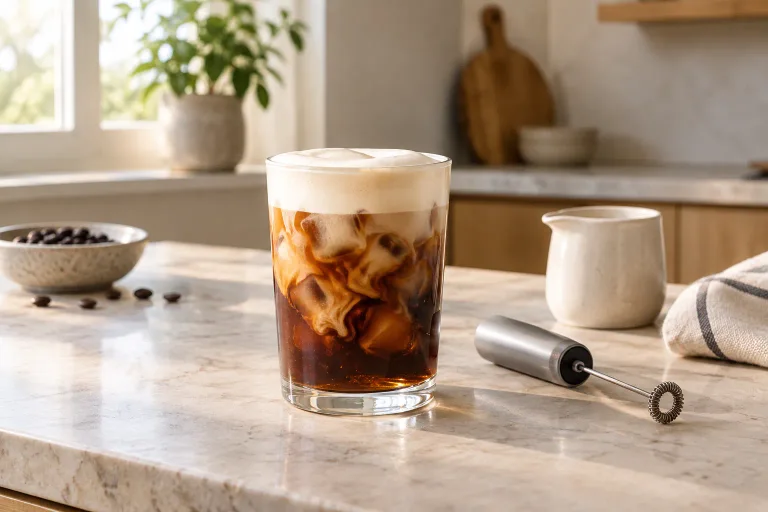
To make cold foam, froth cold milk—or a mixture of cream, milk and syrup—until it thickens but still pours. Spoon or pour it onto an iced drink just before serving. A handheld frother is convenient, but a small French press or a securely closed jar can also do the job.
The first choice is the texture you want: plain milk makes a lighter topping; sweet cream makes a richer one. Start with the measured recipe below, then adjust the sweetness after tasting it with the coffee.
If you want a coffee-flavored whipped topping instead of frothed milk, try dalgona coffee. Its instant coffee, sugar and hot water form a different mixture from the milk-based foam below.
Vanilla sweet cream cold foam: a small-batch recipe
Makes: two modest drink toppings from about 90 mL of liquid. Time: about 3 minutes, with the ingredients already refrigerated. The final foam volume depends on the milk and your equipment.
- 3 tablespoons (45 mL) cold heavy whipping cream
- 2 tablespoons (30 mL) cold 2% milk
- 1 tablespoon (15 mL) vanilla coffee syrup
These rounded US tablespoon measures scale down Monin's 3:2:1 cream, milk and syrup ratio. The method below uses a handheld frother suitable for cream mixtures. For a jug-style electric machine, check its ingredient limits and follow the cold-setting guidance below.
- Prepare the drinks first. Put cold coffee and ice into two glasses, leaving space at the top.
- Combine the ingredients. Stir the cold cream, milk and syrup in a narrow, stable container of at least 300 mL (about 10 US fl oz) capacity, leaving room for expansion.
- Add air. With the frother switched off, lower its whisk into the mixture. Switch on and move it close to the surface without lifting the spinning head out of the liquid.
- Watch the texture. Switch off after about 30 seconds, then lift out the whisk and check the texture with a spoon. Froth briefly again if needed, stopping when the mixture is thicker and airy but still pours.
- Finish the drinks. Swirl the container gently, divide the foam between the glasses and serve immediately.
Make the coffee strong enough to enjoy after adding dairy. If you use concentrate, dilute it according to your recipe before adding foam; our cold brew guide explains that step. Foam is a topping, not a substitute for measuring the coffee and water.
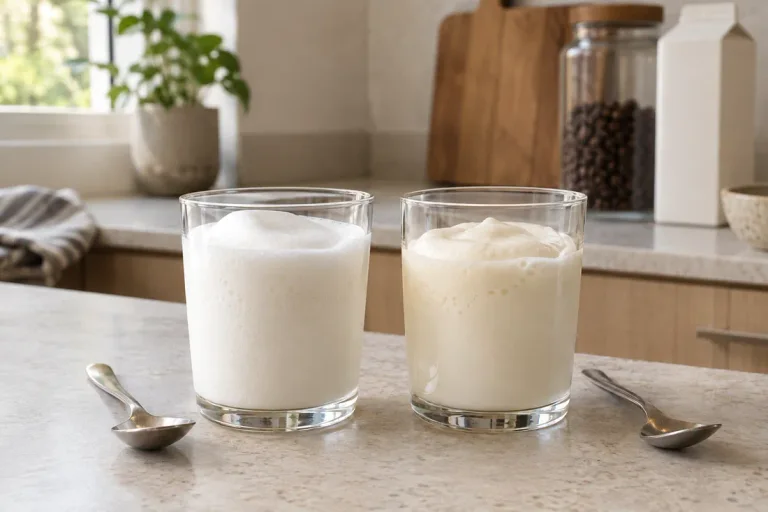
Plain milk versus sweet cream
You do not need heavy cream to make cold foam. For a simpler version, start with ¼ cup (60 mL) of refrigerated skim or 2% milk, enough for one drink, and froth it without heating. Sweeten the coffee separately if you want to keep control over the finished drink.
Starbucks' at-home cold-foam recipe uses ¼ cup of 2% milk with powdered sugar and vanilla extract, demonstrating a milk-based approach. Its title includes “sweet cream,” but that particular published recipe contains no heavy cream. Read ingredients rather than relying on the name.
| Starting mixture | What to expect | Useful adjustment |
|---|---|---|
| Skim milk | A light, relatively stiff milk foam | Use less if you want only a thin cap |
| 2% or whole milk | A milkier topping; texture varies by carton and tool | Try the milk already in your refrigerator first |
| Cream, milk and syrup | A richer, sweeter topping | Stop while it remains pourable |
| Plant-based milk or cold-foam base | Results depend on the formulation | Check for specific cold-frothing instructions |
Nespresso's milk guidance describes lower-fat milk as producing drier, stiffer foam and higher-fat milk as producing a wetter, silkier texture. That helps explain why more foam is not automatically a better topping.
How to make cold foam without a frother
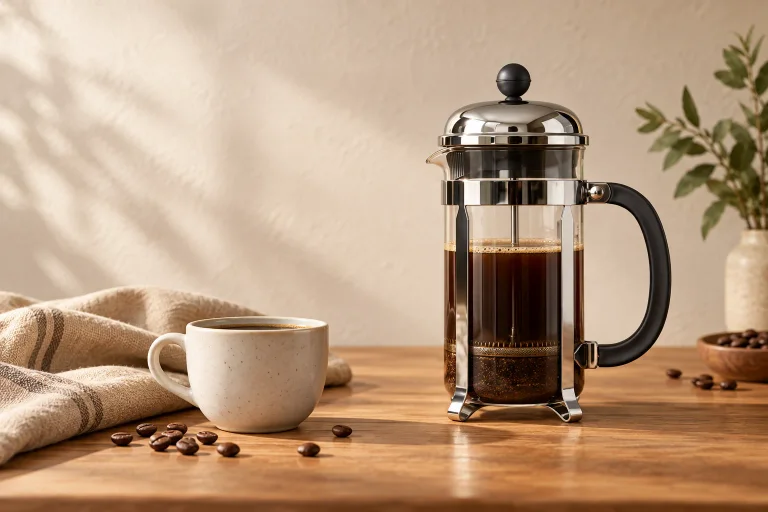
A French press
Use a clean small press whose filter can reach the milk. Add your cold mixture, fit the lid and move the plunger in short, controlled strokes through the liquid's surface. Stop to inspect the texture after roughly 30 seconds. Keep the glass stable and never force a sticking plunger.
Dilworth Coffee includes a French press among its cold-foam methods. A large press may need more liquid than one topping provides. Use a smaller vessel rather than making a large batch just to reach the filter. Our French press guide covers the brewer's coffee-making role.
A jar or cocktail shaker
Pour the mixture into a clean, undamaged jar with a tight lid, leaving plenty of empty space. Close it securely and shake in short bursts, opening between bursts to check the texture. Stop when the mixture pours thickly. A cocktail shaker works too; leave the ice in your serving glass so it does not dilute the foam mixture.
This is useful when you have no electric tool. Do not expect every jar, milk and shake duration to create identical bubbles. If you like the drink, repeat the same quantities and container before changing the recipe.
Using an electric frother's cold setting
Select the cold-froth program, not the hot-milk program. Follow the appliance's minimum and foam-maximum marks; the larger maximum for heating milk is not necessarily safe for frothing. Use only ingredients the manual permits. Some appliances allow milk but exclude cream, syrups or powders.
For example, Nespresso's Barista manual requires a clean jug and whisk, cold milk, and compliance with its fill marks. That model accepts several additions, but its instructions cannot be assumed to apply to another frother. If your appliance permits only milk, sweeten the coffee and make a plain-milk topping.
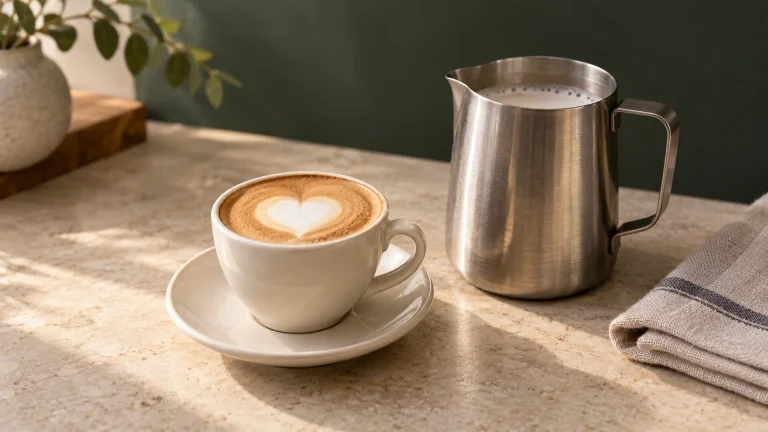
A steam wand heats milk as it introduces air, so it is not the tool for this unheated method. For hot milk texture, follow our cappuccino guide.
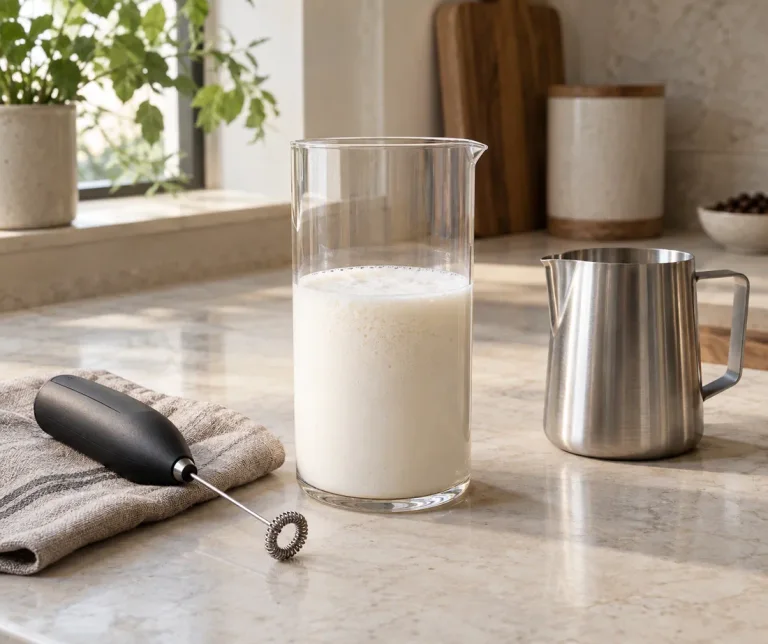
Can you make cold foam with oat milk?
Yes, with a suitable formulation, but “barista” on the carton is not a guarantee of a thick cold cap. A milk designed to steam well may behave differently without heat. Start with a small amount and follow the manufacturer's cold-frothing directions when available.
A dedicated cold-foam base is another option. Oatly's Barista Cold Foam, for example, is a separate product from ordinary barista oat milk and has its own chilling instructions. That distinction matters more than assuming all oat drinks are interchangeable.
For a dairy-free drink, check the cream substitute and flavored syrup too. Choose ingredients that fit your dietary needs, and clean shared tools carefully when allergens are a concern. Avoid copying a dairy recipe tablespoon for tablespoon and expecting the same texture from every alternative.
Why is my cold foam thin, bubbly or too thick?
- It barely thickens: check that the ingredients are cold and the whisk actually reaches them. A small batch in a wide bowl can be awkward to aerate. Try a narrower container before adding more ingredients.
- It has large bubbles: keep the spinning whisk below the surface rather than repeatedly pulling it into the air. Swirl gently before pouring.
- It sits in a stiff lump: stop frothing earlier next time. For the current cream mixture, gently stir in a teaspoon of cold milk and check whether it pours.
- It disappears into the coffee: expect a plain-milk cap to be less substantial than sweet cream. Serve promptly and pour close to the drink's surface rather than from a height.
- It overwhelms the coffee: use half as much topping on the next drink. You can adjust the portion without changing a mixture that already foams successfully.
For flavors, change one ingredient at a time. Swap the vanilla syrup for another coffee syrup, or reduce its amount if the drink is already sweet. Torani's own sweet-foam recipe uses a different proportion of syrup, cream and milk, so there is no single universal formula. Taste the foam with the drink before deciding it needs more sugar.
Make it fresh and keep the ingredients cold
Froth only what you intend to serve now. Keep milk, cream and any mixed liquid base covered in the refrigerator, following their package storage instructions. Fresh foam is a texture choice; refrigerating a questionable ingredient does not make it safe.
The FDA recommends refrigeration at 40°F (4°C) or below and a maximum of two hours at room temperature for foods requiring refrigeration, reduced to one hour above 90°F (32°C). Count preparation and serving time together. Discard a dairy mixture that exceeds that limit; smell alone cannot establish safety.
Clean the whisk, lid, pitcher and any press filter after use according to their instructions. Rinse away milk residue before it dries, then wash the parts properly. A quick spin in water is not a substitute for cleaning.
Cold foam questions
Is cold foam the same as whipped cream?
No. A cold-foam topping should pour or slide easily onto the drink. Whipped cream is usually taken to a firmer texture. A cream-based cold foam can become too stiff if you keep whipping it.
Can I make cold foam without heavy cream?
Yes. Start with ¼ cup of cold skim or 2% milk and froth it for a lighter topping. It will not have the same richness as the cream recipe.
Can I put cold foam on hot coffee?
You can, but it will warm and mingle with the coffee. If you want the contrasting cold cap this recipe is designed for, use iced coffee, cold brew or an iced latte.
Can I make cold foam in advance?
For this homemade recipe, froth just before serving. Keep the ingredients refrigerated and measure only the amount you need; there is no need to store finished foam.