A good coffee house serves a drink you enjoy, handles food and equipment with care, explains its menu clearly and makes the visit comfortable for its customers. Expensive machinery, elaborate latte art and a fashionable address are optional.
Start with a drink you already know and like. Notice whether it tastes pleasant as it cools, whether the order matches what you asked for, and how staff respond to an ordinary question. One visit gives you clues; a second visit tells you more about consistency.
A useful café checklist
| Area | Useful sign | What it cannot prove |
|---|---|---|
| The drink | Pleasant flavor and the style, size and milk you ordered | One cup cannot establish every barista’s consistency |
| The bar | Clean coffee-contact tools and an orderly handoff | A tidy counter is not a complete food-safety inspection |
| The conversation | Clear answers and willingness to check uncertainties | Long technical explanations do not guarantee better coffee |
| The menu | Visible prices, understandable sizes and relevant choices | A huge menu is not required |
| The room | A setting and access arrangements that fit your visit | Wi-Fi or laptop seating is not a requirement for good coffee |
| A problem | A calm response and an appropriate remedy | A refund policy cannot substitute for good daily habits |
Order something you can compare
If you normally drink a latte, order a latte. If black filter coffee is your daily choice, start there. Ordering straight espresso when you dislike its concentrated flavor gives you little basis for judging the shop. A simple familiar drink makes differences easier to notice, but enjoying a flavored drink is not a failure of taste.
Check the menu’s size and recipe before comparing two shops. A small cappuccino and a large latte have different coffee-to-milk balances even if both contain the same number of shots. Ask whether a larger size gets more espresso or only more milk. Our guide to popular coffee drinks explains the usual families; individual cafés may define them differently.
Let the drink cool enough to taste comfortably. Ask yourself three ordinary questions: Does the aroma invite another sip? Does the flavor suit me? Is the finish pleasant? You do not have to identify a particular fruit or assign a numerical score to have a valid opinion.
The Specialty Coffee Association’s Coffee Value Assessment separates descriptions of sensory characteristics from judgments of preference and value. That distinction is useful at a café too: “bright and citrusy” describes something; “too sharp for me” explains what you want instead.
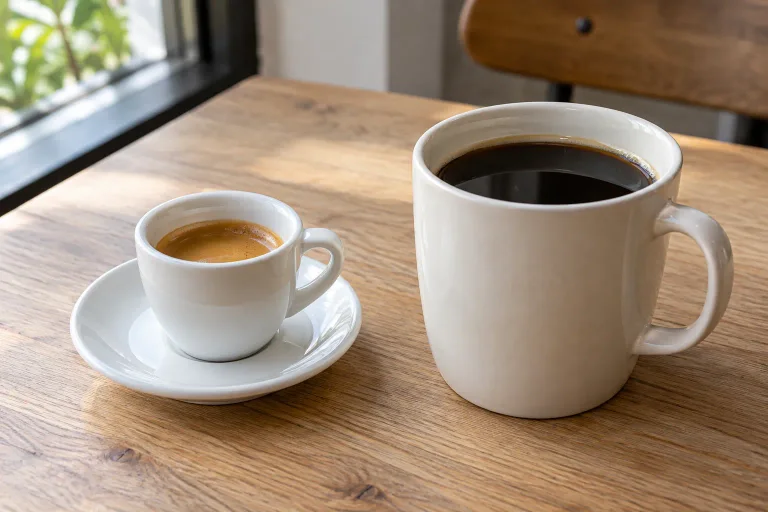
The bar tells you about everyday care
Look at what is visible without hovering over the staff. Are spills dealt with? Are the serving area and cup rims clean? Does the team have a clear place for finished orders? A queue can be busy and still feel organized; a spotless decorative shelf tells you less than the surfaces used to prepare your drink.
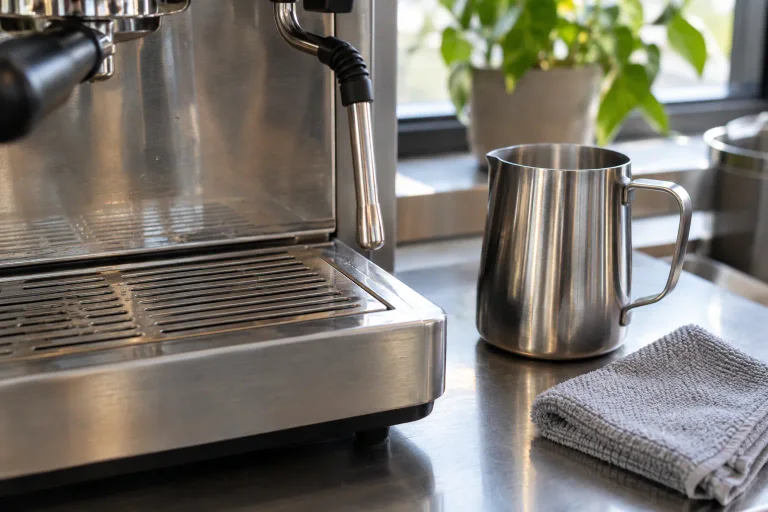
Milk equipment deserves attention. Wiping and purging a steam wand after use is part of normal care; Breville’s steam-wand instructions show why milk residue should be addressed promptly. At a café, you may not see the full cleaning routine, so avoid declaring equipment safe or unsafe from one glance.
For batch coffee, ask what is on the brewer and whether a fresh batch is coming if the current one seems tired. A well-managed batch brew can be an excellent everyday choice. Pour-over is not automatically better simply because someone makes it in front of you.
Visible scales, several grinders or a premium espresso machine suggest available tools, not guaranteed execution. What matters to you is whether the resulting drink is consistent. You are buying the coffee and service, not conducting an equipment inventory.
Good service makes choosing easier
A useful explanation meets you where you are. Try: “I like coffee that tastes chocolatey and not very sharp. What would you suggest?” Or: “I want a smaller milk drink with a noticeable coffee flavor.” Those preferences help more than asking for the strongest or best drink, which can mean different things.
A barista need not know every farm detail from memory. Checking the bag, asking a colleague or saying that a caffeine figure is unavailable is better than making up an answer. Be considerate of a rush; a brief menu question is reasonable, while a long brewing discussion may be easier at a quieter time.
A welcome without a performance
A greeting, eye contact or clear ordering sign can all make the process comfortable. An employee finishing a hot-drink task may not look up immediately. Judge the overall interaction rather than treating a delayed hello as proof of poor service. Clear information about where to order and collect matters more than a scripted welcome.
Look for the choices you need
A focused menu can serve customers very well. One carefully prepared house coffee, a decaf option and a few milk drinks may be enough. A larger menu can work too when staff can explain it and deliver orders reliably. Neither size is a quality certificate.
Check the choices that affect your visit: decaf, serving sizes, milk alternatives, an unsweetened option or something your companion enjoys. Ask about surcharges before ordering. A syrup-free drink should not be a negotiation, but a shop is allowed to have a clear recipe for a signature drink.
If caffeine matters to you, ask for the shop’s available information and recipe, including shot count. Do not infer caffeine from dark color, roast words or a strong taste. Our caffeine guide explains why drink size and preparation matter; estimates are not a measurement of the cup in front of you.
Use roast information to find your preference
Dark and medium roasts
Ask for flavor descriptions: roasty, chocolatey, nutty, fruity or gentle. The National Coffee Association’s roast guide describes broad differences between roast levels, but the words light, medium and dark are starting points rather than an identical scale at every roaster.
If your usual dark roast feels too smoky, ask for a less roasty option. If a lighter coffee tastes too sharp to you, say so. You do not need to train yourself to enjoy a fashionable profile in order to be a good customer.
Light roasts and tasting notes
Notes such as berry or caramel usually describe a perceived flavor, not an added ingredient. Ask whether a coffee is flavored if that distinction matters to you. Do not assume tasting notes are an allergen statement or a complete ingredient list.
A sample can help when a shop offers one, but free samples are not an entitlement or a necessary mark of quality. Buying a small serving is another way to explore. To compare cups at home without complicated vocabulary, use our coffee tasting guide.
Make milk and allergy questions specific
For a milk drink, judge whether the texture and temperature suit the style you ordered. Latte art can be attractive, but a beautiful pattern does not guarantee the flavor underneath it. If you prefer a cooler drink or a particular amount of foam, say that when ordering rather than expecting every shop to use the same recipe.
If you have a food allergy, tell staff before ordering and ask about ingredients and shared equipment. A plant-based milk option does not by itself establish that a drink is free from milk, nuts, soy or other allergens. The FDA explains the importance of allergen cross-contact; a separate-looking carton or jug is not a guarantee about the full preparation process.
A careful staff member may need to check or may be unable to accommodate your needs. An honest limit is more useful than reassurance without an explanation. If the answers do not support a safe choice for you, choose something else or another venue.
Choose the right room for the visit
A standing espresso bar, a family café and a quiet workspace can all serve excellent coffee. Before settling in, check seating rules, laptop policy and how long the space is available. If you need power or Wi-Fi, ask; neither is a universal café service.
Consider the practical details: a seat you can use comfortably, a manageable noise level, a clear route through the room and somewhere appropriate for a stroller or mobility aid if needed. If access is uncertain, contact the café before a special trip. Attractive photos rarely show every step, doorway or crowded corner.
For a work session, choose a venue that welcomes that use and keep your belongings within your space. For a conversation, a café with no laptops may be the better fit. The right atmosphere depends on why you came.
Ask useful questions about food
A tidy display, suitable serving utensils and clear ingredient information are useful observations. Ask which pastries arrived or were baked that day if freshness matters to you. “Handmade” does not automatically mean “made this morning,” and seeing the same variety twice does not mean it is the same pastry.
Do not judge an entire kitchen from the display counter. For formal inspection information, use the local health department’s public records where available. Staff should take ingredient and allergy questions seriously even when the café buys food from another bakery.
Price and refills should be clear
Free refills are a business choice, not a test of coffee quality. Check the price of an extra cup, the sizes and any milk or syrup surcharges. Compare the drink you actually order rather than the cheapest number on the menu.
Value can mean a reliably enjoyable takeaway cup, a place to spend time or a coffee you cannot easily brew at home. You decide which matters. An expensive drink should have a clear price, but price alone does not establish that it is better than your neighborhood café.
How the shop handles a problem matters
If your order is wrong, explain the specific issue promptly and politely: “I ordered decaf,” “This has the wrong milk,” or “Could you help me choose something less acidic next time?” An ingredient or order error is different from discovering that you do not enjoy a particular roast.
Give staff a chance to respond. A straightforward correction or clear explanation is a better sign than defensiveness. If the issue concerns an allergy or another safety requirement, stop drinking and make that clear; do not keep tasting to prove a point.
Before deciding a place is your regular stop, try the same drink on another visit. Consistency, kindness and a cup you look forward to are more useful than a checklist filled with fashionable details. For cafés with distinctive settings and histories, explore our coffee-shop travel guide.
Questions about choosing a coffee house
Does sour coffee mean the café is bad?
Not necessarily. Some coffees have a lively acidity; a sharp, unpleasant cup can also reflect brewing. Describe what you dislike and ask for a different profile. One cup does not tell you the cause with certainty.
Should a good café roast its own beans?
No. A café can brew well with coffee from an outside roaster. What matters is how it selects, stores and prepares the coffee, and whether staff can help you choose.
Is independent coffee always better than a chain?
No ownership model guarantees your preferred drink or good service. Apply the same practical questions to both: taste, care, clear information, consistency and a setting that suits you.
Do I need to drink coffee black to judge it?
No. Judge the drink you actually enjoy. If you are curious, tasting a little before adding milk or sugar can help explain the base coffee, but it is an option rather than a rule.