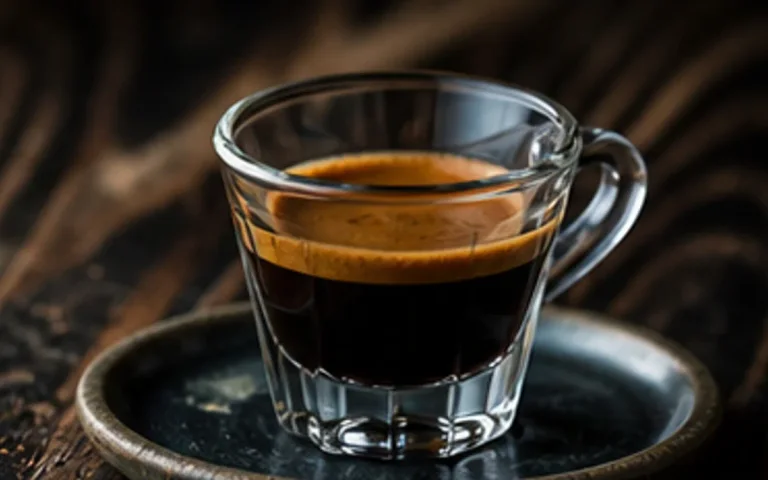
A ristretto is espresso brewed to a shorter beverage yield for the same coffee dose. Its concentrated body can suit a small drink, while sweetness and bitterness depend on the coffee and extraction.
Compare the dry coffee dose with the beverage mass in the cup. Shorter and longer yields create different espresso recipes.
- Ristretto
Shorter beverage yield for the same coffee dose, with a concentrated body.
- Espresso
The standard reference point for balance, crema, body, and clarity.
- Lungo
Longer yield with more extraction, more volume, and a higher risk of dryness.
- Milk drinks
A ristretto can make milk drinks feel sweeter and more compact.
Compare shorter yields; sweetness and bitterness depend on the recipe.
Cafe recipes vary, so confirm whether they use a shorter yield or a different dose.
Use grams, not guesswork, if you want repeatable results.
See where ristretto fits beside espresso drinks.
Gear Best Espresso MachinesFind machines that make espresso practice easier.
Taste Taste Coffee Like a BaristaLearn the language for evaluating short shots.
The smaller yield usually gives a concentrated body. It does not guarantee sweetness or remove bitterness; the coffee and extraction still matter.
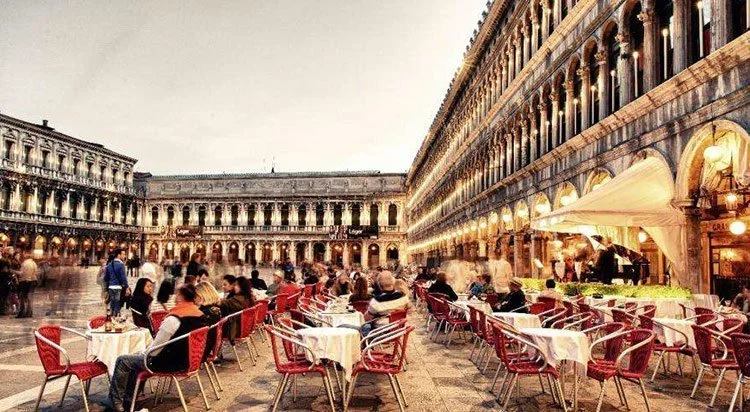
While some of us like sweeter versions of coffee others are addicted to a more bitter taste. Then there are some who drink coffee with milk. How you like your coffee, is all up to you.
Some facts about Ristretto
“Ristretto” means restricted. La Marzocco Home’s espresso-style guide uses a 1:1 to 1:1.5 ratio for this style: one part dry coffee to one to one-and-a-half parts beverage by weight.
For an 18 g basket dose, that range gives 18–27 g in the cup. A 1:2 comparison shot would yield 36 g from the same dose. These are examples for a basket that accepts 18 g; use the dose specified for your own basket.
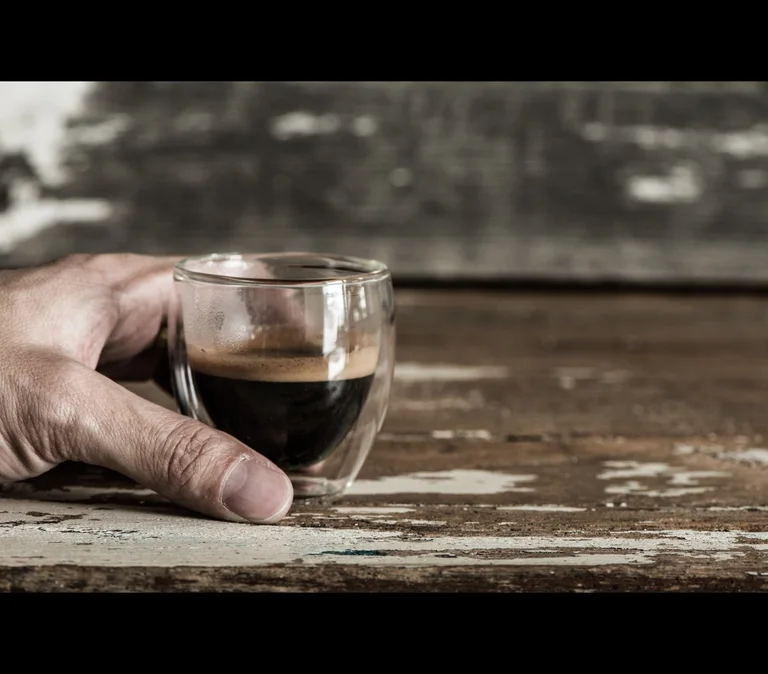
A glass of water may be offered alongside espresso, but it is not part of the ristretto recipe. Measure the drink collected in the cup, not the machine reservoir water.
If you are wondering how to make ristretto coffee, there is more than one method.
Begin with your usual espresso grind and dry dose, then stop the shot at the shorter target yield. Record its taste and flow before deciding whether the grind needs adjustment.
A short shot that tastes sharply sour may need more extraction. Compare a slightly longer yield at the same dose and grind; look for less sharpness without a dry finish.
Keep the tamp level and consistent. Do not press harder to create a ristretto; use the target yield and grind adjustment to control the shot.
Short and long shots can differ in body and flavor, but a ristretto is not automatically twice as strong as another espresso. Strength depends on what was extracted as well as beverage mass.
How to drink a Ristretto?
Try it black first if you want to compare the shot itself. You can also use ristretto as the base of a milk drink.
Ristretto vs. Espresso
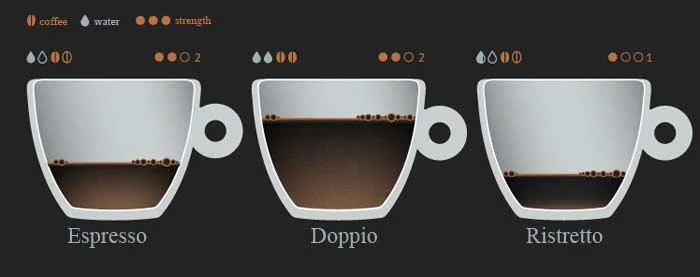
Ristretto is one espresso style. Compare it with a longer shot from the same coffee and dose to decide which balance you prefer.
The following examples use dry coffee mass to finished beverage mass, as explained in La Marzocco’s brew-ratio guide. They do not describe the water added to the tank:
- Espresso – 1:2
- Ristretto – 1:1
Taste the comparison at a comfortable temperature. Notice body, sweetness, acidity and bitterness rather than assuming the smaller shot must taste better.
Espresso refers to the ‘shot’ we all get at the local coffee shop. Espresso beans are not too different than coffee beans. But the real difference lies in the preparation method. At a basic level, espresso is made when a small amount of water is forced through a finely-ground and tightly-packed bed of coffee at extremely high pressure. Depending on your espresso machine, the amount of coffee and the amount of water is slightly variable.
Ristretto still contains caffeine. Yield alone cannot tell you its caffeine content, and it should not be treated as a decaf alternative.
Difference between Lungo, Espresso and Ristretto
A lungo extends the beverage yield. La Marzocco’s espresso-style guide gives roughly 1:3 to 1:4 or more; at an 18 g dose, 1:3 means 54 g in the cup.
Do not choose shot length as a precise caffeine dose. Bean type, coffee dose and extraction all affect the result.
Ristretto, a regular espresso and lungo use the same general brewing method. Their names describe different recipes, with some variation between cafés.
How the flavor can change
The bean and roast supply the starting flavors; shot length changes their balance. A short shot may feel heavy and concentrated, while a longer one may feel lighter. Neither style guarantees floral, chocolate or smoky notes.
For a useful comparison, keep the coffee and dose fixed and collect one short shot and one regular shot. If the short version is too sharp, compare a slightly longer yield next time. If the longer version leaves a drying finish, try stopping it earlier. Keep the recipe whose flavor you prefer.
What is a Ristretto Bianco?
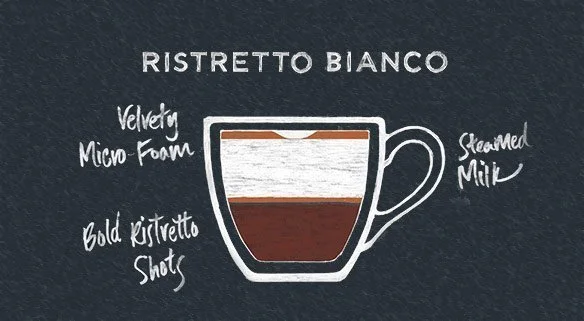
Ristretto bianco generally refers to a milk drink built with ristretto shots. Ask the café about its shot count, cup size and milk amount; the name does not establish one universal recipe.
Ristretto Bianco
A flat white also has textured milk and microfoam; it is not a foam-free latte. For the broader differences, see our latte guide.
Making ristretto at home
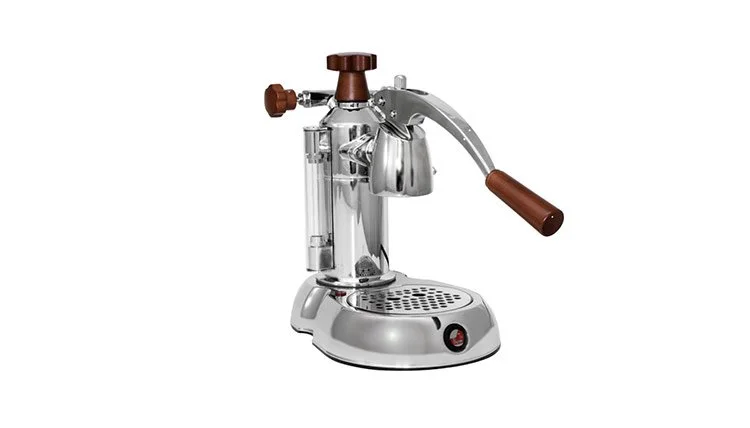
Use your machine and basket instructions for dosing and operation. A lever machine does not necessarily have programmable shot buttons. With a scale, weigh the dry dose and stop at your chosen beverage yield. Without a scale, a smaller marked serving can help you compare shots, but crema makes volume an imprecise substitute for mass.
Start from your usual espresso preparation; keep the tamp consistent and stop the shot earlier. Do not alter pump pressure or force a lever to meet a generic time target. Shot duration will vary with the recipe and equipment.
Research note
Coffee Corner checked the linked espresso-machine maker’s educational material. These are recipe examples and editorial comparisons, not measurements or tasting results from a Coffee Corner test.