Buying Guide
Best Espresso Machines for Hands-On and Easier Milk Drinks
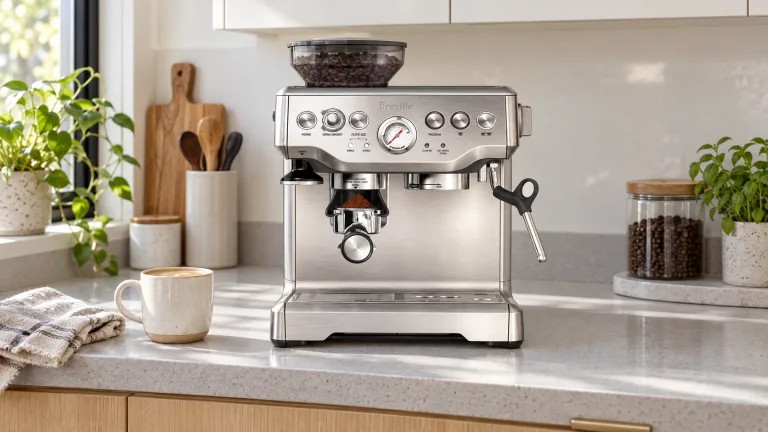
The Breville Barista Express is a good starting point if you want a built-in grinder and are keen to learn milk steaming. The Ninja Luxe Café Premier offers more help with dosing and froths the milk for you. With a separate grinder, choose the Bambino for a lower machine cost or the Bambino Plus for automatic milk. The Arte Evo is worth a look for Americanos: it has a dedicated hot-water outlet as well as a manual steam wand.
Coffee Corner may earn a commission if you buy through this link, at no extra cost to you.
The shortlist
Which machine fits your kitchen?
Start with the Barista Express if learning the grind and milk is part of the appeal. Choose the Ninja Premier when you want help with both. With a separate grinder, the Bambino keeps the machine cost down and the Plus makes milk easier. The Arte Evo earns its place for manual milk and Americanos.
All five require you to prepare, tamp and empty a portafilter. Their differences are in the help they provide, the drinks they make and the work after the first cup. The owner ratings below are Amazon.com snapshots from October 15, 2026; the dated examples are individual experiences, not measured failure rates.
Learn espresso with a built-in grinder
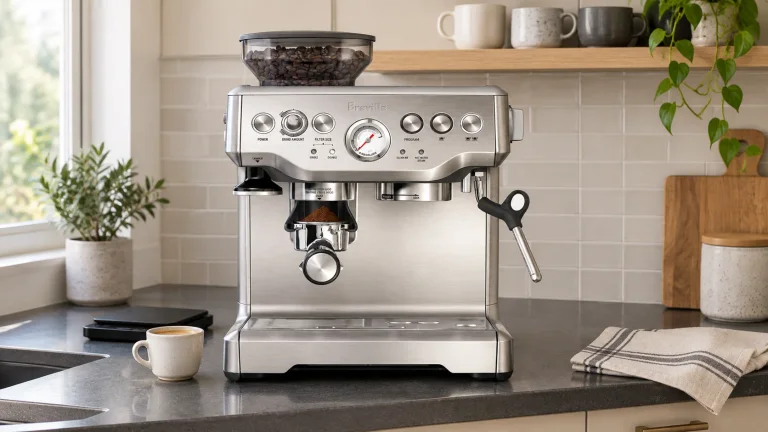
Breville Barista Express
The strongest starting point here for learning espresso with an integrated grinder. Choose it because you want to adjust the coffee and steam the milk yourself.
Read the pros, cons and owner feedbackGuided drinks and automatic milk
Ninja Luxe Café Premier
Choose the Premier when help with dosing and milk matters more than doing every adjustment yourself. It also suits a household that alternates between espresso, longer coffee and cold drinks.
Read the pros, cons and owner feedbackLower machine cost with a separate grinder
Breville Bambino
The lower-cost machine choice if you already own an espresso-capable grinder, or want to choose one separately and are happy to learn manual milk steaming.
Read the pros, cons and owner feedbackCompact machine with automatic milk
Breville Bambino Plus
The choice for automatic milk when you want a separate grinder. The extra spending is easiest to justify if you make lattes or cappuccinos most days.
Read the pros, cons and owner feedbackManual milk with a dedicated hot-water outlet
De’Longhi La Specialista Arte Evo
A specialist alternative for manual milk and Americanos, with a dedicated hot-water outlet and a cold-brew mode. Its smaller pooled owner record and grinder complaints keep it from being the default pick.
Read the pros, cons and owner feedbackAmazon scores describe the linked listings, which can combine models or variants. See each product’s note before comparing the totals.
For other brewing categories, browse our coffee gear buying guides. If you are considering a larger investment, the luxury and commercial coffee machine guide explains the equipment, installation and ownership differences.
Side by side
The numbers and features that matter
Amazon.com snapshots: October 15, 2026. Global ratings include more than the written US reviews and may pool variants; see each model’s details. Grind-setting counts are not directly comparable measures of precision or coffee quality.
Comparing 5 models. On small screens, swipe the table or use the arrow keys.
| Feature | Breville Barista ExpressBES870XL | Ninja Luxe Café PremierES601 | Breville BambinoBES450BSS | Breville Bambino PlusBES500BSS | De’Longhi La Specialista Arte EvoEC9255M |
|---|---|---|---|---|---|
| Best reason to consider it | Learning to adjust espresso and steam milk with one appliance. | A household alternating between espresso, milk drinks and longer coffee. | One or two drinks when you want a small machine and will learn milk steaming. | Small-kitchen milk drinks when you want to keep a separate grinder. | Americanos and manually steamed milk, with cold brew as an extra option. |
| Grinder and dosing | Built-in · 16 settings · timed dose | Built-in · 25 settings · weighed dose | Separate grinder required for fresh grinding | Separate grinder required for fresh grinding | Built-in · 8 settings · user-set dose |
| Milk preparation | Manual wand | 4 automatic presets, including cold foam | Manual wand | Automatic: 3 temperatures and 3 textures; manual option | Manual wand |
| Hot water | Dedicated outlet | No independent outlet | Through the steam wand | No dedicated outlet | Dedicated outlet + Americano program |
| Main extra to budget | Optional scale; grinder included | Cleaning supplies; grinder and scale included | Espresso-capable grinder | Espresso-capable grinder | Optional scale; grinder included |
| Amazon rating / global ratings | 4.4 / 5 · 27,928 | 4.2 / 5 · 2,559 | 4.0 / 5 · 2,665 | 4.1 / 5 · 2,422 | 4.2 / 5 · 957 |
| Amazon owner score | 4.4 / 527,928 global ratingsChecked Oct 15, 2026 | 4.2 / 52,559 global ratingsChecked Oct 15, 2026 | 4.0 / 52,665 global ratingsChecked Oct 15, 2026 | 4.1 / 52,422 global ratingsChecked Oct 15, 2026 | 4.2 / 5957 global ratingsChecked Oct 15, 2026 |
| Main limitation | Grind, dose, tamp and milk all need your attention. | You still tamp, move and empty the portafilter. | An espresso-capable grinder increases the total price and footprint. | Costs $200 more than the Bambino at the checked manufacturer prices. | Dose is not automatically weighed. |
| Details | Specifications, pros and cons | Specifications, pros and cons | Specifications, pros and cons | Specifications, pros and cons | Specifications, pros and cons |
Make it personal
Find what fits your kitchen
Choose the features you need, then check the practical trade-offs in each product report.
Your must-have features
- Breville Barista Express
- Ninja Luxe Café Premier
- Breville Bambino
- Breville Bambino Plus
- De’Longhi La Specialista Arte Evo
Select requirements to narrow the list.
Choose the features you need. A match means the listed features fit, not that one machine makes better-tasting coffee. If requirements conflict, compare the trade-offs instead of treating a partial match as a winner.
What will the coffee cost?
Use your own bag price and coffee dose. A double-shot dose counts as one drink here.
Example inputs; change them to match your coffee.
Coffee only. Excludes milk, wasted grounds, filters, electricity, cleaning and repairs. A month is 30 days; a year is 365 days. These inputs are examples, not measured consumption.
Add up the complete espresso setup
A machine without a grinder needs a suitable one in your budget. Enter current prices from your chosen sellers; use zero for equipment you already have.
Enter all three prices to see your total.
Upfront estimate only, before taxes, shipping and ongoing supplies. This does not calculate savings or payback.
A closer look
What you get—and what to live with
Compare the equipment, preparation and maintenance before choosing a model. Check the model number as well as the name; similar listings can include different versions.
01 · Learn espresso with a built-in grinder
Breville Barista Express
The strongest starting point here for learning espresso with an integrated grinder. Choose it because you want to adjust the coffee and steam the milk yourself.
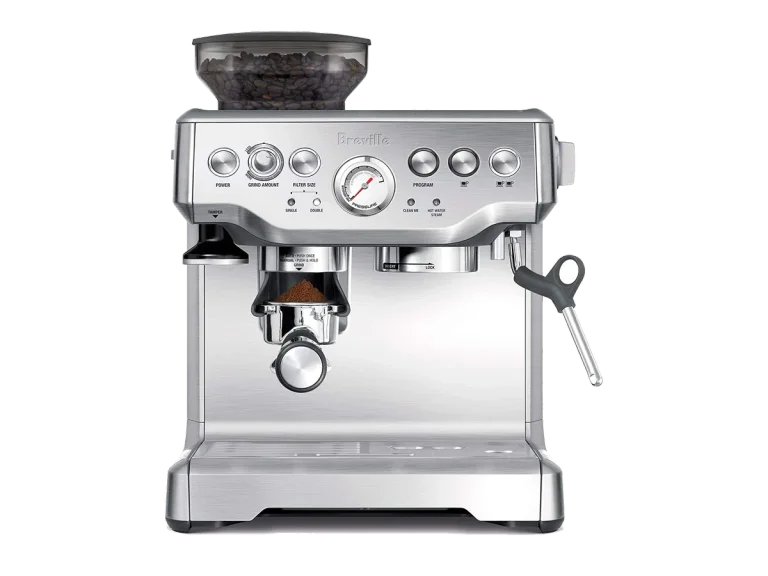
Exact model · BES870XL
Coffee Corner may earn a commission if you buy through this link, at no extra cost to you.
Pros
- Integrated grinder avoids a separate starting purchase.
- Manual steaming gives you control over milk texture.
- Dedicated hot-water outlet for Americanos.
- Current US kit includes the main preparation and cleaning tools.
Cons & limitations
- Grind, dose, tamp and milk all need your attention.
- Timed grinding does not measure the coffee weight.
- A second milk drink repeats the basket and wand cleanup.
- Some owners find the portafilter tight to lock; try the handling if grip strength matters.
What you control
The Express combines a 16-setting grinder with a 54 mm portafilter. You choose the grind, set the grinding time, distribute and tamp the coffee, then brew. The timer repeats a duration rather than weighing a dose, so a small scale is a useful first extra. Keep the same beans and basket while learning, and change one variable at a time. The pressure gauge alone cannot tell you how the coffee tastes.
Two milk drinks in a row
Brew the espresso, texture the milk with the manual wand, then wipe and purge it. Before the next shot, let the machine complete its return to brewing temperature. Empty and dry the basket before adding fresh grounds. This is a sequence of hands-on jobs; automatic milk on the Premier or Bambino Plus removes one of them. Choose manual milk only if the people using the machine want to learn it.
The kit and the counter
The current US kit supplies a tamper, jug, funnel, single- and dual-wall baskets and cleaning tools. Start with those before buying another tamper or distributor. Leave working space to turn the portafilter, lift the rear tank and remove the front tray. The separate hot-water outlet is useful for an Americano without moving a kettle.
Where the value changes
The integrated grinder avoids another initial purchase, but it also ties two appliances together. A future grinder upgrade still needs room beside the machine. At the manufacturer’s $699.95 price seen on October 15, compare the complete cost with a Bambino and your chosen grinder; a retailer sale can change that calculation.
02 · Guided drinks and automatic milk
Ninja Luxe Café Premier
Choose the Premier when help with dosing and milk matters more than doing every adjustment yourself. It also suits a household that alternates between espresso, longer coffee and cold drinks.
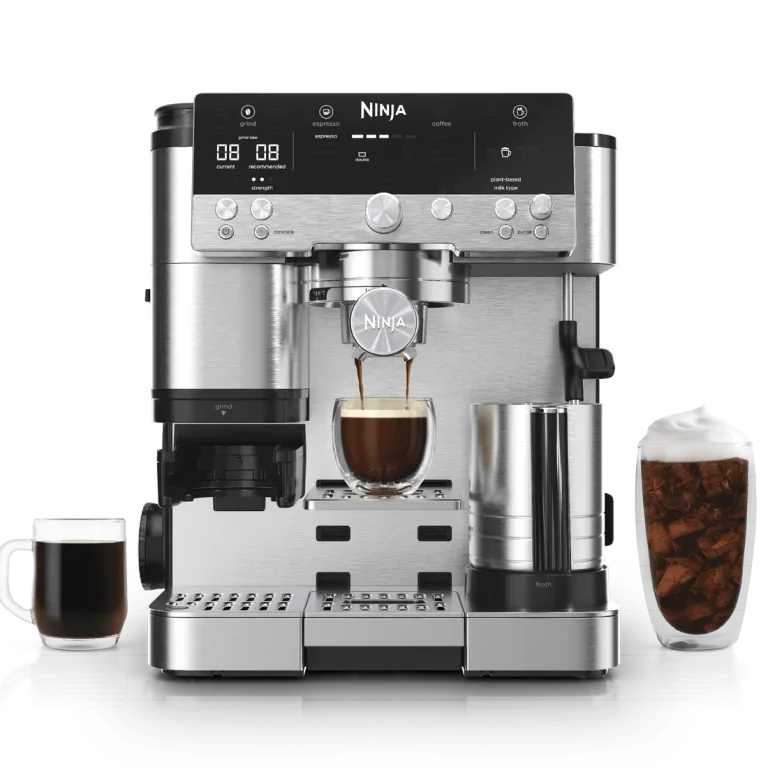
Exact model · ES601
Coffee Corner may earn a commission if you buy through this link, at no extra cost to you.
Pros
- Built-in scale measures the dose rather than relying only on grinding time.
- Automatic milk includes hot presets and cold foam.
- Espresso, longer coffee and cold modes in one machine.
- Grinder, jug, assisted tamper and funnel are supplied.
Cons & limitations
- You still tamp, move and empty the portafilter.
- No independent hot-water outlet.
- No single-shot basket in the standard ES601 kit.
- Owners flag tray emptying and restricted wand movement as practical irritations.
The assistance you actually get
The 25-setting grinder works with a built-in scale, and the display recommends a grind setting. You turn the dial yourself, move the portafilter, use the assisted tamper and lock the handle. Automatic milk programs handle steaming and whisking, but this is still a portafilter machine. Anyone hoping to avoid tamping should look at bean-to-cup machines instead. Try locking the handle before buying if hand or wrist strength is a concern.
Know which drinks are included
The ES601 supplies double and Luxe baskets, rather than a single-shot basket. Its four milk presets include cold foam, alongside espresso, coffee and cold-brew modes. There is no independent hot-water outlet. If a daily Americano or tea is important, allow for a kettle or compare the Express or Arte Evo’s dedicated hot-water setup. Match the ES601 label and kit: photos of other Luxe models can show different accessories.
The second cup still needs a reset
After the first drink, empty and wash the basket and portafilter, wipe the wand and follow the automatic purge sequence. Rinse the jug before preparing another milk drink and watch the drip tray. The daily benefit is less milk technique and dosing guesswork, not an empty sink. Stay with the machine during operation.
What to budget and leave room for
The grinder, scale, portafilter, assisted tamper, funnel, milk jug and cleaning accessories cover most starting needs. A knock box and cloths are useful conveniences. Use it clear of wall cabinets, as the manual requires, with room to refill and remove the tray. The manufacturer price seen on October 15 was $599.99; cleaning tablets and descaler remain recurring purchases.
03 · Lower machine cost with a separate grinder
Breville Bambino
The lower-cost machine choice if you already own an espresso-capable grinder, or want to choose one separately and are happy to learn manual milk steaming.
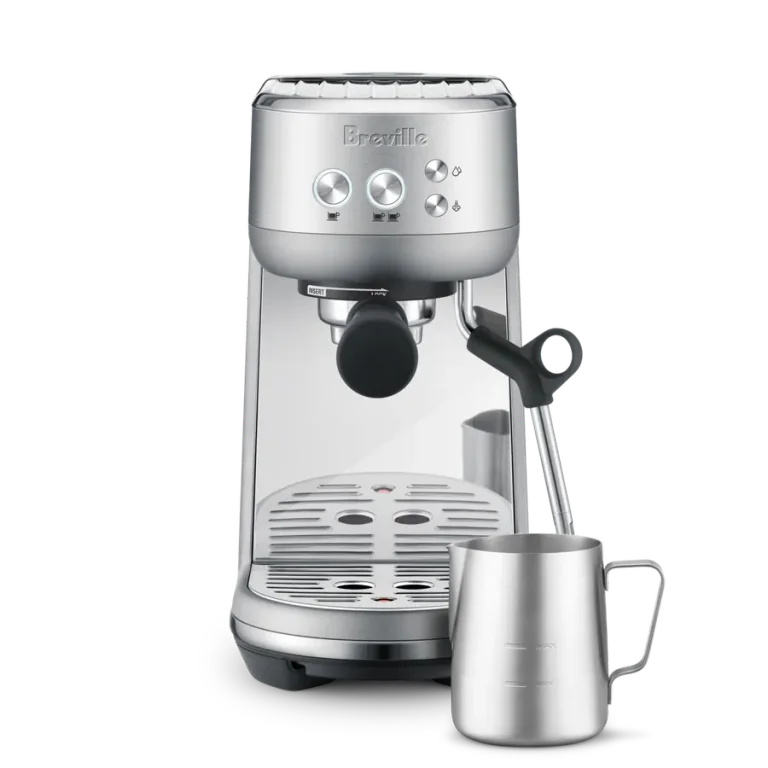
Exact model · BES450BSS
Coffee Corner may earn a commission if you buy through this link, at no extra cost to you.
Pros
- Lowest checked machine price in this shortlist.
- Separate grinder can be selected or upgraded independently.
- Manual steaming lets you learn jug position and milk texture.
- Current US kit includes the basic baskets, tamper and jug.
Cons & limitations
- An espresso-capable grinder increases the total price and footprint.
- Milk steaming is manual.
- Its 47 fl oz tank is smaller than the Plus’s 64 fl oz tank.
- Recent owners include reports of early flow and pump faults.
Spend on the complete setup
The $299.95 manufacturer price seen on October 15 buys the machine, not a grinder. Add the grinder you will actually use before comparing it with an integrated model. A separate grinder can be changed independently later. Its price, size and adjustment range matter more to this decision than the Bambino’s small body alone.
Prepare the coffee, then steam
The current US kit has a 54 mm portafilter, tamper, milk jug and both single- and dual-wall baskets. The manual allows pre-ground coffee in a dual-wall basket; a suitable grinder and single-wall basket give you more control. You handle the dose, tamp and jug position. The hot-water function uses the steam wand rather than a separate spout.
Quick heating is only the start
Breville’s three-second figure describes the ThermoJet heating system, not a complete latte. The cup and portafilter still need warming, and the beans still need grinding. For the second drink, remove the puck, rinse and dry the basket, then repeat the preparation. Wipe and purge the steam wand after milk so residue does not dry onto it.
Who should spend more
For mostly espresso, the standard Bambino leaves more money for a grinder. For daily lattes, the Plus may justify its extra $200 at the checked manufacturer prices because it takes over milk temperature and texture. Neither removes the portafilter work, and both need a place for the grinder, jug and used coffee pucks.
04 · Compact machine with automatic milk
Breville Bambino Plus
The choice for automatic milk when you want a separate grinder. The extra spending is easiest to justify if you make lattes or cappuccinos most days.
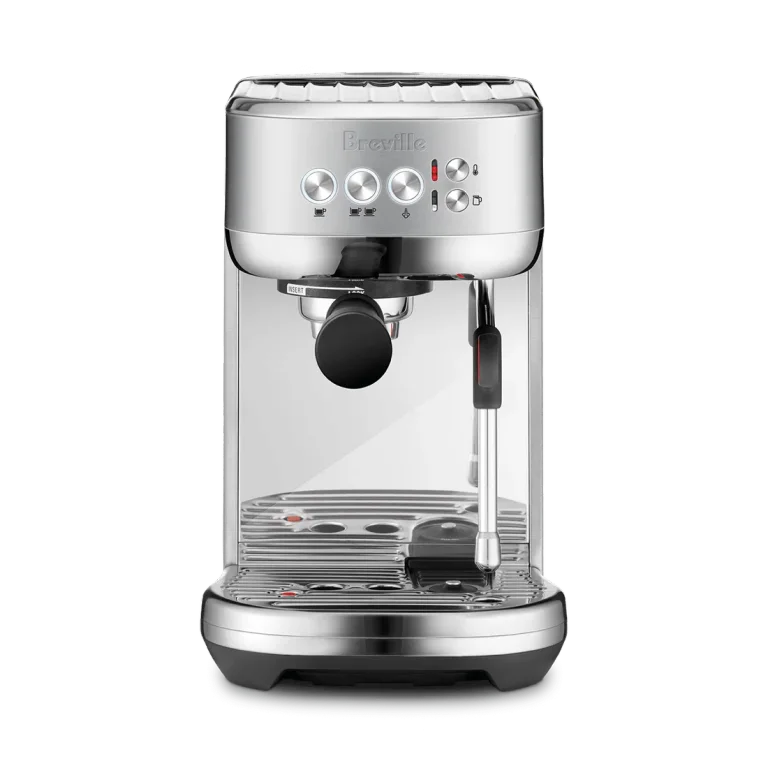
Exact model · BES500BSS
Coffee Corner may earn a commission if you buy through this link, at no extra cost to you.
Pros
- Automatic milk offers three temperature and three texture choices.
- Manual steaming remains available.
- 64 fl oz tank holds more than the standard Bambino’s.
- Separate grinder can be chosen and upgraded independently.
Cons & limitations
- Costs $200 more than the Bambino at the checked manufacturer prices.
- A grinder is still a separate purchase.
- Automatic wand purging adds to drip-tray work.
- Owner reports include milk-frother and brewing faults.
What the extra $200 changes
The Plus was $499.95 on Breville’s US page on October 15, compared with $299.95 for the Bambino. Its main advantage here is automatic milk with three temperature and three texture settings, plus the option to steam manually. It also has a larger 64 fl oz reservoir. Paying more does not remove grinding, dosing or tamping.
Use the automatic milk system correctly
For automatic milk, use the supplied jug with its base resting on the tray’s temperature sensor and keep the milk between the marked minimum and maximum. After steaming, lift the wand to remove the jug, wipe the wand and lower it for the automatic purge. Keep hands away from the hot tip and purge discharge.
Two drinks and the cleanup afterward
A second espresso requires a fresh dose and an emptied, rinsed and dried basket. For another milk drink, rinse the jug and use fresh cold milk. Automatic purging sends water into the tray, so check it during a run of drinks. Group-head cleaning and descaling are separate jobs; set aside time when the machine signals for them. For poor flow on a new machine, follow the manual and contact support rather than opening the case.
A small machine is not the whole station
A grinder, the 480 ml supplied jug and a place to empty pucks still need space. Check tank access and room to swing the handle with the machine in its intended position. Start with the included tamper, baskets and dose-trimming tool. A scale is useful for learning; a more expensive accessory set is not a requirement.
05 · Manual milk with a dedicated hot-water outlet
De’Longhi La Specialista Arte Evo
A specialist alternative for manual milk and Americanos, with a dedicated hot-water outlet and a cold-brew mode. Its smaller pooled owner record and grinder complaints keep it from being the default pick.
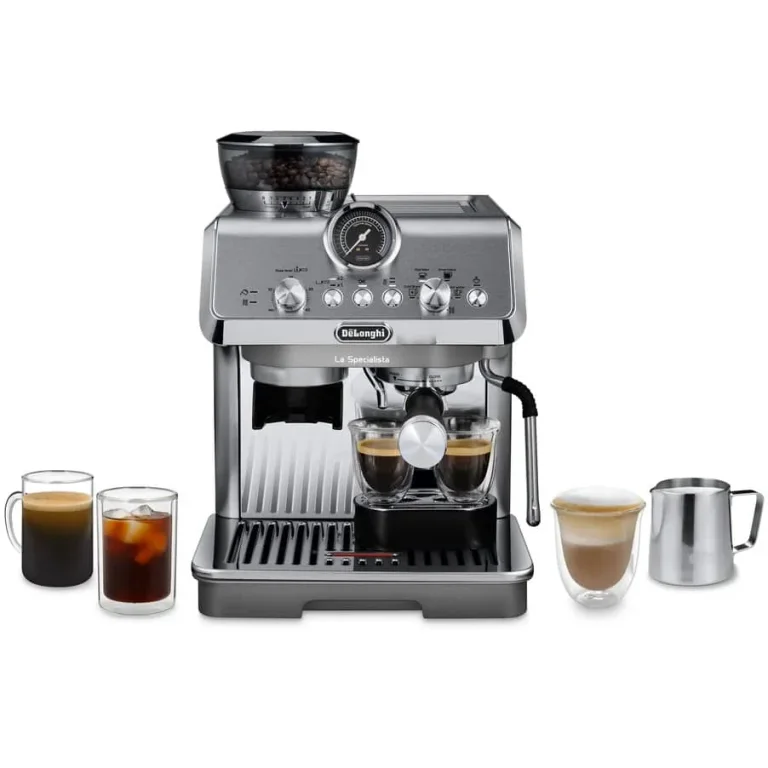
Exact model · EC9255M
Coffee Corner may earn a commission if you buy through this link, at no extra cost to you.
Pros
- Dedicated hot-water outlet and Americano program.
- Manual steam wand for people who want to control milk texture.
- Three brewing-temperature profiles on the selected US model.
- Funnel, tamping mat, tamper and jug are included.
Cons & limitations
- Dose is not automatically weighed.
- Eight grinder settings provide fewer labelled steps than the Express or Premier.
- No automatic milk program.
- Smaller pooled rating base and repeated grinder complaints deserve attention.
A more manual choice than the Premier
The US EC9255M has eight grinder settings and three brewing-temperature profiles. You set the dose, tamp with the supplied guide and choose the drink. The grinder does not weigh the coffee for you. A scale helps you distinguish a grind change from a change in the amount of coffee in the basket.
The reason to choose this model
The separate hot-water spout and Americano program suit someone who often dilutes espresso, while the steam wand leaves milk texture to you. Cold brew adds another option, but it is a rapid machine process rather than an overnight steep. Buy it for the controls and drinks you will use, rather than a promise that every method tastes alike.
Preparing the next drink
After brewing, remove the spent puck and clean the basket before dosing again. Wipe and purge the wand after steaming milk. For cold drinks after hot use, follow the manual’s cooling instructions. The funnel, tamping mat, tamper and jug are supplied, so the first extra to consider is a scale rather than a duplicate preparation kit.
Grinder care belongs in the decision
The manual provides access and brushing instructions for the grinder outlet. Follow those, and contact support if grinding stops; do not treat online cabinet-disassembly advice as routine maintenance. Two sampled Arte Evo owners reported stopped grinders, including one after roughly two years. Check where the exact US model would be serviced and keep the proof of purchase.
Living with it
What Amazon owners report
Read the score together with the number of ratings and the model note. Individual reports show what can go well or wrong; they do not measure a product’s failure rate.
Breville Barista Express
Back to product details ↑Amazon.com
Checked Oct 15, 2026
Selected version: Brushed Stainless Steel · ASIN B00CH9QWOU
The largest owner record of these five gives the Express useful context. It supports a serious shortlist, but does not establish a failure rate or guarantee that your unit will last.
The listing pools finishes. The total is global ratings, not 27,928 written US reviews.
Amazon rating distribution
What owners liked
A verified purchaser liked the built-in grinder and the freedom to adjust coffee preparation and milk.
Sep 26, 2026 · View product on Amazon ↗Problems and cautions
A verified stainless-steel purchaser gave four stars and liked the machine overall, but found the portafilter unusually tight and difficult to seat.
Sep 6, 2026 · View product on Amazon ↗Ninja Luxe Café Premier
Back to product details ↑Amazon.com
Checked Oct 15, 2026
Selected version: Stainless Steel · ASIN B0D45PK5V4
Owners praise the frother and easier preparation, while the useful cautions concern the work that remains around the tray, wand and handle. The sample below includes a four-star review with both praise and criticism.
The listing pools colors, including Cyberspace. The total is global ratings, not a US-only review count.
Amazon rating distribution
What owners liked
A verified stainless-steel purchaser reported almost a year of daily use without issues and singled out the frother as a favorite feature.
Oct 4, 2026 · View product on Amazon ↗Problems and cautions
A verified purchaser liked the convenient drinks but criticized the small wastewater tray, limited wand movement and lack of a dedicated hot-water spout.
May 15, 2026 · View product on Amazon ↗Breville Bambino
Back to product details ↑Amazon.com
Checked Oct 15, 2026
Selected version: Brushed Stainless Steel · ASIN B0B1JPPG2L
Compact size and daily usefulness earn praise, but the mixed aggregate score and recent flow or pump complaints make clear return terms particularly useful. These reports do not tell us how often faults occur.
The listing pools finishes. The selected written examples are for brushed stainless steel; the total is global ratings.
Amazon rating distribution
What owners liked
A verified brushed-stainless purchaser liked the compact machine and cleanup after some trial and error learning to make drinks.
Oct 10, 2026 · View product on Amazon ↗Problems and cautions
A verified brushed-stainless purchaser reported a loud pump with almost no water flow from new and planned to return the machine.
Oct 3, 2026 · View product on Amazon ↗Another verified purchaser reported that the espresso pump stopped after a short period of use.
Oct 1, 2026 · View product on Amazon ↗Breville Bambino Plus
Back to product details ↑Amazon.com
Checked Oct 15, 2026
Selected version: Brushed Stainless Steel · ASIN B07JVD78TT
Automatic milk is a clear source of owner praise. Read that alongside reports of frother or brewing problems and the tray-cleaning complaints; an individual success or failure cannot predict your unit’s lifespan.
Amazon’s total can pool finishes. The linked Amazon reviews are syndicated by Woot; individual variant badges are not shown. The positive example explicitly names the Bambino Plus.
Amazon rating distribution
What owners liked
A verified Amazon purchaser specifically identified the Bambino Plus and praised its easy operation, hot milk and foam.
Oct 13, 2026 · View product on Amazon ↗Problems and cautions
A verified Amazon purchaser reported a milk-frother failure and dissatisfaction with the service response.
Sep 21, 2026 · View product on Amazon ↗De’Longhi La Specialista Arte Evo
Back to product details ↑The headline rating mixes La Specialista styles, so the selected Arte Evo examples matter more than the total alone. They show enjoyable daily use alongside grinder stoppages; the cause and overall failure rate are not established.
The total pools other La Specialista styles, including Touch, Opera and Maestro. The selected written examples are labelled Arte Evo.
Amazon rating distribution
What owners liked
A verified Arte Evo purchaser appreciated the instructions and first-machine experience, while noting that descaling was still required with filtered water.
Aug 9, 2026 · View product on Amazon ↗Problems and cautions
A verified Arte Evo purchaser reported a grinder that stopped and described an unsatisfactory support experience.
Jun 25, 2026 · View product on Amazon ↗A four-star Arte Evo owner described enjoyable daily use since May 2024, then a grinder stoppage after about two years.
Jul 6, 2026 · View product on Amazon ↗Other options
When to choose something else
A bean-to-cup machine
If nobody wants to tamp or empty a portafilter, none of these five meets that requirement. The Magnifica Plus handles those steps internally, but milk cleaning and mixed owner reports still matter.
Read more ↗Ninja Luxe Café Mini
Worth comparing if you want a guided integrated grinder and mainly make espresso or ordinary coffee. The base Mini uses manual milk; the Premier’s automatic milk and cold modes are the reasons to spend more.
Read more ↗A drip coffee maker
For several large black coffees at breakfast, a pot may be more convenient than preparing repeated portafilters. Compare that job before spending on an espresso system.
Read more ↗Buying advice
What matters before you buy
Grinder and dose
A built-in grinder saves a separate purchase. A separate grinder makes later changes easier. Check dose weight rather than assuming a timer measures it.
Milk preparation
Manual steaming asks you to position the jug and stop at the right point. Automatic milk still leaves a cleaning job.
The second drink
Think through emptying the basket, refilling, steaming and cleaning when two people want coffee at once.
Counter access
Leave room to fill the tank, remove the tray, turn the handle and use the milk jug. Include the separate grinder.
Service and consumables
Check local warranty terms, return options, cleaning supplies and available replacement parts before choosing a seller.
Choose the work you want the machine to do
Start with the drink you make most often. For lattes, decide whether you want to steam the milk yourself. Then consider whether you want a built-in grinder or would prefer to choose one separately. The grinder guide explains what a separate espresso setup needs.
- For a hands-on all-in-one
- Start with the Barista Express if learning grind, dose and milk texture appeals to you. Compare it with the Premier if you would rather follow grind guidance and let the machine froth the milk. Both still need a prepared portafilter.
- For a separate grinder
- Choose the Bambino for manual milk or the Bambino Plus for automatic milk. Reserve room and money for a grinder that can make useful fine adjustments for espresso; a basic blade grinder is not a like-for-like substitute.
- For one-touch drinks
- If nobody wants to fill and tamp a portafilter, look at a bean-to-cup machine such as the Magnifica Plus. It handles those steps for you, but the milk system still needs cleaning. Read the review’s owner-reliability cautions before buying.
Budget and measure the complete espresso station
The machine price is only part of the decision. Count the grinder if required, a useful scale, cleaning supplies and the counter space needed to prepare a drink. Begin with the included tools before buying accessories that may not fit. If tamping is the step you want to avoid, the Magnifica Plus review explains the benefits and ownership cautions of a bean-to-cup machine.
- Check real access, not just a width figure
- Measure with the water tank removed or filling lid open, and leave room to turn the portafilter handle and pull out the drip tray. A machine that fits below a cabinet may still be awkward to refill. Check the exact regional model and power label.
- Separate machine, grinder and coffee costs
- A separate grinder makes later changes easier but costs money and space now. An integrated machine keeps the station together; replacing or repairing the grinder can also affect the whole routine. Compare the full setup against the price of a suitable all-in-one.
- Use the manual for milk and maintenance
- Keep hands clear of hot metal and steam. Wipe the wand after each use, purge as directed and unplug before removing grinder parts for cleaning. Use the model’s specified cleaner and descaler rather than assuming the two jobs are interchangeable.
The first drink and the next one
A single latte hides work that becomes obvious when two people want different drinks. After the first, there is a puck to discard, a basket to rinse and dry, and milk equipment to clean. Automatic frothing helps with texture; it does not do those jobs. If the second person wants decaf, a hopper full of regular beans adds another decision. A separate grinder may make changing beans easier, depending on its design, but do not assume every built-in grinder supports an instant, empty changeover.
Buy the useful extras first
Start with the supplied jug, tamper and baskets. Add a scale that can hold your cup on the tray if you want to track dose and drink weight. A knock box keeps pucks out of the sink, while a dedicated damp cloth makes it easier to wipe the wand immediately. Check the exact basket diameter and handle compatibility before buying a funnel or replacement portafilter. A costly tamper or distribution tool is not a prerequisite for learning.
Measure working room, not just the machine
Place your largest cup where it will sit, allow room to turn the handle and swing the wand, and check how the tank lifts out. The tray needs space in front to be removed without spilling. Include the grinder and its hopper lid for either Bambino. Product listings use inconsistent dimension labels, so confirm the intended model’s fit with the seller before ordering for a tight cabinet space.
Cleaning costs more than a button press
Milk residue needs prompt cleaning even when the wand purges automatically. Cleaning coffee oils and removing mineral scale are different jobs; use the maker’s specified supplies and cycles for each. Water hardness and usage affect how often care is needed, so a fixed annual descaler bill would be misleading. Keep the manual and warranty details handy, and judge a seller’s return terms before a problem interrupts your morning coffee.
Common questions
Before you decide
Which espresso machine is best for a beginner?
Choose the Barista Express if you want to learn manual preparation with an integrated grinder. Choose the Premier if guided dosing and automatic milk suit you better. Either still requires tamping, emptying the portafilter and cleaning after milk.
Is the Bambino Plus worth more than the Bambino?
It is easier to justify when you make milk drinks regularly and want automatic texture and temperature settings. For mostly straight espresso, the standard Bambino and a suitable grinder can be the more useful place to spend. Neither includes a grinder.
Do I need an espresso grinder?
For a single-wall basket, you need a grinder that can grind fine enough and make small adjustments for your beans. Some dual-wall baskets accept pre-ground coffee; check the machine manual. Include a suitable grinder in the budget when buying a machine without one.
Does a higher pump-bar number mean better espresso?
No. The advertised maximum pressure does not tell you the pressure at the coffee or how well the machine controls temperature and flow. Spend more time comparing grind adjustment, dosing and how you will prepare each drink.
Are automatic milk machines self-cleaning?
No. Automatic milk reduces the technique involved in frothing, but you still clean the jug or carafe, wipe accessible milk-contact parts and follow the maker’s rinse or purge steps. Check that routine before buying.
Should I buy a super-automatic instead?
Consider one if you want the machine to grind, dose and brew without handling a portafilter. Budget for milk-system cleaning and follow the brew-unit care instructions. Compare recent exact-model ownership issues as carefully as the drink menu.