Café au lait is brewed coffee mixed with warm milk, often in roughly equal amounts. It is an easy way to turn a normal pot of coffee into a softer, milkier drink without an espresso machine. Start with half a cup of coffee and half a cup of milk, then adjust the balance to suit the coffee you already enjoy.
The name means “coffee with milk.” Copenhagen Coffee Lab’s guide uses filter coffee and an equal quantity of hot milk. You do not need a deep foam cap or latte art: a smooth, gently warmed milk mixture is enough.
An easy café au lait recipe
Makes: one drink, about 8 US fl oz (240 mL). Time: about 5 minutes once your coffee is brewed. Use a mug of at least 10 fl oz so you have room to stir. These rounded metric quantities are kitchen equivalents; one US measuring cup is 8 fl oz.
Ingredients
- 1/2 US cup (about 120 mL) freshly brewed hot coffee
- 1/2 US cup (about 120 mL) refrigerated pasteurized milk
Method
- Measure 1/2 US cup (about 120 mL) of freshly brewed hot coffee. This is a measure of finished coffee, not grounds or brewing water.
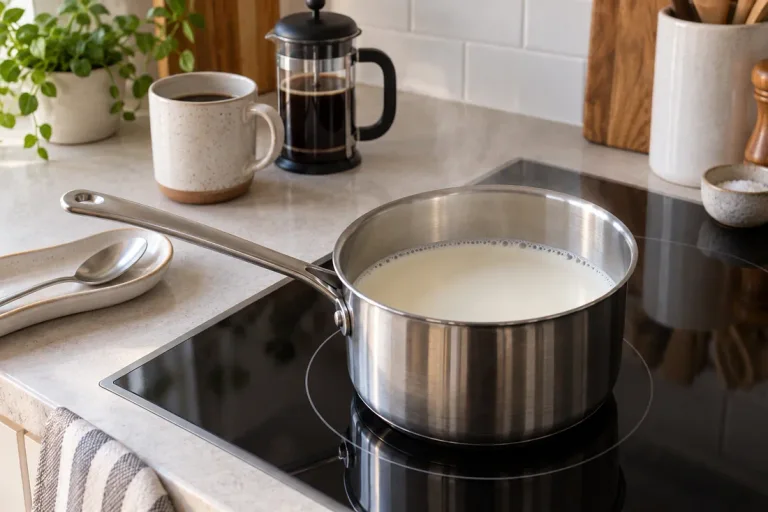
- Warm the milk in a small saucepan over low to medium-low heat, stirring frequently. For dairy milk, aim for about 140–150°F (60–65°C), then remove from the heat. Do not let it boil.
- Pour the coffee into a heat-safe mug that holds at least 10 fl oz. Add the warm milk slowly, keeping space below the rim.
- Stir gently and serve promptly. Taste before sweetening. Let the drink cool to a comfortable drinking temperature.
The milk temperature follows Breville’s dairy-milk guidance. A thermometer is more useful than touching a hot pan. This is a drink-preparation temperature, not a treatment that makes spoiled or improperly stored milk safe.
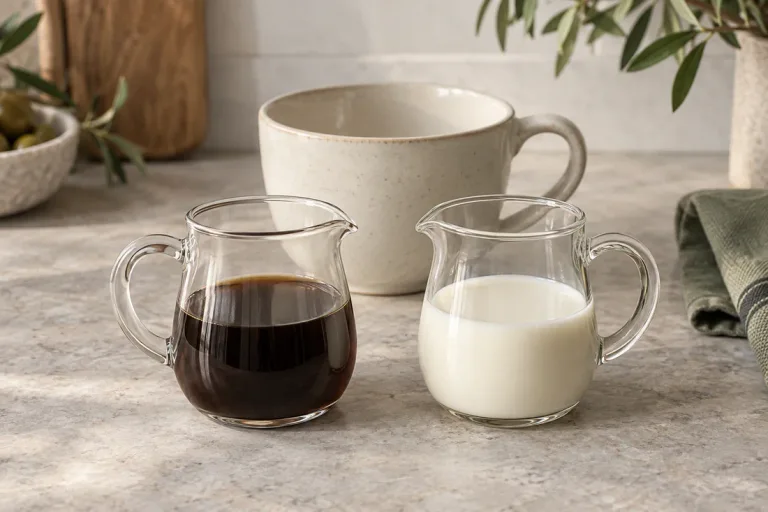
Choose the balance, then change one thing
Equal parts is a useful first cup, not a rule every café follows. Starbucks’ home recipe uses 230 mL coffee and 115 mL milk: a 2:1 ratio. Its recipe also froths the milk. Both choices show how much room there is to adapt this simple drink.
| For this result | Coffee | Milk |
|---|---|---|
| Equal-parts starting cup | 1/2 US cup (about 120 mL) | 1/2 US cup (about 120 mL) |
| More coffee in the same size drink | 2/3 US cup (about 160 mL) | 1/3 US cup (about 80 mL) |
| A larger equal-parts serving | 3/4 US cup (about 180 mL) | 3/4 US cup (about 180 mL) |
The first two rows both make about one measuring cup. The second contains more actual coffee; it is not simply the first recipe in a bigger mug. The last row makes about 12 fl oz, so choose a larger mug with spare capacity.
Keep the coffee itself consistent while comparing these mixtures. If you change the roast, grind, brew ratio and milk quantity together, you will have little idea which change helped. For a quick adjustment, hold back a little milk, taste, then add it in small pours.
Start with coffee that tastes good before the milk
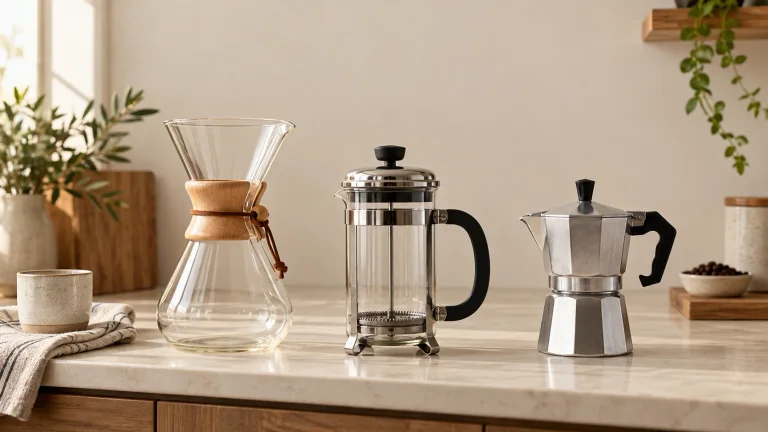
Use drip coffee, pour-over or French press. A fresh brew is a better starting point than coffee left cooking on a warming plate. Choose coffee you like black or with a small splash of milk; adding a large quantity of milk should be a preference, not a rescue operation.
There are two different ratios here. Your brew ratio measures dry grounds against brewing water. Your drink ratio measures finished liquid coffee against milk. Do not brew with half the usual water just because you plan to add an equal quantity of milk.
Using a drip brewer
Follow the dose and minimum batch size for your machine, then measure the coffee needed for the drink. For example, Moccamaster’s US guidance gives 55 g grounds per liter of water. That scales to 27.5 g for 500 mL of brewing water, where your model supports that batch. It does not promise 500 mL in the carafe: water remains in the grounds.
If your usual drip recipe works, keep it. Our home brewing methods guide explains the differences between drip and other brewers, while the brew-ratio calculator helps scale the grounds and water without confusing them with the milk.
Using a French press
One manageable batch is 18 g medium-coarse coffee with 320 g water at about 205°F (96°C), scaled from Counter Culture’s French press method. Stir after 30 seconds, place the lid on, and slowly plunge at 6 minutes. Use a press suitable for that volume, and never force a stuck plunger. Pour into a separate vessel, then measure 120 mL for your drink.
This makes more coffee than one small café au lait needs; the 320 g is brewing water, not the final drink yield. Use the rest for another serving. Our French press guide covers grind, sediment and a different starting recipe. Pick one method and keep its dose and timing together.
Warm the milk without making a project of it
A small saucepan gives you control over a single serving. Stir along the bottom as the milk warms, remove it from the heat at your target temperature, and combine it with the coffee promptly. Boiling is unnecessary. If a skin forms, spoon it away rather than whisking it into lumps.
An electric frother can also work if it has a hot-milk setting. Follow the correct minimum and maximum marks for that mode. The Aeroccino instructions, for example, distinguish the hot-milk and frothing limits. If your device requires more milk than this recipe, heat a suitable batch and measure the portion you need. Do not automatically empty the entire jug into your coffee.
Keep milk out of a standard coffee maker’s water tank; heat it separately. Clean milk-contact parts after use according to their manual. A little foam is welcome if you like it, but whipped milk is not the goal. You should be able to stir the finished drink easily.
Choosing dairy or plant-based milk
Whole milk is a straightforward starting choice; 2% milk also works. If you prefer oat or soy, use a product you already like in hot coffee and follow its heating instructions. A “barista” label describes a formulation intended for coffee, not identical behavior across brands.
For example, Oatly explains that its Barista Edition uses an acidity regulator to help it perform in coffee. That does not establish a universal heating temperature or guarantee for every oat drink. Begin with a small portion before making a full mug, and check the carton for allergens, sweetness and storage directions.
Café au lait, latte, cappuccino and cortado
The coffee base matters more than a particular cup shape. Café au lait uses brewed coffee in this recipe. The other three drinks use espresso, so matching their coffee-to-milk ratio would not make an identical drink.
- Latte: espresso with a generous amount of steamed milk and a light foam finish. See the latte guide.
- Cappuccino: espresso with steamed milk and a more pronounced foam texture. Our cappuccino recipe explains how to create that texture.
- Cortado: a smaller espresso-and-milk drink, often near equal parts. Equal proportions do not make it café au lait: the base remains espresso. See what a cortado is and how to make one.
Café recipes vary, so ask about the coffee base and milk amount if you have a particular drink in mind. Our guide to coffee drinks helps decode the wider menu without treating every café’s serving size as a fixed standard.
The New Orleans coffee-and-chicory version
Café du Monde serves its coffee-and-chicory blend au lait, traditionally with an equal amount of hot milk. Chicory is part of that particular style, not a required ingredient in every café au lait. Regular brewed coffee is enough for the recipe above.
To try the New Orleans variation, use a packaged coffee-and-chicory blend and follow its brewing directions. Then combine the finished brew with milk. Avoid adding an arbitrary spoonful of chicory to an already dialed-in recipe: that changes the blend as well as the dose. Café du Monde’s demonstration also allows more or less milk according to preference.
Fix a weak, cool or bitter cup
- Too milky: use 120 mL of the same coffee with 90 mL milk next time. If the coffee tastes weak on its own, fix that brew before adjusting the drink.
- Too cool: warm a heat-safe mug with hot tap water, empty it, and have the milk ready as the coffee finishes. Adding cold milk and heating the entire drink afterward makes temperature control less straightforward.
- Bitter or burnt: taste a little plain coffee and milk separately once they are cool enough. This helps distinguish a coffee problem from milk caught on the pan. Our coffee troubleshooting guide covers grind, cleanliness and stale coffee.
- Too much foam: use a hot-milk mode instead of a froth mode, or switch to the saucepan method. Measure liquid milk rather than filling half the mug with bubbles.
Make only the milk you need
Use refrigerated milk and make the drink when you plan to have it. Keep the carton at 40°F (4°C) or below. Under the FDA’s perishable-food guidance, discard a milk drink left at room temperature for more than 2 hours, or 1 hour above 90°F (32°C). Reheating is not a way to rescue milk that was stored unsafely. Do not return heated milk to the original carton.
Milk changes the drink’s concentration, not the caffeine already present in its coffee. A pale drink is not necessarily low in caffeine. Use decaf if you want to reduce it, while remembering that decaf still contains some caffeine. Our caffeine guide explains why a single number cannot describe every home brew.
Frequently asked questions
What is the difference between café au lait and a latte?
Café au lait usually starts with brewed coffee and warm milk. A latte starts with espresso and steamed milk, usually with a thin layer of microfoam. Milk amounts and serving sizes vary by café; the coffee base is the useful distinction.
What is the best coffee-to-milk ratio for café au lait?
Start with equal volumes of finished brewed coffee and warm milk, such as 1/2 US cup of each. For a more coffee-forward cup, try two parts coffee to one part milk. These are starting points, not a universal rule.
Does café au lait always contain chicory?
No. Café du Monde serves its New Orleans version with a coffee-and-chicory blend, but ordinary brewed coffee also makes café au lait. Choose a coffee-and-chicory blend when you specifically want that variation.
Can I make café au lait without an espresso machine?
Yes. Use a drip brewer, pour-over or French press for the coffee and a saucepan for the milk. An espresso machine, steam wand and thick foam are unnecessary for this home recipe.