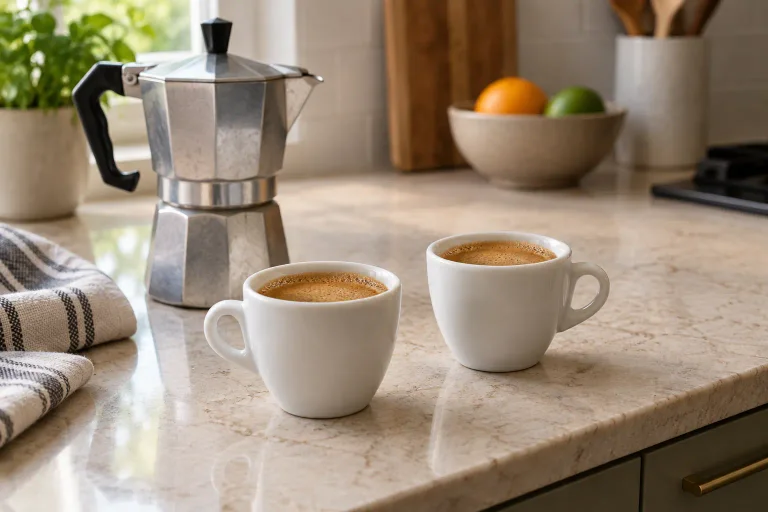
Cuban coffee, or café cubano, is strong, sweet coffee served in small cups with a light sugar foam called espumita. To make it, beat a little of the first brewed coffee into sugar, then gently mix in the remaining coffee. The foam comes from that separate mixing step; you do not put sugar in the brewer.
For the starter recipe below, use a six-cup moka pot and 4 level US tablespoons of sugar, then divide the finished batch into six small servings. “Six-cup” is the brewer's size designation, not six American mugs. Water and coffee quantities follow the pot's instructions, because different models do not all hold the same amount.
What makes it Cuban coffee?
The name describes a way of preparing and serving coffee, rather than a requirement to buy beans grown in Cuba. Dark-roasted coffee is a familiar choice, but the defining step in this version is the sweet foam. Chef Lourdes Castro's cafecito recipe uses a six-cup stovetop maker with a quarter cup of sugar; that is the starting sweetness here.
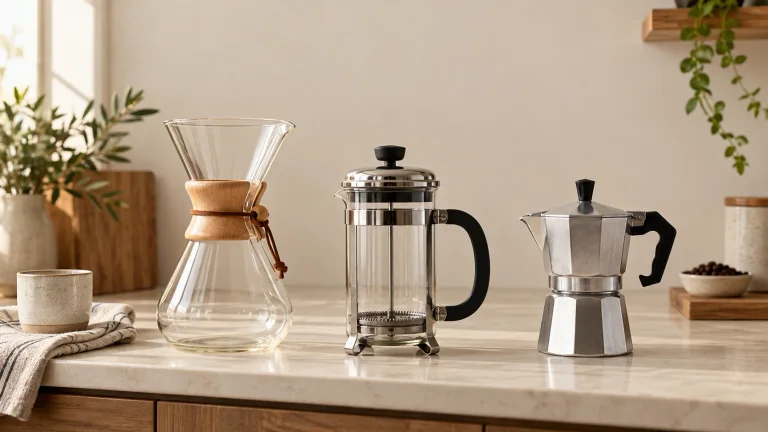
A moka pot makes concentrated, espresso-style coffee. It does not turn into an espresso machine because a packet says “espresso ground.” Follow the grind guidance for the appliance you actually use. If you are choosing between brewers, our coffee brewing methods guide explains the differences.
Espumita is also different from espresso crema. Espresso crema forms during extraction; the sweet cap here is made by beating sugar with coffee. Neither is whipped dairy cream. And unlike dalgona coffee, cafecito does not use a mound of whipped instant coffee spooned over a glass of milk.
Cuban coffee recipe with espumita
Makes: 6 small servings. Prep: about 5 minutes. Brewing and finishing: about 10 minutes. Total: about 15 minutes; timing varies with the stove and pot.
This recipe uses a six-cup Bialetti Moka Express, a heatproof two-cup jug or metal pitcher, and a small spoon. The early-coffee mixing method follows Café Bustelo's cafecito instructions. For another brewer, use its own fill and heat directions rather than transferring the Moka Express setup automatically.
Ingredients
- 4 level US tablespoons granulated white sugar (1/4 US cup)
- Ground coffee suitable for a six-cup Bialetti Moka Express, enough to fill its funnel loosely
- Cold water, enough to reach just below that pot's safety valve
Method
- Set up. Put the sugar in a heatproof two-cup measuring jug or metal pitcher. Set a small spoon and six small cups nearby.
- Fill the cold pot. Add the water to the base, keeping the valve uncovered. Insert the funnel and loosely fill it with coffee; do not tamp. Clear the rim and assemble the pot according to its manual. Keep all sugar in the separate jug.
- Start brewing. Close the lid and place the pot over low to medium heat, with any gas flame contained beneath the base.
- Collect a little coffee. When coffee begins to collect in the upper chamber, lift the assembled pot off the heat by its handle. Carefully pour about 1/2 US tablespoon (1 1/2 teaspoons) through the spout onto the sugar, keeping your face away from steam. Return the pot to the heat. Do not unscrew it.
- Beat the sugar. Briskly work the coffee into the sugar with the spoon until it becomes a pale, creamy paste, usually around 1 to 2 minutes. Keep watching the brewer. If brewing finishes first, remove the pot from the heat before continuing to beat.
- Combine and serve. Remove the pot from the heat as soon as brewing finishes. Pour the remaining coffee gently into the sugar paste and stir gently. Divide the batch and its foam among the six cups. Serve promptly, allowing it to cool to a comfortable drinking temperature. Let the pot cool completely before opening it.
The Moka Express manual takes priority over generic coffee recipes. Use an intact brewer with clear filters and a functioning valve; do not keep heating a pot that is not brewing normally.
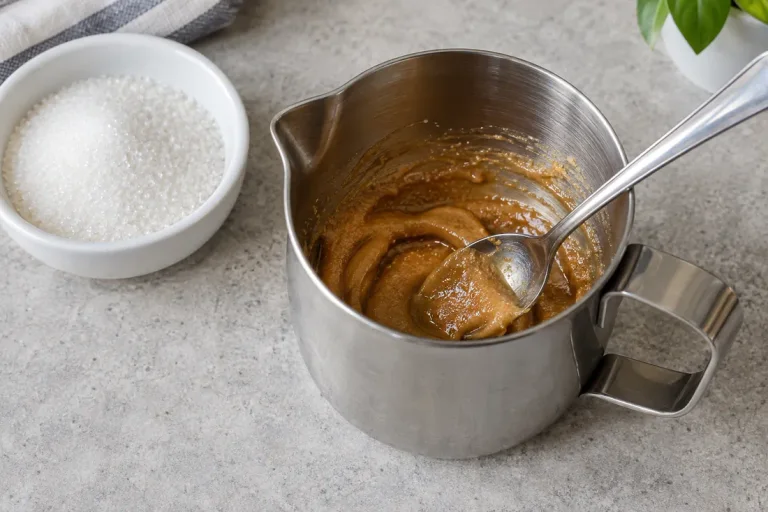
Get the foam right before adding the full brew
Think pale paste first, thin foam second. The mixture in the jug should look noticeably lighter after beating, but it does not need to stand in stiff peaks. The final drink should still be pourable coffee, with a modest layer of foam on top.
A common mistake is pouring generously at the first step. Half a tablespoon looks very small next to a quarter cup of sugar, but it gives you a concentrated mixture to work with. Start there. If dry sugar remains after working the mixture thoroughly, add a few drops of coffee at a time rather than another unrestricted pour.
Scrape the bottom and sides of the jug with the spoon so you are working all the sugar, not just stirring a wet patch in the middle. Once the paste looks pale, stop chasing a bigger topping and finish the coffee. The brewer's timing still matters: remove it from the stove when ready even if the sugar needs another moment.
After adding the remaining coffee, stir enough to combine it with the paste. You are not trying to repeat the vigorous beating step with a jug full of hot liquid. Pour small portions around the cups, then share out any foam remaining in the jug.
Choosing coffee and adjusting the sweetness
Start with ground coffee labeled as suitable for moka brewing, or grind beans to your pot manufacturer's recommendation. Bialetti specifies moka-suitable coffee rather than the very fine grind used for espresso machines. Do not compensate for a weak cup by compressing the grounds.
You can use a familiar dark roast without committing to a particular brand. Buying a coffee because it has “Cuban” on the label is less useful than checking that the grind suits the pot. If the cup is unpleasantly bitter, inspect your brewing routine before simply doubling the sugar; our guide to common coffee flavor problems can help separate those issues.
Granulated white sugar makes a straightforward starting point. Brown sugar is a variation, not an essential ingredient. Cuban-American recipe developer Jamie Silva discusses both in her Cuban coffee guide. Use one type for the first batch so you can judge the sweetness before changing other things.
Four tablespoons is a starting recipe, not a rule for every household. If it is too sweet, try three tablespoons for the next full batch, then adjust again. Reducing sugar changes the amount and texture of the paste, so add the initial coffee cautiously. Do not assume a sugar substitute will whip in the same way. You can certainly drink the coffee without sugar, but it will not have this particular foam.
Divide the batch before deciding it needs more sugar. Tasting a spoonful of the concentrated paste tells you very little about the balanced drink: almost all the brewed coffee has yet to be added.
Cafecito, colada, cortadito and café con leche
These names help you order the drink you want, but serving sizes and sweetness vary between cafés. In Miami, the distinction between a personal cafecito and a colada for sharing is especially useful. Silva's guide describes the familiar small-cup sharing tradition.
| Order | What to expect | Choose it when |
|---|---|---|
| Cafecito or café cubano | A small, strong coffee, commonly sweetened with espumita | You want the coffee without a large serving of milk |
| Colada | A larger order of Cuban-style coffee with small cups for sharing | You are getting coffee for several people |
| Cortadito | A small coffee with hot milk; sweetness and milk proportions vary | You want a little milk without a full breakfast-sized milk drink |
| Café con leche | Coffee with a more generous serving of hot milk | You want a milkier drink, often alongside breakfast |
A cortadito and a cortado overlap as small coffee-and-milk drinks, but do not assume every café makes them to the same ratio or sweetness. Ask whether the coffee is already sweetened before adding sugar.
Café con leche recipes vary too: Café Bustelo's version combines sweetened coffee with hot milk. For a simpler brewed-coffee-and-milk comparison, see café au lait. The names are useful starting points, not a reason to insist that every family's recipe must be identical.
Troubleshooting a disappointing batch
| What happened | What to check | What to change |
|---|---|---|
| The sugar stays dry and sandy | Has the small amount of coffee been worked through all the sugar? | Scrape and beat thoroughly; if needed, add only a few drops more |
| The jug contains a thin brown liquid | Was too much coffee added before beating? | Continue beating, but expect a lighter cap; measure the first splash next time |
| The drink has gritty sugar at the bottom | Was dry sugar left around the jug, or was the final coffee barely mixed? | Gently stir to dissolve the remaining sugar before dividing the batch |
| One cup gets all the foam | Was the entire first portion poured at once? | Serve smaller pours around the cups and distribute the remaining foam |
| The coffee tastes too sweet | Did you use a smaller pot with the six-cup sugar amount? | Match the recipe to the pot, then reduce sugar in later batches |
| The coffee tastes too strong | Are you drinking the whole batch as one serving? | Start with a small portion; add hot water or milk to your cup if desired |
If the drink tastes good but the foam is modest, there is no need to discard it. The useful correction is usually in the next batch's mixing step, not extra heat or pressure in the moka pot.
Smaller batches, guests and other brewers
For fewer people, a smaller moka pot is more practical than treating a six-cup pot like an adjustable drip machine. Do not invent a half-filled setup unless your brewer's instructions allow it. Keep the water and basket filling appropriate to the model, then adjust sweetness to the finished batch.
The six portions in this recipe are deliberately small. Set the cups and jug out before heating the pot so you can move directly from brewing to mixing and serving. If your cups are different sizes, share the liquid evenly rather than filling each to its rim. A colada is a good reminder that a batch can be a shared drink.
For guests with different preferences, reserve some brewed coffee before combining the remainder with sugar. That changes the amount of coffee going into the paste, so do not use the full recipe's sugar for a much smaller sweetened portion. Preparing separate batches is easier when one group wants very sweet coffee and another wants none.
An espresso machine can supply the coffee for a Cuban-style drink, but a single shot is not a replacement for this entire moka batch. Use a recipe sized for the number and size of shots you brew. With ordinary filter coffee, you can make a sweet coffee drink, but the larger, less concentrated serving will need its own sugar adjustment. Instant coffee belongs in a separate instant-coffee recipe, rather than inside the moka pot.
Caffeine and milk additions
A small cup is still caffeinated coffee. The dose depends on the coffee used, how much the brewer extracts and how you divide the batch; “strong” flavor is not a measurement in milligrams. Our caffeine guide explains why serving size matters when comparing drinks.
For less caffeine, choose decaf coffee with a suitable grind. The FDA notes that decaf still contains some caffeine. Adding milk or sugar changes the drink, but does not remove the caffeine from the coffee you poured.
If making cortaditos, warm the milk separately and add it to the cups after brewing. Keep unused perishable milk refrigerated; do not leave a jug beside the stove throughout a long gathering. Plain cafecito needs no milk at all.
Frequently asked questions
Do you need Cuban-grown beans to make Cuban coffee?
No. Here, Cuban coffee describes a preparation style: strong coffee served sweet, usually with a foam made by beating sugar with a little brewed coffee. Choose coffee ground for your brewer; the beans do not have to come from Cuba.
Why does my Cuban coffee have no foam?
Check the sugar mixture before adding the rest of the coffee. It should have become pale and creamy through beating. Adding the full brew immediately, or stopping while the mixture is still wet granules, skips that step. A thin cap is the goal, not a tall whipped topping.
Can you make Cuban coffee with less sugar?
Yes. Reduce the sugar to suit your taste, but expect the foam to change. Try a smaller amount in the next batch and add the first coffee cautiously; the same splash is proportionally more liquid when there is less sugar. Unsweetened coffee will not have this sugar foam.
What is the difference between a cafecito and a colada?
A cafecito is a small serving of Cuban-style coffee. In Miami, a colada commonly means a larger order supplied with little cups for sharing. It is not an instruction to drink a whole moka-pot batch as one espresso-sized serving.